Editor’s note: This is the monthly contribution from Boardhawk columnist Dr. Aaron Massey. See his bio at the bottom of this post.
School board election season is upon us nationwide. What used to be a hyper-local and seemingly uneventful process has catapulted into a main card bout.
And though it does not draw the same level of attention as a presidential election, recent history has taught us that every local election – including school board elections – are critical in shaping our communities, how our children will experience schooling, and the variety of ways our education workforce will respond.
Over the last few months, I’ve spent some time talking to people, studying school boards, digging into policies and executive limitations, and taking note of campaigns across time and region. And there is one line of division that most – if not all — school board candidates must transparently acknowledge on which side they stand.
This decision will likely determine if they are elected.
This decision impacts how they raise money for their campaign.
This decision influences what decisions are made for children in your city.
School closures. Contract negotiations. Funding strategies. School board candidates across the country have to answer this consequential question:
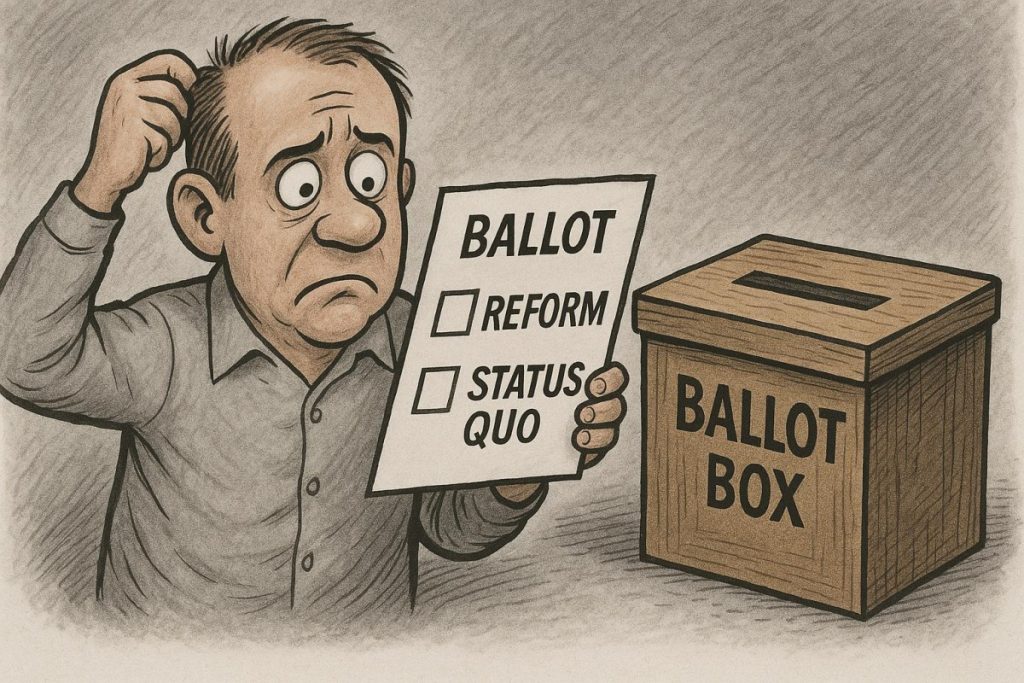
Are you running as a “Pro-public Education” candidate or a “Reform” candidate?
On average, if you are a “Pro-public education” candidate, you typically support fully funding traditional public schools, teachers’ unions to ensure they get what they have earned and rightfully deserve. You oppose things like school vouchers which allow funding for low-income students to use towards private schools.
If you are a “Reform” candidate, you typically support school choice and charter schools, standardized test-based accountability, and more business-focused strategies for school improvement.
This is a false binary. All school board candidates across the country know that what students need is not as simple as these two categories; yet leading with your values is subjugated by a system that only pretends to have choice.
The system reduces candidates to overly simplistic thoughts. Did you teach in a traditional public school or a charter public school? That matters for your candidacy for school board.
Did you grow up in this city or are you a transplant? That matters for your candidacy for school board.
Are you friends with this group of people or that other group of people? That matters for your candidacy for school board.
For voters:
If you’re a parent who wants your child to go to a trade school, you might not only care about those two categories. If you are a business leader, you might care more about certifications. If you are a concerned citizen who doesn’t have children, you might care about student community service in your neighborhood.
So ask school board candidates the hard questions. Questions that align with your values and your family needs.
For candidates:
Take somebody like me whose identity is wrapped in both pro-public school and reform.
I went to public schools for my entire K-12 experience. My family and I went through extremely traumatic experiences while I was navigating my traditional, comprehensive high school. And those teachers had my back. I went on to teach math at a traditional public middle school. But I also led charter schools.
School board candidates, I have personal and professional experiences that can’t be reduced to two categories. And you do too. It would be disingenuous to act as though you don’t.
Because of my personal and professional experience, I want ALL teachers to be well taken care of including those in the union. I gave my traditional public school teachers hell. I want families to have options AND I want all traditional public schools fully funded.
Maybe my traditional K-8, A.M. Jackson Math and Science Academy, would still be open if we accepted that more than one thing can be true.
So candidates, be your dynamic selves. When you answer the tough questions that voters have for you, be transparent about how your personal and professional experiences influence your decision making, as opposed to voters learning about this after you’re elected.
Remember, it is your responsibility to build trust in our public schools.