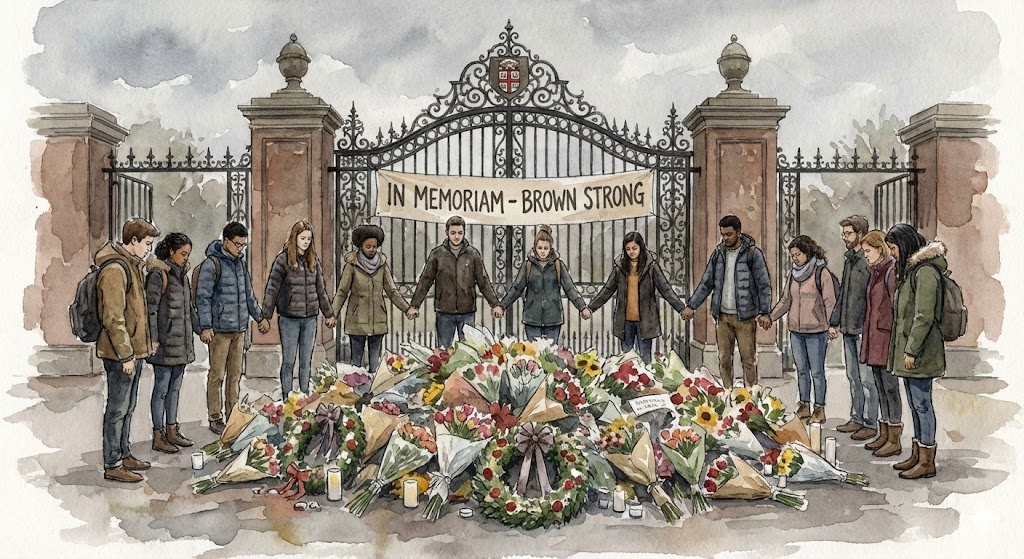
This past weekend, a place near to my heart, Brown University, was the latest school to experience violence on campus. Ella Cook and Mukhammad Aziz Umurzokov were murdered by a gunman who is yet to be captured.
An additional nine were injured. And our entire community was shaken.
Thoughts and prayers. Gun reform. Guns don’t kill people, people kill people. Most of us don’t know what to do besides be upset. Some of us believe that gun restrictions will limit the number of casualties in a given situation. And some of us still don’t want any restrictions.
But what do teachers think about how to approach gun violence in American schools? If you ask me, they are the ones that can make progress in solving gun violence.
Teachers have a unique positionality in society in that they see children progress through the human developmental stages. Maturation process, identity formation, relationship formation, influence, how they learn, impacts of social/familial/learning environments, struggle, how they bounce back, etc. are observed (and often influenced) by teachers.
This line of sight positions teachers to see the roots of societal issues as they develop.
It’s not just their positioning. School and district practices like limiting out-of-school suspensions, social emotional learning, and restorative conversations force teachers to learn how to work with students in distress without excluding them from the class.
They work with some students that curse them out and refuse to do classwork. They work with the valedictorian and the kid that barely graduated. (The very best teachers treat both of those students with the same respect and care.)
Teachers spend their entire careers helping to raise society and manage all the dynamics that come with that.
We don’t have a motive for why this person chose to hurt Brown students. But after Deer Creek Middle School, Sandy Hook Elementary School, Virginia Tech, Marjory Stoneman Douglass High School, and many more, we know one motive that is often referenced is “mental health.”
When the one social worker is busy with another student or out, teachers also assume that role. Maybe a student didn’t eat that day, or their parents/guardians passed away, or their parents/guardians abused them, or they have been homeless for a few weeks, or they are trying to get out of a gang…teachers deal with all of that and more.
With mental health being both a frequently referenced issue when gun violence happens AND an area of focus teachers often have to engage with on a daily basis, teachers are best positioned to help solve this aspect of gun violence.
What about other frequently referenced motives for school shootings?
- Social isolation: teachers deal with that.
- Fascination with guns: teachers deal with that.
- Crisis: teachers deal with that
- Racism/Sexism/Homophobia: teachers deal with that.
- Revenge from bullying: teachers deal with that.
- Notoriety: teachers deal with that.
- Adverse Childhood Experiences (ACEs): teachers deal with that.
- Family Instability: teachers deal with that.
- Poverty: teachers deal with that.
If we want to get serious about solving gun violence in schools, we need to go to the few people that witnessed the behaviors develop.
Teachers.