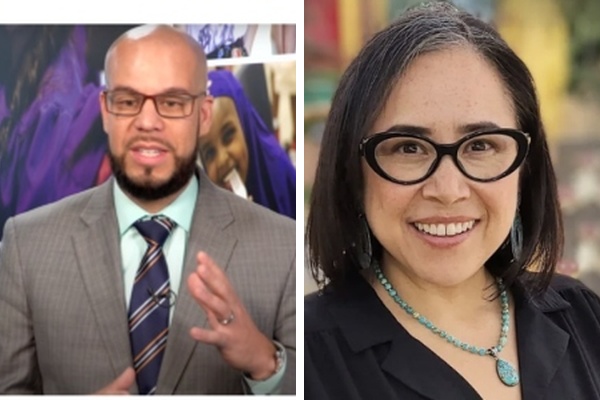
The Denver school board met for four hours on July 27th in what to many seemed an anti-climactic meeting. Some observers (your podcast co-hosts included) expected the board to move against Superintendent Alex Marrero, possibly putting him on leave with pay for an indefinite period while they figured out what to do next with this badly broken relationship.
Instead, the board emerged from the meeting with very little to say about what had transpired. But this does not mean the Marrero saga is over or that his job is secure.
In this episode, co-hosts Alan Gottlieb and Alexis Menocal Harrigan discuss the current state of the Marrero drama and what is likely to happen next.
One instructive lesson comes from Douglas County, Colorado, in February 2022, when Superintendent Corey Wise was fired by the school board without cause and wound up with an $833,000 settlement. While the board might end up having to pay Marrero a year’s salary (roughly $346,000), they would surely like to avoid additional penalties for going about putting him on leave or firing him without going through due process.
Expect more drama in the coming weeks and perhaps months.
Episode transcript
[00:00:00] Alan Gottlieb: Hi, everybody, and welcome back to the Board Hawk Podcast. We are recording this, and I think it’ll be a short episode, on the morning of Tuesday, July 28th. Yesterday, the 27th, was the day the Denver School Board held an executive session to discuss Superintendent Alex Marrero’s complaints about board behavior and violation of policy governance, or as he alleges.
Alan Gottlieb: I think there was a lot of hope raised among those who are critical of the current regime that this might lead to something dramatic happening. The Denver Post had a big series of articles Sunday about the superintendent and whether he was gonna be fired and all of that. So the meeting ended after four hours feeling a little bit like a nothing burger, because people came out of executive session, and there were some very kind of boilerplate, non-interesting statements board members made.
And we don’t know what happened in the [00:01:00] executive session, obviously, but I think it would be helpful to set a little context here, and that’s what we’re gonna talk about. So, to start with, you can’t fire the superintendent under his unbelievably generous contract without giving 60 days’ notice that you’re even gonna talk about the possibility of this.
So, certainly the board could not have fired him even without cause yesterday without having given him 60 days’ notice. However, there is a clause in the contract, and I have not had time to look into this, but I think somebody told me it might be in state statute, because it’s pretty common in superintendents’ contracts, that a superintendent can be put on paid leave for any reason, for any amount of time, with just a simple majority vote of the board.
You might remember that to fire the superintendent under the new contract requires a super majority of five of the seven. So, there’s a lot of stuff in play there. They could have potentially put him on unpaid leave yesterday if they felt that was warranted. But I [00:02:00] want to raise something that was pointed out to me, that happened in Douglas County in 2022.
The superintendent at the time was Corey Wise, who was a kind of a traditional educator superintendent, I guess you could say. Douglas County is known for being quite conservative, but there had been kind of weird turnovers on that school board over time. Corey Wise had been hired by a more progressive school board, and then a conservative majority took power in November of 2021.
Allegedly, through a series of kind of daisy-chain meetings, like one board member with another board member, but never having a quorum, so all of this was private, they decided that they needed to fire him ’cause he was too woke for them or something. So they went into an executive session in February of 2022 and fired him.
He wound up suing, and claiming civil rights violations, and collecting an $833,000 settlement from the Douglas County School District.
Alexis Menocal Harrigan: Oh my God.
Alan Gottlieb: Yeah. So I think board members might be aware of that history [00:03:00] and be thinking, if we wanna do anything to move against Alex Marrero, especially given the amazingly generous contract he has, we need to really dot our I’s and cross our T’s here and go through a process.
So the Denver Post reported yesterday, after the meeting, that Marrero is staying, and I think that’s a gross oversimplification, and that this is not over yet, and it may take some time, but there is enough dissatisfaction on the board with the superintendent, and especially how broken the relationship has become, that it’s not over.
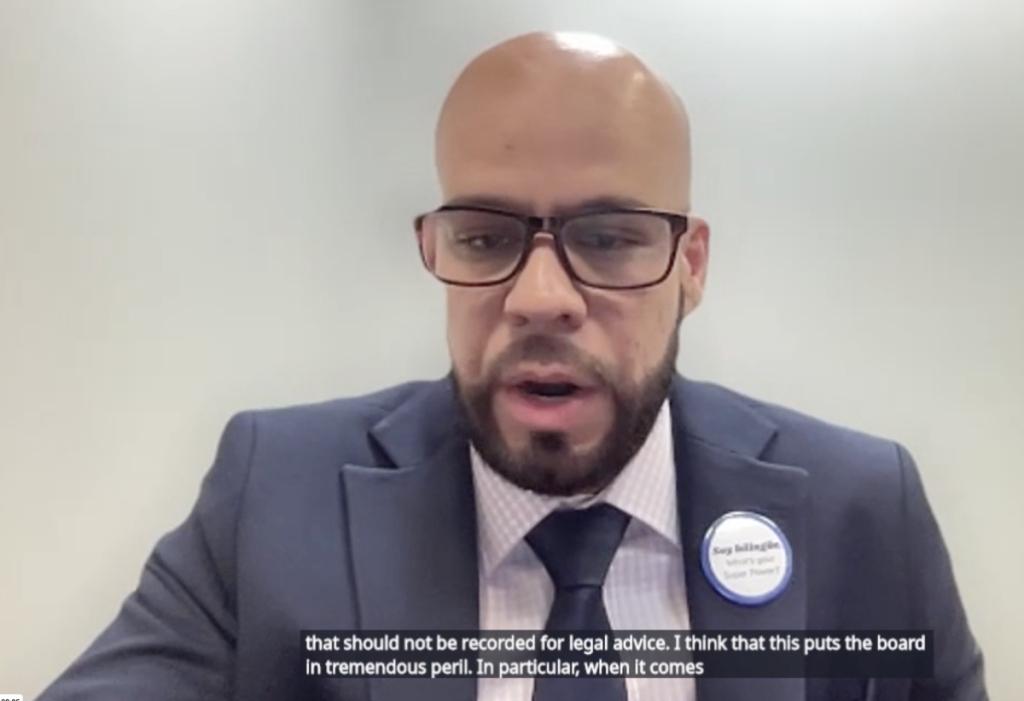
It’s definitely not over. Now, again, we don’t know what happened in the executive session, but I think there’s a very revealing little clip that Alexis is about to share her screen and play, of the superintendent, at the very beginning of the meeting, warning the board that they’d better be careful. So, Alexis, pardon us if we have a couple of technical glitches, but she’s gonna share her screen and play this very short clip from yesterday’s opening of the meeting.
Alexis Menocal Harrigan: Yep, here we go. [00:04:00]
Alex Marrero: Thank you. Considering the next item, as you mentioned, is executive session, that should not be recorded, for legal advice I think that this puts the board in tremendous peril.
In particular when it comes to what could be recorded. I already see Mr. Youngquist in particular communicating on his cell phone, and he in particular has a history of breaching confidential information, so I just want that noted.
Xochitl Gaytan: Really noted, Dr. Marrero. Appreciate you sharing your thoughts.
Alan Gottlieb: Yeah, so you see he’s, A, calling out Youngquist again, which he loves to do, and B, saying you’re putting yourselves at tremendous peril. So, it’s worth being a little careful here if you’re the school board.
And it’s unfortunate that we’re gonna enter into the new school year, teachers are coming back any day now, students start in a few weeks, with this kind of unsettled environment. It’s just the way it is at the moment. So, Alexis, just interested in your thoughts.
Alexis Menocal Harrigan: Yeah. I want to go back to something you said about the four votes versus the five votes. So, [00:05:00] I think it’s important to remind our listeners, when the last board opened up the superintendent’s contract and extended it prematurely, the clause they inserted was that he had to have five votes to fire him without cause.
To put him on leave, or give him notice, that’s a separate conversation, and I just want to make sure we don’t lose sight of that. And I want to also respond to what you said about what was happening with Corey Wise in Douglas County. I don’t think the superintendent is an intelligent person, so I would assume he’s getting his own counsel, he’s thinking about his options.
And what I would hate to see is that this turns into such a legal battle that we end up paying him much more than we need to in order to get him out of the district. The other piece is, talking about the [00:06:00] Youngquist call-out at the beginning, it just shows another pattern of behavior from the superintendent, of his hubris, of his ego, of his pride.
I mean, you and I have talked about it, Alan, but I’ve heard other folks, including members of the board, talk about the Trump-like attitude. He has such an inflated ego. He has such a high opinion of himself. He thinks he’s the greatest. And, as board members, I can’t imagine sitting there and having to deal with the superintendent, who’s your employee, talking about how great he is and what a gift to humanity he is.
So I just want to set the context there. And then the other thing is my own pettiness, as, you know, I reserve the right, as a co-host of this podcast, to express: so many of us in the ecosystem, it’s like, “We told you so. We told you so.” I feel like we didn’t get the attention at [00:07:00] the time when we, several of us, particularly in the Latino community, were pushing the last board not to prematurely extend his contract.
It was done behind closed doors. We don’t know what happened to get to the point where he got such a sweetheart deal. But it’s just incredibly frustrating that now this board, who I give a ton of credit to, is trying to unravel the messy contract, including the provision about policy governance, which I want to get into in a second, when it all could have been avoided if the last board hadn’t played politics with our taxpayer money.
So that’s where I’m at.
Alan Gottlieb: Yeah. And I haven’t dug into this yet, and it might be a little hard to find out, but I’d be very curious to know, and I don’t know, so I’m not accusing anybody of anything, but I don’t know who was representing the board and who was representing the superintendent in those last contract negotiations.
Did Alex Marrero have his own [00:08:00] outside counsel advising him on this? Was Aaron Thompson kind of negotiating on behalf of both the board and the superintendent? I don’t know, but I do know some people who’ve looked pretty closely at a number of superintendent contracts around the state, and even the country, and there are clauses in this, some of the termination clauses and other things, that are really pretty unprecedented.
And the tie to policy governance, this is one of the most generous superintendent-favoring contracts that exist anywhere.
Alexis Menocal Harrigan: Right. And two things. One is trying to undo, or I don’t even know if that’s what they’re planning on, but trying to separate policy governance, and different people’s interpretation of policy governance, from the contract, and what may be cause, what may not be cause, for dismissal. That’s one piece.
The other piece is around what you said back then, if he had his own representation. I actually want to fast-forward to what just recently happened, and I [00:09:00] feel confident sharing this because I’ve heard it from multiple sources, and Alan has also heard this from other people. So it’s not just one person that shared this information.
But going into this, before going into executive session, before all of the drama around this particular meeting, the board had already been trying to get outside counsel. That’s something Board Member Kimberly Sia had been trying to do for quite some time, and I might be getting the details wrong, so somebody please fact-check me if this is incorrect.
They went out, they tried to actually get outside counsel.
Alan Gottlieb: I don’t know if they did an RFP or they did a bid.
Alexis Menocal Harrigan: They did. They did an RFP. I’ve seen it.
Alan Gottlieb: Oh, okay, great.
Alexis Menocal Harrigan: And no one applied. Not a single attorney or firm applied. So I don’t know if that’s bad staff work, I don’t know if that’s bad outreach, or if it’s that the lawyers in town just know to stay away from Denver Public Schools at all costs.
I [00:10:00] don’t know. So I think that’s really telling. I’m assuming they did have one of their outside counsels that they’ve used in the past for this session, but I’m not sure.
Alan Gottlieb: Yeah, I don’t know… Oh, well, they did use, and I don’t know the name of the firm, I could look it up while we’re talking here, but I think one of the attorneys they had yesterday was Christine Edgar, and it’s a firm, I don’t remember the name off the top of my head, that does a lot of consulting and legal work for school boards across the state.
They’re a very well-established firm that does that kind of work. It’s one of their main lines of work. So one name I know is Christine Edgar, and I think Alexis is trying to look it up.
Alexis Menocal Harrigan: Kaplan, Kaplan and Ernst.
Alan Gottlieb: Yes, yes, yes. So that’s who they had advising them yesterday, Kaplan and Ernst.
So that’s where things stand. I think it’s pretty clear that this isn’t over. There was, at the end of the meeting, some of the statements people made were [00:11:00] about policy governance and the need to sort of start rethinking that, and perhaps talking about how they could change it. But I do think that the way the contract is written, if they materially alter policy governance, that gives the superintendent an out to declare that his contract is terminated, and that he can collect a year’s salary as he goes out the door, again.
He’s already made something of a claim like that in that June 8th letter that we’ve discussed in previous podcasts. But certainly altering policy governance in any fundamental way would again give him an opportunity, under the contract, to say, “The terms of my contract have changed in such a way that I consider this a termination.
Pay me.”
Alexis Menocal Harrigan: Right. And what’s not clear to me is: do both parties, the superintendent and the school board, have to agree to open the contract, or can the board make amendments? I would assume it has to be both parties. So how do you get the superintendent to agree to that, when, again, it’s such a good [00:12:00] deal for him?
Alan Gottlieb: Mm-hmm.
Alexis Menocal Harrigan: I don’t think that’s fair, that’s tenable.
Alan Gottlieb: And, well, the other question related to that is, can they open up policy governance and change it without opening the contract? You know what I mean? It’s like, they don’t have to open the contract to change policy governance, but if they change policy governance, they have, in a weird kind of backdoor way, under the terms of the contract, apparently altered the contract.
Alexis Menocal Harrigan: Right. But it’s not clear if the contract is based on the policy governance at the time,
Alan Gottlieb: Right.
Alexis Menocal Harrigan: a point in time, or policy governance as it evolves.
Alan Gottlieb: Yeah, yeah, I know.
Alexis Menocal Harrigan: I can go back and read it. We should have, if we had more time, we probably should have hired, found an attorney to come on and join us, in contract law. Maybe someone from Kaplan and Ernst. I don’t know. What else? What else is there to talk about here?
Alan Gottlieb: I don’t think there’s a lot else. We didn’t wanna do a long podcast, and I think this is just sort of getting at the point that, despite what the Denver Post reported, it isn’t as though they sang Kumbaya and came out of that meeting feeling great about everything. [00:13:00]
I mean, if you kind of look at the video, after the four hours they were in executive session, and you look at the board members, they all look a little shell-shocked after that meeting. The other thing that’s important to note is that two key board members in this whole thing, John Youngquist and DJ Torres, because the meeting went way longer, I think it was supposed to end by noon or something.
It went till past 1:00. They both had previous, unbreakable, other commitments, so they had to leave the meeting before it was over. So they weren’t there to give their two cents worth at the end of the meeting.
So, maybe…
Alexis Menocal Harrigan: …they wouldn’t have anyway.
Well, and all due respect, and all the love to DJ and John, but the tone was certainly different coming out of the meeting versus the tone, and how contentious it was, going into executive session. And I don’t know if that’s because, you know, the superintendent didn’t have the two men that he wanted to battle against, and it was [00:14:00] women who, in my view, are just more calm and rational, and the less emotional sex.
Sorry, Alan. I don’t know, I don’t know what it was.
Alan Gottlieb: Calm and rational, yes. Less emotional, we can debate that one.
Alexis Menocal Harrigan: Okay. But we didn’t talk about, I just realized, is the drama going into executive session about who was there in person, who was there virtually. And kudos to Monica Hunter.
What I’ve often seen some board members, particularly President Gaytán, do is use race, or wokeness, or her version of wokeness, to weaponize it, basically to make an argument for herself. And it’s really hard to call out Monica Hunter, a Black woman, and DJ Torres, a Latino man, for racism, sexism, anything.
And so, Monica, basically you could tell that there was frustration from Xochitl and the [00:15:00] superintendent that some board members were not there in person. So, for context, Xochitl, Kimberly, Marlene, and the superintendent, I think that’s everybody, were there at DSA, Denver…
Alan Gottlieb: Amy Klymoch
Alexis Menocal Harrigan: was there too. Oh, sorry.
And when they opened the recording, it looked like they were all in separate rooms, like in individual classrooms, or maybe in some staff members’ offices, unclear. And then DJ, Monica, and John were elsewhere, not at DSA. And John was called out. I don’t know why, he’s just, like, the punching bag for these folks.
But he was called out, and then DJ and Monica basically came in. They were all sort of called out for not being there in person, saying, like, all board meetings we’re able to join virtually, which I think is true. And Monica, to her credit, basically came in and talked about the ableism that is present when they require things to be in person.
And what I [00:16:00] appreciate is, I think Monica is taking this approach of, you don’t need to be at every meeting in person, every time, especially for people, whether it’s a working mom, whether it’s somebody with a physical disability, something like that. You want to make board meetings more accessible.
And so Monica called out Xochitl’s comments as ableist. I was like, “Damn, girl. That was impressive.”
Alan Gottlieb: And DJ Torres, you know, because Xochitl, again, who’s so unbelievably deferential to the superintendent, was apologizing to him for pulling him away from his family and a day-long staff retreat that was happening yesterday
Alexis Menocal Harrigan: Oh, I forgot about that.
Alan Gottlieb: to be there. She said she was apologizing on behalf of the board, and DJ started saying, over and over, “Point of order. Point of order. Point of order. Don’t apologize for me. I’m not apologizing. Don’t apologize on my behalf.”
Alexis Menocal Harrigan: So good.
Alan Gottlieb: That was… well, and then, yeah, I mean, that’s how the meeting started.
Alexis Menocal Harrigan: Well, and the other thing with Xochitl’s comments, it felt contradictory. On the one hand she said, “Oh, there’s an all-day staff retreat that he’s missing,” but then, he’s not with his kids [00:17:00] anyway. He wouldn’t have been with his kids anyway if he was supposed to be at the staff retreat.
So was he supposed to be at the staff retreat? Or, what I’ve heard from other people is the superintendent doesn’t spend a lot of time here in the summer. I don’t know if he goes back to the East Coast. It sounds like he might be a guest lecturer somewhere, like in Boston, or a different East Coast city.
I don’t know. So don’t blame this meeting for the reason you’re not seeing your kids, because you’ve been out of town. Get the fuck out of here. I’m sorry.
Alan Gottlieb: That’s okay.
Alexis Menocal Harrigan: Apologies.
Alan Gottlieb: Yeah, we… When I click it on YouTube, “Is this video intended for kids?” I say no, so…
Alexis Menocal Harrigan: Okay, great.
Alan Gottlieb: …you’re okay. Well, on that high note, maybe we should…
Alexis Menocal Harrigan: Sorry, y’all.
Alan Gottlieb: …end this version of the pod. No, it doesn’t matter, I’m not gonna even cut it out. I could…
Alexis Menocal Harrigan: Great.
Alan Gottlieb: …but anyway, we’ll be back. We have some guests we’re hoping to line up to talk some more about this in the near future. It’s not over, folks. It’s not over. So, don’t believe everything you read in The Denver Post. [00:18:00]
Alexis Menocal Harrigan: Yep. Thanks, all.