
Editor’s note: This article was written by Lily Becker, a senior at Denver’s George Washington High School, and a SHIFT fellow with FaithBridge. Maya Moorman, Lead of Operations and SHIFT Fellowship at FaithBridge, contributed to the article.
My name is Lily Becker. I’m a senior at George Washington High School and a SHIFT Fellow with FaithBridge. Over the last several months, I’ve worked alongside students from Denver Public Schools and Aurora Public Schools through our Thrive by Design campaign, asking a simple question:
What do students actually need to thrive?
Students have answered through public comment, surveys, and conversations in schools. In September alone, we held six student conversations focused on mental health and wellness. In about a month, more than 400 students responded to our Thrive by Design survey, and we’re still collecting responses. Students from Abraham Lincoln, East, George Washington, Montbello, Northfield, Northeast Early College, South, Thomas Jefferson, and Aurora Public Schools have participated in this work.
What we’re hearing isn’t that our schools have no mental health resources. We’re asking something different: Do the resources that exist actually reach students in ways we can access, trust, and experience?

That question matters even more while adults are having major conversations about leadership, governance, accountability, budgets, and investment in our schools. Those conversations matter. But as a student, I have one request:
Don’t let what’s happening between adults overshadow what’s happening to kids.
During public comment at Denver school board meetings, students have shown us what access actually feels like. Mai, a senior at Thomas Jefferson, talked about struggling with her mental health after moving to Colorado and not even knowing mental health counseling was available at her school.
Abby, a junior at South, described struggling with anxiety without having a trusted relationship with a school counselor. She eventually received therapy outside of school, but recognized that not every student has a family with the resources to make that possible.
Meara, a recent East graduate, described asking for help before freshman year but spending the next two-and-a-half years navigating waitlists, insurance issues, and other barriers before finally receiving therapy at school.
Josh, a sophomore at Abraham Lincoln, shared another kind of gap. After his grandfather died, his school identified that he was struggling. He spoke with a counselor about his loss and returned to class, but what he remembers is that nobody followed up.
These stories changed how we think about access. It isn’t enough to ask whether a resource exists. We need to ask whether students know about it, understand where to go, can reach someone when they need help, develop trusted relationships, receive follow-up, and get support before reaching a crisis.
As we started researching mental health and wellness, I realized something: I didn’t completely understand the system either. Students talk about school counselors all the time, usually around schedules, credits, graduation, college, and careers. But if I’m struggling with my mental health, should I go to my counselor? A social worker? A psychologist? What does each person actually do? If I had those questions while researching this issue, how many other students have them too?
We’ve learned that professional organizations recommend approximately 250 students per school counselor, 250 per school social worker, and 500 per school psychologist. These are professional recommendations, not Colorado staffing mandates. Ratios matter because relationships take time, but a ratio alone doesn’t tell us whether students are getting what they need. Staffing is not automatically access. Access is not automatically quality. And quality eventually has to show up in students’ lives.
Our survey reinforced that. In our initial cleaned analysis of approximately 336 unique respondents, about two-thirds positively rated their awareness of mental health supports, their accessibility, and whether those supports adequately meet their needs. That’s encouraging. But roughly one-third did not give a positive rating in each area. Instead of assuming we know why, we want to keep asking students.
That is also why the SHIFT Fellowship matters. SHIFT isn’t just about giving students a microphone or asking us to share our stories. We are learning how decisions get made, researching the issues affecting us, looking at data, listening to other students, speaking publicly, and working with adults who have the authority to change systems. Our goal is to move from simply being asked what we think to actually helping shape what happens next.
Through Thrive by Design, that work is focused on three areas: Policy. Practice. Pathways.
Policy means working with policymakers and district leaders to create a clear Student Mental Health & Wellness Policy. Students should understand what support they can expect, including the roles of counselors, social workers, psychologists and other professionals, expectations around staffing and access, specialized supports, transparency, and student voice.
Practice means making sure those promises actually reach students. If money is invested in mental health, we should be able to see whether it creates more capacity, whether students know where to go, whether wait times improve, whether referrals lead to care, whether someone follows up, and ultimately whether students are doing better. That’s why we’re exploring a Student Thrives Dashboard that could help students, families, educators, and policymakers understand not only what is being funded, but what students are actually experiencing.
Pathways means recognizing that students can be part of the solution. We need behavioral health professionals, and some of the students sitting in our classrooms today may want those careers. We want to explore opportunities beginning in high school through coursework, concurrent enrollment, paid work-based learning, and clearer transitions into college and behavioral health careers. Students shouldn’t only be viewed as people who need mental health support. Some of us could become the people who provide it.
Why the mill levy matters for students
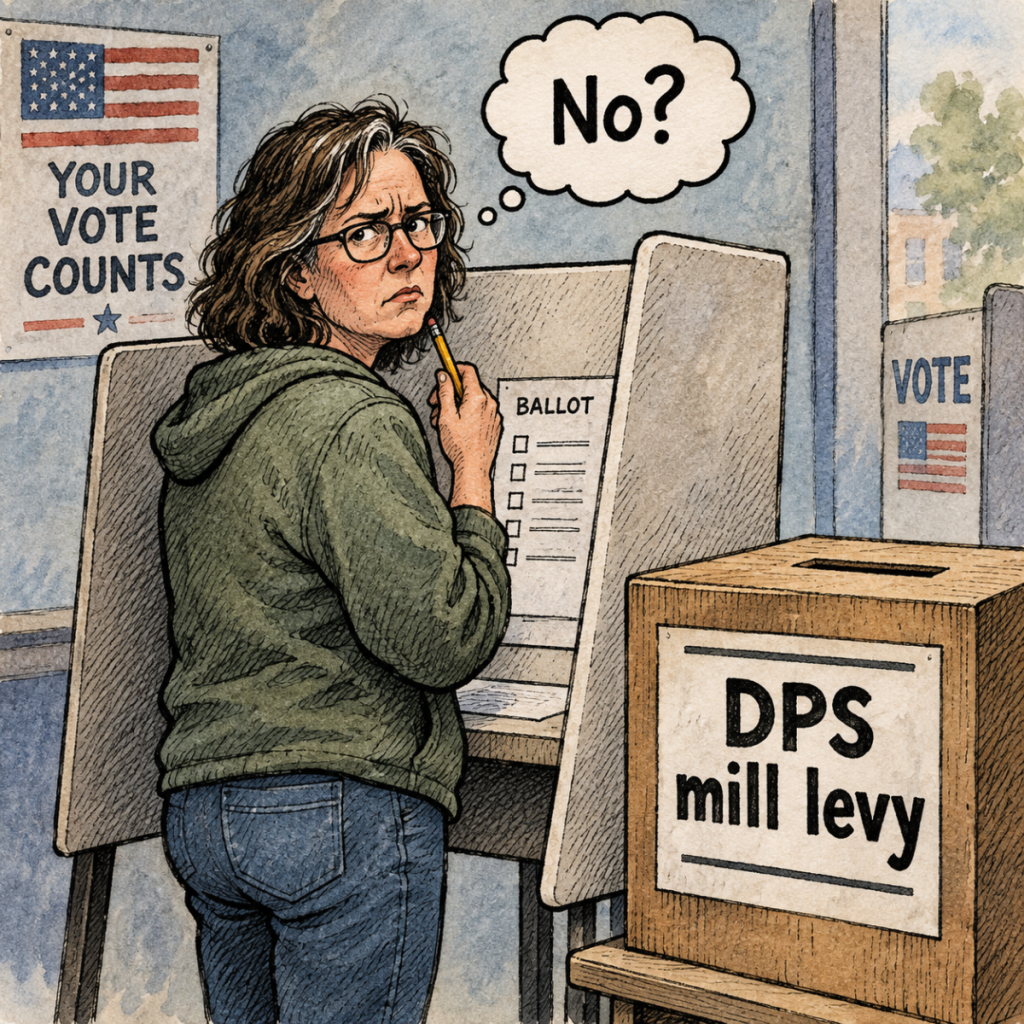
This work is happening while Denver is considering another major investment in its schools. In August, the DPS board approved placing a $44 million Mill Levy Override on Denver’s November 2026 ballot. There will be disagreements about that proposal, just as there are disagreements about other issues facing DPS.
Recently, I’ve heard people question whether Denver should make another investment in our schools because of the disagreements and challenges happening among adults in the district. As a student, that is hard for me to understand.
Whatever concerns adults have about leadership, governance, or accountability, taking investment away from students because of adult behavior feels like punishing us for decisions we did not make.
Students didn’t create the adult disagreements. We still show up to school every day, and we still need great teachers, mental health support, special education services, opportunities, safe schools, and adults we can trust.
That doesn’t mean adults shouldn’t demand accountability. They should. Public investments should come with clear expectations for where money goes, how it is implemented, and whether students actually experience the results. Accountability and investment in students should not be opposites.
In fact, that is exactly the kind of accountability SHIFT is preparing us to participate in. If money is invested in mental health, students should be able to ask whether we can get help faster. If positions are added, we should know whether students can actually build relationships with those adults. If programs exist, students should know about them. If adults tell us mental health is a priority, we should be able to see and feel what that means in our schools.
Adults should put students first with or without additional investment. Decisions about investing in students shouldn’t become a punishment for adult behavior.
While adults debate these issues, we still have to walk into school the next morning. We only get one freshman year, one sophomore year, one junior year, and one senior year.
Later in October, students will come together again at our Thrive by Design Youth Summit. We’ll take what we are hearing from hundreds of students and continue working with policymakers, educators, district leaders, families, and community partners on what comes next.
We aren’t asking adults to go into a room and solve student mental health for us. We’re asking to be in the room with you.
So hold adults accountable. Ask hard questions about how money is spent. Measure whether promises are kept. But invite students into that work too.
We don’t have every answer. But we have something adults cannot create without us: our experience. We know what it feels like when the system works. We know what it feels like when it doesn’t. And we’re willing to help build something better.
Don’t just listen to us. Build with us. Invest in us. Hold the system accountable with us.
Because we deserve the opportunity to thrive by design, not by chance.