Editor’s note: This is the monthly contribution from Boardhawk columnist Dr. Aaron Massey.
Social media has figured out a way to both connect students in ways that allow them to know what’s going on in the world while simultaneously creating new ways to cause harm to themselves and others.
About 18 months ago, I wrote a piece arguing that superintendents of urban school districts should ban technology because it’s causing more harm than good. Although that captured exactly how I felt during a time where students were reacclimating themselves to in-person learning, those sentiments don’t capture the nuance of the power of social media in American education.
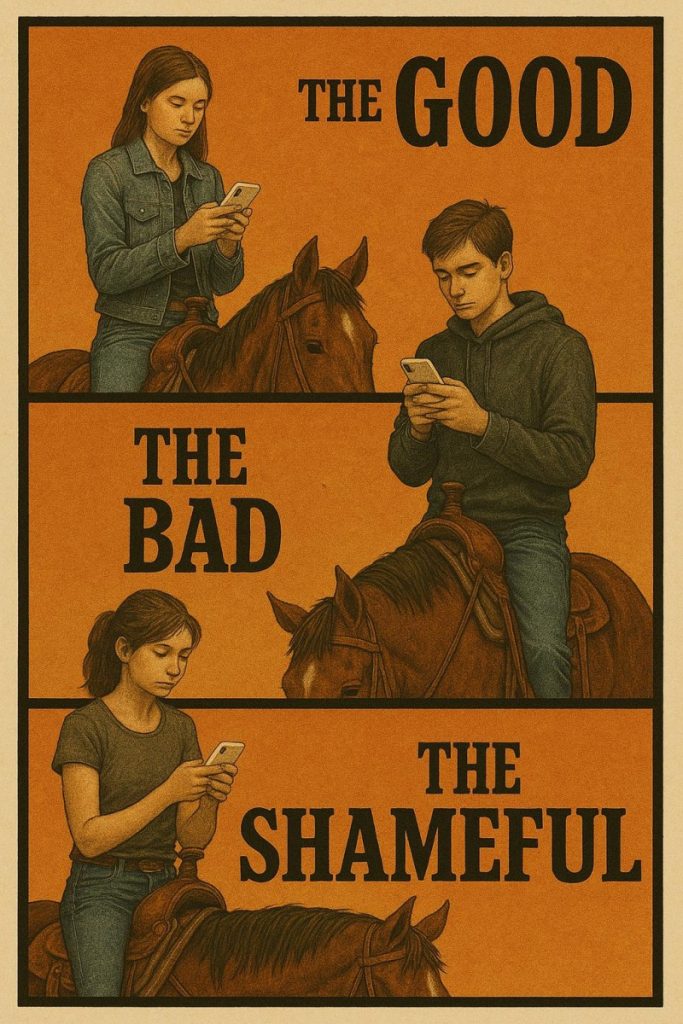
There is the good. There is the bad. And then there is the shameful.
The good
I’ve referenced my amazement at how students returned back from quarantine with a planned list of activities, called “devious licks,” to disturb the normal functioning of school. Soap dispensers in toilets. Paper towel machines in the hallway. Although it was disruptive (and I don’t want that to occur again), it showed the power of students advocating and organizing via social media.
Well, it happened again. The blockbuster, “A Minecraft Movie,” features a scene where each time it comes on, youth all across the country throw popcorn, soda, and otherwise trash the auditorium. The issue was so pervasive that one of the stars, Jack Black, attended a screening and asked folks not to throw popcorn during the movie, according to The Hollywood Reporter.
Why am I considering this a good thing? I clearly don’t support damaging property or making a mess in public spaces. But it is a good thing because it shows what’s possible. Education is like an automatic revolving door at a hotel. Only the hotel is in the movie “Inception” and you have no clue where it’s going to take you.
Simply put, as the landscape of education keeps rotating, the ideologies and tools we use need to evolve. Social media as a tool for organizing and connecting is an opportunity. Educators just haven’t figured out how to guide students in using the tool to its fullest potential.
And connection and organizing aren’t just happening in support of flying kernels. Social media is connecting movements across K-12 and higher education institutions. In years past, college students were the ones leading movements in response to the “Collapse of Reconstruction” and efforts towards the “Modern Civil Rights Movement” (National Museum of African American History & Culture).
College students now have ways to coordinate efforts, debate and align on positions and strategies, create communication campaigns, test ideas, etc. All on their phones. When a nation is in crisis, social media can be a powerful tool.
The bad
But that tool can be equally powerful in harmful ways. Nearly half (46%) of US teens have experienced online bullying in some form (Vogels, 2022). Moreover, that online bullying has led to increases in suicidal ideation and attempts in children (National Institutes of Health, 2022).
Another way of saying this: You know those movies from the 90’s where the jock football captain would stuff the less physically imposing nerd with glasses into the locker? Yeah, that’s by and large not happening anymore and we need to update how we think of bullying so we can better assess solutions.
That push into the locker was replaced with “offensive name calling, spreading false rumors about them, receiving explicit images they didn’t ask for, constantly being asked where they are, what they’re doing, or who they’re with by someone other than a parent, physical threats, and having explicit images of them shared without their consent” (Vogels, 2022).
That three-minute interaction between bully and victim has turned into 24/7 access. The only thing that hasn’t changed is how adults are trying to solve the problem.
Moreover, I would be remiss if I didn’t bring up the impacts of doom-scrolling on all of us. That’s when we get stuck watching videos on social media for hours on end. And because sensationalizing is more appealing than objective news stories, often that scrolling involves some sort of crisis or someone being harmed. This can often lead to things like emotional fatigue, social isolation, and even physical symptoms like headaches, nausea, and higher blood pressure (Nationwide Children’s, 2025).
The issue with the bad parts of the power of social media in education is that it’s, both, bad and new. It has harmful effects on children and it’s nothing society prepared for. Right?
The shameful
Some of us in society knew the power of social media. They just happened to be the social media companies themselves.
One critical thing to acknowledge at this juncture is that it is short-sighted to believe that parents are the blame. Why don’t parents just take away their children’s phones and they won’t have access to their social media?
Well it’s like the 1990 classic, “,”House Party where Kid snuck out of his house to go to a party. You were a teenager once, you figured out ways to get around rules as well. And now kids have an invisible network where they can log on to a device and continue their social media lives. So let’s not blame parents.
Instead, how about we focus on the adults that knew the power of social media while they were creating it?
They created it to make sure your child spends as much time on social media as possible. That shouldn’t be the case.
They know it’s addictive but they make money from it so they won’t stop. That shouldn’t be the case.
They know it’s having impacts on children’s brains but refuse to address those concerns in earnest. The American Psychological Association saw 50% of respondents have at least one symptom of “clinical dependency” (2024). That shouldn’t be the case.
In fact, this is shameful. I don’t think it’s by happenstance that social media comes with a double-edged sword. Some of the smartest people in the world are working behind computer screens to monitor that balance.
Educators, we need to learn and learn quickly how to guide students to use social media in socially responsive, yet innovative ways. I know this is another job on our plate. I know that we can’t solve all of society’s ills. I also know that we can’t standby. I don’t know the exact solution.
But maybe the answer lies within a movie.