Alleged antisemitic statements by Denver school board member Monica Hunter aimed at her colleague Amy Klein Molk are problematic. Equally troubling, however, is why the superintendent and board president sat on them for nine months until it became politically expedient to release them.
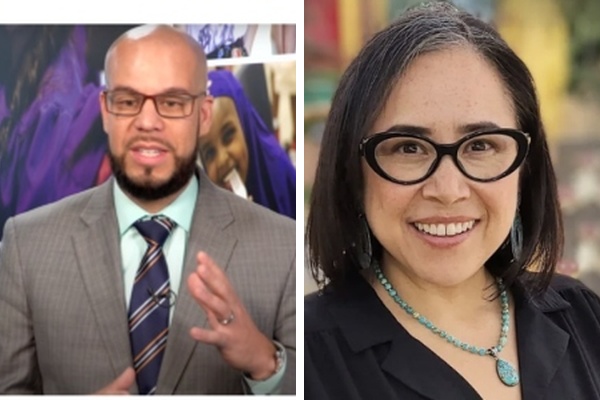
In this episode, co-hosts Alexis Menocal Harrigan and Alan Gottlieb discuss whether board relationships and trust in board President Xóchitl Gaytán and Superintendent Alex Marrero are irreparably damaged, and if so, what should happen as a result.
Podcast season 2, episode 24: The highly suspect timing of allegations against DPS board member Monica Hunter, and moving forward from here
Alan Gottlieb: [00:00:00] Hi, everyone. We are back with another episode of the Board Hawk Podcast, and unfortunately, we are not talking again today about student achievement or any of the things that actually matter to what the mission of the Denver Public Schools is, but rather the continued hubbub around the alleged antisemitic comments made by board member Monica Hunter toward board member Amy Klein Molk, and all of the fallout that has resulted and continues to result from that.
In particular, the odd timing of the revelations about these alleged statements from board president Xóchitl Gaytán and Superintendent Alex Marrero. This is not dying down. In fact, it’s flaring up, I would say, pretty significantly. And we once again seem to be at an inflection point where the board is very fractured, where the trust in leadership among a lot of the board members is [00:01:00] completely gone, and whether this is salvageable in any way or not is highly questionable.
The implications of this, of course, is whether the board president, again Xóchitl Gaytán, and the superintendent, Alex Marrero, can even work with the rest of the board anymore. And if not, what should happen instead? So Alexis and I really wanna just kind of unpack this a little bit and talk about it, because it’s a little bit tangled, and it’s a little bit tawdry, and it’s fascinating and depressing all at the same time.
So Alexis, why don’t you give maybe a little bit of history, timeline, and your take on this?
Alexis Menocal Harrigan: Thanks so much, Alan. Yeah, I think the last couple times this has come up, we didn’t have the sequence of events, so I think it’s important for the listeners to hear the order that people are alleging these things took place.
So as a reminder, we elected, or reelected in the case of President Gaytán, four board members to the school board in November. Those board members [00:02:00] were, as I mentioned, President Gaytán, who won her reelection, and the other three unseated incumbents. Those three members were Dr. DJ Torres, Monica Hunter, and Amy Klein Molk.
Shortly after they won the election, there is alleged to have been a meeting, and it sounds like the meeting did happen, because nobody’s refuting that the meeting occurred.
Alan Gottlieb: And this was reported in The Denver Post, just to be clear.
Alexis Menocal Harrigan: Yes. This was reported in The Denver Post, and this is in some of the documents and statements that have been put out by some of these board members.
So there was a meeting at the house of Lisa Calderón, who is a mayoral candidate here in Denver. At the time she was the chair of the Working Families Party, according to The Denver Post. I don’t believe that’s the case anymore. About that meeting, and I’ll read directly from The Denver Post article, according to Calderón, “The meeting was to bring together the progressive slate and talk through how they would work together through a productive way. Klein Molk chose not to come, and that was unfortunate because we [00:03:00] really wanted her to be there, and there were several conversations to welcome her. I absolutely refute Hunter’s characterization.” And Hunter’s characterization is that at that meeting there were allegations being made to suggest that she opposed Amy for an officer position because she was a Zionist.
What Monica says is, “That’s not my recollection of what happened.” And then, according to Hunter, they also alleged… So this is what Monica Hunter said about Lisa Calderón and Xóchitl Gaytán: that during the meeting, they preferred people of color to serve as board officers and questioned whether Klein Molk represented the community.
So according to Monica, Lisa and Xóchitl were questioning if Amy, because she’s not a person of color, represented the community. And then, quote, “They also characterized her conduct as demonstrating what they described as white fragility and racism,” unquote. So that, we assume, occurred [00:04:00] sometime in November or early December, before the officer votes took place.
The officer vote took place in early December, right after folks were sworn in. So that’s the first thing that we hear, and that’s where the first claims come of potentially using the word Zionist. Now, whether it was used in a derogatory manner or not, we don’t know. This is just a recollection of what people are claiming happened at this meeting at Lisa Calderón’s house with the progressive slate of candidates.
Alan Gottlieb: We don’t know if it was used in a negative or pejorative way, but it seems a little bizarre to me that in a conversation about school board seats in Denver, Colorado, whether somebody is a Zionist or not seems a little bit irrelevant.
Alexis Menocal Harrigan: Correct.
Alan Gottlieb: So, you know, on its face, it gets kind of weird right off the bat.
Alexis Menocal Harrigan: Agreed. So that’s the first thing that took place right after the election. Then Amy, in her statement that is now part of the public record and part of these future [00:05:00] investigations, says that she met for lunch with Monica in December of 2025. And as they were walking out from that lunch, Director Hunter stated words, and I’m reading here from Amy’s statement. Director Hunter stated words to the following effect, quote, “AK…” Oh, I’m sorry. This is the wrong one. I’m reading from Monica Hunter’s…
Alan Gottlieb: Here, it’s right under incident one.
Alexis Menocal Harrigan: Oh, thank you. Go ahead.
Alan Gottlieb: “During the walk back to Emily Griffith Campus, Director Hunter asked me directly whether I’d identified as a Zionist.” Note here that Amy never uses that word herself. “I told her that I believe in the existence of an Israeli state and that I am a proud Jew. She responded that she could not understand how I, or Jewish people generally, could be, quote, ‘okay with the killing of innocent babies,’ close quote, and said she personally could never be okay with that, and therefore could never support Israel or Jewish people who support Israel’s existence. [00:06:00] When I pushed back, she ended the conversation with, ‘Let’s just agree to disagree.'”
Now, I don’t think Monica’s disputed that she said what Amy’s saying she said in the statement. She’s disputed that she ever called her a white Zionist bitch or any of the other things that are alleged in Gaytán and Marrero’s statements.
However, this is a very problematic statement in and of itself, to basically say she could never support Jewish people who support Israel’s existence. That’s over the top. So if she actually said that, that in and of itself is highly problematic. Sorry, back to the timeline.
Alexis Menocal Harrigan: Yeah. And just a little bit of commentary here. You can disagree with what Israel is doing, and in some cases even disagree with the premise that Israel should be a state. But why this is coming up in the context of school board conversations is not clear. And we can talk about that later, why it does or does not [00:07:00] matter.
But getting back into the timeline, then we have a statement from President Gaytán. In addition to what we read from Amy’s statement about walking back from a lunch, and this meeting that happened at Lisa Calderón’s home, Xóchitl’s statement reads, “In the days leading up to the December 2025 oath of office, I received a phone call from Monica Hunter, who had recently been elected to represent District 4. At the beginning of the conversation, Director Hunter told me that she had just gotten off a call with Amy Klein Molk. As I recall the conversation, Director Hunter stated words to the following effect, ‘AKM just said she’s a Zionist. Can you believe that? I’m not going to vote for her for any officer role, so don’t consider bringing her up for consideration for an officer role because she doesn’t have my vote.'”
So we’re hearing three different versions of events. We’re hearing Monica’s version about a meeting that took place at Lisa Calderón’s home, where [00:08:00] allegedly Lisa and Xóchitl said that they shouldn’t have people who are not people of color on the board. Then we have Xóchitl’s statement saying that Monica called her after a conversation, and Amy does say that there was a conversation.
Amy said it was in person, when they were walking back. According to Xóchitl, it was a phone call, or maybe these were two different incidents, I don’t know, in which she said, “She doesn’t have my vote.” So what’s clear from the statements from Monica and Xóchitl, whoever you believe, and if one of them is telling the truth, is that at some point a conversation took place where Amy wasn’t being considered for an officer role, either because she was not a person of color, because she’s white, or because she is perceived to be a Zionist.
And Amy has never called herself a Zionist in any of her statements. What she put in her statement is that she supports the state of Israel to exist.
Alan Gottlieb: Right. So that’s where it tiptoes [00:09:00] up to: it’s because she’s Jewish, not because she’s a Zionist, which gets a little more problematic.
Alexis Menocal Harrigan: Agreed. So then this all happens in November or December, depending on which event we’re talking about, because we don’t know when the meeting at Lisa Calderón’s home took place. Then when we’re looking at the statement from…
Alan Gottlieb: I think we need to keep going on Xóchitl’s statement, because then a separate incident occurred.
Alexis Menocal Harrigan: Oh, yes.
Alan Gottlieb: “Sometime in mid-December 2025, while Steph and I were working on the seating arrangements and assignments for the board dais… During that process, Amy Klein Molk was assigned to sit next to Director Hunter. When Director Hunter became aware of the seating arrangement, she stated words to the effect of, ‘I am not sitting next to that racist Zionist bitch.'”
Now, Monica vociferously denies ever having said this. The only two people who have ever said she used the term racist Zionist bitch or Zionist bitch are Xóchitl Gaytán and Alex Marrero. So we don’t know whether she used those terms or not. I would argue that while that’s highly offensive if she said it, it’s not as relevant [00:10:00] as the overall message that she’s sending with some of her statements that are less patently offensive than this one.
Alexis Menocal Harrigan: Correct. And then, going back to Amy’s statement, incident number three, she says that she learned on August 21st about a remark that took place on January 27th. She was sitting at a breakfast with Superintendent Dr. Marrero to catch up and discuss priorities for the new school year.
She says, “Dr. Marrero disclosed that on January 27th, 2026, Director Hunter had used the phrase, quote, ‘White Zionist bitch,’ unquote, to describe me, and had expressed a desire to be moved away from me on the dais. Dr. Marrero appeared surprised by my lack of visible reaction to this disclosure nearly seven months after the remark was made. I was not surprised, given my past personal experience, but was obviously very upset and became more so over time.” So Marrero [00:11:00] chose to share this with Amy seven months after the fact.
Alan Gottlieb: And Amy says a little farther down in her statement, “It was terribly upsetting to me and continues to be. I was disappointed that this was known by district leadership for months before it was disclosed to me.” And that’s kind of the heart of the issue that I think we’re talking about right now.
Alexis Menocal Harrigan: Yep. And then the last one, and I’m trying to go back and pull it up, because there are so many different places these documents exist, is that Marrero did also share his statement for the record. And of course, now I’m not finding it. One moment.
Alan Gottlieb: His is a short five-paragraph statement, and I can read it if you want.
Alexis Menocal Harrigan: Go ahead.
Alan Gottlieb: I’ve got it right here. Here’s the relevant portion of it. He met with Monica. He doesn’t have any dates on his, but Amy says it was January 27th, so he must have told her that, but it’s not in his own statement. But [00:12:00] he says, “During that same discussion, Vice President Hunter referred to Director Klein Molk as a Zionist bitch and said she did not wanna sit next to her. She also told me she had previously expressed that sentiment to Board President Xóchitl Gaytán. Following the meeting, I contacted President Gaytán and shared what Vice President Hunter had said to me. President Gaytán confirmed that Vice President Hunter had previously told her that she did not wanna sit next to Director Klein Molk in connection with the board’s seating arrangements.”
Alexis Menocal Harrigan: Mm-hmm.
Alan Gottlieb: So there’s a lot to unpack here again, Alexis. The thing I really wanna get at here is the odd timing of these statements allegedly having been made and then completely sat upon and not released until seven months later.
And in the intervening months, a big fracture developed between Monica and DJ Torres and, to a certain extent, Amy Klein Molk, and the board president and the superintendent. So, [00:13:00] and this is my take, it wasn’t politically expedient to release this earlier. As offensive and potentially damaging and important as these statements are, they weren’t important enough to release until suddenly the superintendent and the board president were on the other side of issues, including the superintendent’s potential job security, from Monica Hunter. Let’s just boil it down to her at this point.
Alexis Menocal Harrigan: Right. I tend to agree with that. We don’t know, and we likely will never know, if these statements were made, and I think it’s really unfortunate that a lot of this is getting decided in the court of public opinion.
However, from my personal experience and hearing from others, I do think there is a really strong pattern of retaliation by the superintendent. And for that reason, unfortunately, I’m not surprised that this information wasn’t revealed until months later, when Sochi and Alex, the superintendent, were [00:14:00] unhappy with the behavior of some of these board members. So for me at least, it’s hard not to see this as retaliatory, regardless of whether the statements were true or not.
Alan Gottlieb: Right. Either this was retaliation or it was gross negligence on the part of, certainly, Gaytán. And we can separate out Gaytán and Marrero here a little bit, and I wanna do that in a second. It was either gross negligence, political retaliation, or both. Yes to the pattern of retaliation. That’s unquestionable. They went after John Youngquist. You can debate whether that was legitimate or not. They fired Kurt Dennis. They banned Brandon Pryor from attending board meetings because they didn’t like what he said. That’s just the tip of the iceberg. There are a lot of other examples of retaliation.
Alexis Menocal Harrigan: That we can’t share.
Alan Gottlieb: Yeah. Or that we can’t share, or that aren’t sticking in my head right now because I haven’t written them down. But retaliation’s definitely a thing. Now, one thing I wanna bring up, or at least talk about, [00:15:00] because I know that everybody thinks that I’m the most anti-Marrero person in Denver, which I’m not.
Alexis Menocal Harrigan: I thought that was me.
Alan Gottlieb: Oh, well, anyway.
Alexis Menocal Harrigan: Or Theresa Peña.
Alan Gottlieb: Yeah. Well, anyway, the one thing that I think is a little bit exculpatory for him here is that, at least in his statement, as soon as he heard this from Monica, allegedly, he told Xóchitl Gaytán about it, which is the right thing for him to have done. Absolutely the right thing for him to have done. He didn’t do anything else, and we can talk about whether he should have.
But Xóchitl’s the one who sat on this and didn’t do anything until it became politically expedient. However, you would think maybe the superintendent would’ve said something to Amy. You would’ve thought the superintendent would’ve reached out to Monica and said, “This is problematic.” There are a lot of other things he could have done, and I think it doesn’t put him in a great light, but I think this actually puts Xóchitl Gaytán in a worse light even than it puts the superintendent.
Alexis Menocal Harrigan: Mm-hmm. I’ve been trying to put myself in the shoes of these two, [00:16:00] and I’m trying to think of the most generous interpretation. So first is Xóchitl. The most generous interpretation that I can think of is she wanted to get away from this narrative of dysfunction that had been plaguing the school board for the last several years, especially when she was the board president.
So you have these brand-new board members that were elected, and she doesn’t want to start this new iteration of the board with immediate drama and allegations and all of these issues. And so maybe she’s just hoping, like, we can resolve this on our own, and maybe she did, but we don’t know. Maybe she did try at one point, but I doubt it, because otherwise Amy or Monica would have said there were attempts at mediation.
And based on all the statements we have, there seem to have been no attempts at mediation, and that’s even more so the case because Amy didn’t even learn about these things until the end of August.
Alan Gottlieb: Except what she heard herself in December.
Alexis Menocal Harrigan: Correct. [00:17:00] Oh, yes. True. Thank you. And her own experience walking back from that lunch.
So that’s the most generous interpretation for Xóchitl: maybe she wanted to sweep this under the rug because she didn’t want the public to have another level of frustration and outcry over the board’s interpersonal drama.
The most generous interpretation for the superintendent is he did what he felt he had to do by reporting this to President Gaytán. And maybe, again, generous interpretation, he assumed she was handling it behind the scenes, and he didn’t wanna get involved with it because these are all his supervisors. So maybe that’s the case. But then why he would wait until January to share the information with Monica is unclear to me.
Alan Gottlieb: [00:18:00] He didn’t wait till January. He waited till August.
Alexis Menocal Harrigan: I’m sorry, share the information with Amy. Thank you. Why would he wait until August to share that information with Amy? Because it doesn’t sound like Xóchitl had shared it before him. You know, did they conspire to make that decision? Because not long after that conversation that took place in August between Amy and Alex, we had the statements, and then we had the board meeting where Xóchitl basically presented 20-plus pages of allegations against both Monica and DJ. It did feel a little bit coordinated, and too buttoned up for it not to have some level of coordination.
Alan Gottlieb: Right. There’s something called Occam’s razor, which I may butcher a little bit here, but it’s a rule that the most likely explanation for something is usually the right one.
I think it’s good to do the generous interpretation you just did. I think that’s really important, because it is possible. I think much more likely [00:19:00] is that in the early days after the election, the four members who won were all backed by the DCTA and were seen as allied with one another.
So there was a close bond, potentially, between Xóchitl Gaytán and DJ and Monica and Amy, because they’d all been backed by the DCTA and were gonna be on the same page in terms of a lot of the issues going forward. And so as long as they were seen as allies, I think even possibly in Xóchitl’s eyes, a statement as problematic as, “I don’t want to sit next to that Zionist bitch,” was like, “Well, I can forget that because we’re gonna all be working together, and I don’t want to stir the pot.”
But suddenly, as we got into the spring and summer, fractures began to develop on the board between most of the other board members, with maybe the exception of Marlene, and Xóchitl Gaytán and the superintendent, as he was looking for other jobs and writing letters complaining that they were violating his contract by getting too in the [00:20:00] business of the district.
Certainly Monica and DJ very strongly, and to probably a lesser extent Amy. And then there’s John Youngquist and Kim Sia, who are in slightly different positions because they’ve both been on the board. But certainly the three new board members, and especially DJ and Monica, turned against the superintendent and the board president very aggressively. And then just conveniently, “Oh, look, these guys have been doing all sorts of terrible things,” and, “Oh, Monica said these horrible things about Amy,” which we’ve been sitting on for seven months or whatever it is, but now suddenly we think we have to release these. And that really fractures the board and makes it very difficult for the board to move in unison to try and do something about who the board president is, possibly, or who the superintendent is. So to me, that’s Occam’s razor. That’s what actually happened here. I can’t prove it, but it sure seems likely.
Alexis Menocal Harrigan: Yep. And in some of the conversations I’ve been having with folks, including some board members, I’ve been expressing to many people that the board has really [00:21:00] tied itself up in this knot, especially those who have chosen to push for some sort of investigation or censure.
Alan Gottlieb: Of Monica?
Alexis Menocal Harrigan: Of Monica and DJ, right? So I would say a lot of this is Xóchitl and Alex, but I think to some extent Marlene as well is asking questions in the board meeting about wanting to get some resolution, and Amy as well, but I think Amy is looking at it more from the Zionist comments. And DJ’s also questioning things. So I think the question now is, how do they undo this knot?
Let me just pull a couple of threads here, right? The first advice I would give to some board members would be, well, maybe you should try to get a mediator. The problem with that is they’ve already done mediation, and board members in [00:22:00] previous years have done mediation, and it hasn’t led anywhere.
What’s clear is that mediation and these retreats have not actually solved the problem. There are a lot of nice words that come out of them. We’re gonna build trust. We’re gonna focus on the kids. We’re gonna prioritize resolving interpersonal issues privately. Clearly, that has not happened in the month following this board retreat that they had to talk about some of these issues.
So if you start going down that path, you’re spending more taxpayer dollars on doing that. And Alan, you and I spoke yesterday, and I forgot the phrase you used. It was something like taxpayers are now paying for the dysfunction, or something like that.
Alan Gottlieb: I don’t remember. Sorry.
Alexis Menocal Harrigan: I don’t know. Anyway, so that’s one, right? If you try to go down the path of mediation, you’re spending more taxpayer dollars than you already have trying to resolve it. So then the second thing you could do is, in a board meeting, just have it all out. Say all of the things. And that [00:23:00] came up a little bit in the last board meeting last Thursday, where Amy and Marlene both said, “We wanna have the discussion.”
And I think what’s confusing about that to me is, is it a discussion or is it an investigation? Because a discussion to me is you’re putting time on the agenda, and you’re not leaving until you figure out a way that everybody gets their feelings out and says what they were upset by. And you have to respect people enough to let them finish speaking, because what often happens is they interrupt each other and they start questioning each other.
And then at the end of that conversation, agree to put everything behind them. Anything that’s between one member and another needs to get resolved privately, and then move forward with this in the rearview mirror, and forgive and move on. I don’t think that’s gonna happen based on the personalities we have, and that will further the narrative in the news about the dysfunction and the fighting.
So then where [00:24:00] does that leave us, right? It’s an investigation, and with an investigation, you’re still spending money on investigating the interpersonal dynamics or allegations against board members. So you have these three scenarios: a discussion, which doesn’t cost any money; an investigation, which costs taxpayer dollars; or mediation, which also costs taxpayer dollars. And in all of those, the narrative continues about a dysfunctional board. So I think they’ve really tied themselves up, and with my political hat on, I don’t know how I would advise any of them to get out of this.
Alan Gottlieb: I think the investigation is happening, but the investigation is very narrowly about whether Monica said these antisemitic things about Amy Klein Molk. That’s the only thing they’re investigating.
Alexis Menocal Harrigan: But they have to now consider if they’re going to vote to open up an investigation and reverse the vote that they took in the last board meeting, because Kim wasn’t there. [00:25:00]
Alan Gottlieb: Well, they did vote to do the investigation, because that was a unanimous vote.
Alexis Menocal Harrigan: No, no, no, but I’m saying to investigate the… Because what the vote was, was to accept John’s motion. And John’s motion said that they will investigate the statements about the dais…
Alan Gottlieb: And they’ll let everything else go.
Alexis Menocal Harrigan: Exactly. Let everything else go and not take action, which means not censure.
Alan Gottlieb: Right.
Alexis Menocal Harrigan: What was the word that was used? Buyer’s remorse is the word that Monica used on the dais. If there’s buyer’s remorse, I think some of those board members, being Amy, Marlene, and Xóchitl, because Kim wasn’t there, are probably now asking themselves ahead of the next meeting, are they going to try and reverse that vote with Kim there? So Kim is really the deciding vote, because they kept trying to go in these different directions and they kept getting deadlocked, because it was three-three.
Alan Gottlieb: I think there’s a pretty good argument to be made, and I think there are discussions happening along these lines, that the only way forward, the only way this [00:26:00] board and this district can get back on track, is to have a new board president and a new superintendent. I think trust is so broken. Whether that happens or not, I don’t know, but I don’t know how you step back into regular functioning with all that’s gone on here. I talked about this in the last podcast, but before some of this stuff even came out, the superintendent wrote this long memo to the board president complaining about some of the things board members said about him in The Denver Post, and that it violated his contract, or violated GP9, I think it is, which is General or Governing Policy 9, which is about how the board relates to the superintendent, I think. Anyway, I just don’t see how you step back from this.
Another slightly off-topic thing that I just wanted to make sure I said on this podcast, and I’m saying this partly because I am Jewish as well: one of the disturbing things that’s going on here, and is manifesting itself very plainly here in a number of ways, whether [00:27:00] or not Monica said some of the things she’s alleged to have said, is that Jews in this country historically have worried about antisemitism from the right, you know, the neo-Nazis, the Christian nationalists, et cetera, et cetera.
For somebody like me who’s always considered himself a person of the at least moderate left, it’s like the call is coming from inside the house now. You know? It’s like suddenly it’s almost just as bad from the left as it is from the right, and it’s a scary feeling. And so I can understand somebody in Amy Klein Molk’s position wanting to be a little careful about how she deals with things here, because it’s ugly out there. It’s ugly and scary out there. And it’s not oversensitivity, and it’s not equating criticism of Israel with antisemitism. It is, by the way, totally, totally legitimate to criticize the hell out of Israel, Benjamin Netanyahu, and the actions that they’ve taken in Gaza without that being even remotely antisemitic.
Alexis Menocal Harrigan: Mm-hmm.
Alan Gottlieb: [00:28:00] But it’s real, and it’s concerning, and it’s manifesting itself in all this crap that’s going on on the Denver school board, which is just bizarre. But it’s happening all over the country, and it’s certainly happening in Denver.
Alexis Menocal Harrigan: Right. Absolutely. And I’ve been to some events for the Democratic nominee for governor, Phil Weiser…
Alan Gottlieb: Who’s Jewish.
Alexis Menocal Harrigan: Who’s Jewish, thank you. And these questions have come up in more than one meeting, where people are asking about the rise of antisemitism, and he has noted, you know, it’s something that he’s seeing, it’s something he’s experiencing. And Victor Marx put a really horrible graphic ad out there, and he’s like, “Oh, I didn’t know that this was a characterization of Jewish people.” It’s like, come on. Have you read a history book? Get out of here. So it’s even plaguing the governor’s race, and all the way down.
What I wanna do, just for the purposes of this conversation, is step back for a second, because I [00:29:00] hear you, and I agree with you that there is antisemitism on the left. It’s happening up and down the political races. But I also wanna just step back and presume innocence for a second, innocent until proven guilty, for Monica. Because the only people who have said this are Alex and Xóchitl. So let’s assume Monica… Go ahead.
Alan Gottlieb: What she said to Amy, which she hasn’t disputed and which Amy directly experienced, unless you decide not to believe Amy, tiptoes right up to the line too, if not over.
Alexis Menocal Harrigan: Right. So for the purposes of what I’m about to say, I’m going to assume the following, and we don’t know if any of this is true. I’m going to assume that Alex and Xóchitl are lying, and I’m going to assume Monica and Amy are telling the truth, and that Amy and Monica probably do have some level of disagreement about what is taking place in Israel and Palestine.
[00:30:00] And guess what? I disagree with many of my friends on what’s happening in Israel and Palestine, but that doesn’t mean we can’t still get along. So I’m saying all that as I’m about to explain what I’m about to explain. I appreciate your comments about being Jewish, Alan, and the antisemitic behavior. And I think what I’m also witnessing is that the Black community has been calling for there to be a level of support for Monica, and again, innocent until proven guilty, and that’s not what’s taking place.
And so I wanna backtrack a little bit. I made a comment that we put out as a clip on the Board Hawk Shorts on YouTube, and it actually was one of the more popular clips. It was something to the effect of: you can’t be called anti-Black just for investigating a Black person. And I do stand by that. I think anybody in a position of office, regardless of their race, gender, or political identity, is subject to criticism, and being a person of color, being a [00:31:00] woman, being of different identities of any kind, intersectional identities, doesn’t make you immune to that. What I wanna say is, and I had a conversation with somebody who really challenged me on this and kind of called me out, and I appreciate that person a lot, I do think there is anti-Blackness taking place.
Uh-oh. My phone’s going off. Sorry, y’all. Okay. What I mean by that is, when we look at Monica and Amy here, I think that they’re both victims of what’s happening. With Amy, I think a lot of people, and myself too, are saying she’s a mom, she is innocent, she is being put in this really difficult position. Her poor kids having to deal with this, poor Amy having to deal with this. But we’re not saying the same thing about Monica, because we’re assuming guilt. Monica is also a mother. Monica also is having to deal with some of this [00:32:00] vitriol that’s taking place at her kids’ school.
Her children are likely suffering the same way Amy’s kids are suffering, for a different reason. And so I do wanna just point out the differences in how the public has been perceiving Amy and Monica. I think it’s important that we do assume innocence until proven guilty, and treat Monica with the same level of respect and compassion that we have been treating Amy. And I will say I myself haven’t been doing that, and I appreciate the person who called me out for that.
Alan Gottlieb: Yeah. I don’t think we’re ever gonna establish innocence or guilt beyond a reasonable doubt on this, because it’s coming down to, “I didn’t say that.” “Well, yes, you did.”
Alexis Menocal Harrigan: Right.
Alan Gottlieb: Again, she hasn’t denied the conversation with Amy, which in and of itself is problematic. And to me, it’s of secondary importance whether she called her a white Zionist bitch or just said that she can’t support any Jewish person who supports the right of Israel to exist, which to [00:33:00] me is a pretty outlandish statement. But yes, it’s difficult for her as well. A lot of other charges were thrown at her, some might be legitimate, some not, by Marrero and Gaytán as part of this basically smear campaign against her and DJ Torres, because they are now not on the side of the superintendent and the board president.
So yes, innocent until proven guilty. Again, I have a hard time with the kinds of statements I hear from some super progressive people about Zionism, Israel, and Jews, conflating all of these things in ways that I find not only offensive, but just, you know, a different kind of racist.
Alexis Menocal Harrigan: Yep. And even you and I have had disagreements.
Alan Gottlieb: Sure.
Alexis Menocal Harrigan: And I’ve had to walk back things that I have said that I didn’t realize would be taken a certain way. So I think a lot of this is people taking these terms, Free Palestine or [00:34:00] Zionism, and taking them both to the extremes, when I think most people are more moderate and nuanced. And unfortunately, the two sides on this issue are just getting polarized so much that we’re not seeing the humanity in one another.
Alan Gottlieb: And it’s one of the most polarizing, complex, intractable problems on the world stage, and has been ever since the creation of Israel in 1948. It’s hugely complex. There’s just no easy solution, and there are no heroes. There’s plenty of blame and plenty of justification to go around on a lot of different sides on this. It’s just so nuanced and complicated.
Alexis Menocal Harrigan: Yep. Agree.
Alan Gottlieb: And I don’t think we need to get into a debate about that.
Alexis Menocal Harrigan: No.
Alan Gottlieb: But it’s just, like, everybody oversimplifies everything and then tries to use it as a way to score points on social media, and that’s not how this… It’s just too complicated.
Alexis Menocal Harrigan: Totally. Totally fair. I wanna go [00:35:00] back, Alan, to your comments about how you think the way to get through this is by removing Sochi and Alex from their positions. Do you…
Alan Gottlieb: I didn’t exactly say that, just to be clear.
Alexis Menocal Harrigan: Oh, okay.
Alan Gottlieb: I said you could make a strong argument for that, but I’m not sure if that’s going to happen, or if that’s what absolutely should happen. But I think that unless they can figure out a way to, as you said, have a conversation that completely clears the air and everybody trusts everybody again… Trust is so broken. So I’m sorry, I didn’t mean to interrupt, but I just wanted to clarify.
Alexis Menocal Harrigan: No, no, thank you. Thanks for clarifying that. So I wanna dig a little bit deeper into that. I had a different conversation with a different person, and they made me think about the following, and it’s really been sitting with me. I can’t think of a better way to distill down all of the noise on the Monica, Amy, Alex, Sochi situation than into two things. One of these two things has to be true, and I’m just gonna explain what those two things are.
Either [00:36:00] Monica said this thing, and if Monica said these things, you know, white Zionist bitch or racist Zionist bitch, then we as a community have to question why Xóchitl and Alex chose not to do anything about that for seven, eight, nine months in some cases. And that’s, I think, a values question about why you chose to ignore really problematic behavior, if it were true. Okay? That assumes Monica said the things that she’s being claimed to have said. If she didn’t say them, then you have to assume that Alex and Xóchitl are lying.
And so I don’t know which is worse: lying about something that creates so much division between the Black and Jewish community, [00:37:00] or hearing something that’s so egregious against a Jewish board member and choosing not to do anything about that for your own political gain and your political positioning. They are both horrible, and I think at the end of the day, those are the questions that people should be asking.
Alan Gottlieb: And what if they’re both true, which is also possible? You know, unlikely, but possible.
Alexis Menocal Harrigan: And I think all three of them probably need to reconsider how they’re gonna show up. And I think community members have to ask, well, what are they calling for? I think there are a lot of questions about what is the role of the Jewish community, what’s the role of the Black community, what’s the role of the teacher community, because I think a lot of people are having conversations. I think we’re on the precipice of some sort of organizing action, and I just don’t know what that’s going to look like.
And again, it’s hard to do anything until an investigation comes out, [00:38:00] but I think the investigation is gonna leave people highly unsatisfied, because it will end up being, you know, somebody said this, somebody refutes that, and vice versa. What we have are written statements from many of these individuals, in some cases corroborating the statements of others, in some cases disputing those. And because that’s likely going to happen, and we won’t know for sure what was said unless there was a recording out there, I think the timeline is the most concerning piece.
Alan Gottlieb: Yeah. I totally agree.
Alexis Menocal Harrigan: Which is how we started this whole recording.
Alan Gottlieb: Right, and maybe that’s how we should end it, too. So this is where we are. We’ve spent practically 45 minutes talking about Denver Public Schools without once mentioning the students, other than Amy and Monica’s children. And that’s depressing. And, you know, we’re not trying to fan the flames here, folks. We’re not trying to keep this alive because it gets clicks, because we don’t get that many clicks anyway. We’re talking about this because it’s [00:39:00] paralyzing the district in really damaging ways. And until it gets cleared up, it’s hard to see how the board’s gonna get a lot of work done. We’ve got issues coming up very soon, like redrawing boundaries, which we need to talk about in a separate podcast because it’s very important, and it also gets to issues of race and class and everything else that always seem to land in public schools, as do all social issues in this country. So we’re not talking about any of those things because we’re so stuck on this, and we’re stuck on this because it’s a real sticking point.
Alexis Menocal Harrigan: Absolutely. I think that’s a great place to end it. Thanks, Alan. Thanks, everyone.
Alan Gottlieb: Okay. We will be back again with another podcast episode soon, and we hope it’s on a different topic. Bye, everybody.
Alexis Menocal Harrigan: Bye.