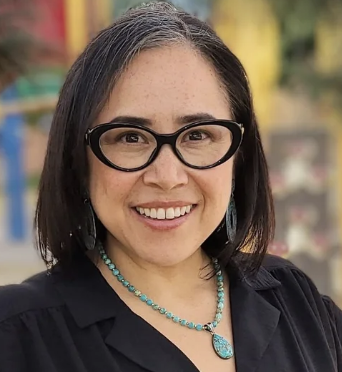

Three eventful years into his tenure on the Denver Public Schools Board of Education, board member John Youngquist discusses where the board’s focus should be as it emerges (we hope) from a period of tumult, in-fighting and dysfunction.
Transcript: Denver school board member John Youngquist discusses what the board should focus on now
Alan Gottlieb: [00:00:00] Hello, everybody, and welcome back to the Board Hawk Podcast. Today we have as a guest Mr. John Youngquist, who is a Denver School Board member and has been for three years. It’s been an adventurous and eventful first three years for John on the board.
And we thought we’d have him on because there’s so much going on, and there’s been so much dwelling on the board’s internal dissent and fighting on this podcast that we really want to do more looking forward, at what are some of the things that need to happen next. So that’s why we wanted John on, just to get his perspective on several different issues that are now percolating in the district and on the board.
Before we do that, though, there is one issue that we wanted to touch on, just getting back into what’s just happened with the censure of Monica Hunter. So we’ll deal with that first and then go into the looking forward part. John, thank you so much for coming on, and welcome to the podcast. [00:01:00]
John Youngquist: Thank you. It’s great to be here. I appreciate the invitation, Alan and Alexis.
Alan Gottlieb: Great. Well, let’s start with that one issue, which is that you were recently one of the votes not to censure Monica Hunter, who the board censured for a variety of reasons. The leading one was that she allegedly made antisemitic statements about Amy Kleinmolke, another board member.
But also, there was a whole raft of other accusations, basically brought by the board president, Xochitl Gaitan, about possible conflicts of interest, attempts to push staff to grant favors, et cetera, et cetera. And the censure covered all of those things. But I just wanted to get your perspective, as somebody who also is one of the three Denver Public Schools board members ever censured, I think (you were censured a year and a half or so ago), on why you voted no on that and what the implications of the censure are.
John Youngquist: Yeah. Time is an interesting thing, Alan, isn’t it? I’m leaning into three years on the board in November. It’s [00:02:00] been not even a year since that censure. But in the context that we’ve been in, things move quickly and things move slowly in some respects.
Thank you for asking me about this. It’s something that I put a lot of thought into. If you even look back a little bit further, right, this has been a summer… It was a summer of accusations, right? There were accusations that were made by the superintendent to President Gaitan, and very quickly into the media, early in June, that related to me, actually, again, also.
And at least three board members, and that rolled into what you’re talking about through the summer, resulting in Director DJ Torres resigning and then Director Monica Hunter being censured. As you represent, I had a very deep interest in how this was being processed and what was going on in regard to accusations that had been [00:03:00] made.
And deeply political and personal in lots of ways, beginning at the beginning of the tenure of the new board members, in terms of some of the story. And a really important concern because, as I mentioned during the board meeting, this is a matter of the most importance to me, to our community.
It speaks to the possibility that a director had used antisemitic language toward a colleague, which to me would be a heinous, offensive, possibly illegal act, incredibly serious. I was very interested in the investigation. I do believe that objectivity is key and important. I spent almost 20 years as a principal, and then more beyond that at the district level, engaging and supervising all kinds of levels of investigations, and always looking for as close as we can find to truth, as close as we can find to not just rationale, but a level [00:04:00] of evidence that represents something that happened.
And this report happened so quickly. It’s represented two or three times in the report by the investigator, “If I had more time, I would have asked these things or talked to these people.” But essentially the report in the end doesn’t come up with a determination, as often they don’t, but essentially asks board members the question, who do you believe, right?
So that means we end up looking around the table and saying, “Who do we believe?” In the context of the findings, it was represented that this is she said, she said, he said, which reinforces that idea that it’s about who we believe to be, in other words from the report, true and honest.
When the report didn’t represent any fact, then it goes down to personal recollections and people’s belief in who is being true and honest. And my belief is that a censure vote is [00:05:00] so important and significant that my judgment in regard to who is being true and honest carries too much weight, there not having been any real information for me to go with and understand.
So with that, I did vote no on the censure, understanding that the issues had been present, were present. We need to be able to move forward in an important way. People do need to heal and connect over time. I understand that with significant kinds of accusations and the censure and all that is involved in that, and the belief and understanding that that was not me, is not me, and I’ll carry forward and continue to lead for our children in our community.
That is the most important thing to me, as is represented by colleagues on the board, too. So while I did not vote for the censure, as we do as a board, I [00:06:00] support the decision that’s made by the board, and then we move forward.
Alexis Menocal Harrigan: Thanks, John.
Alan Gottlieb: Thanks.
Alexis Menocal Harrigan: I was in the audience for some of these board meetings when the discussion happened, and I remember you trying to push forward a motion that was actually passed, which, as I recall, essentially allowed for an investigation to move forward focused on the antisemitism, but not investigating Director Hunter on other items that are unrelated to the antisemitic remarks, and then preventing any future action against her for anything unrelated to the antisemitic remarks.
There was a little bit of confusion when that happened. There was a clarification from President Gaitan saying, “Well, isn’t that the same thing?” You didn’t respond in the affirmative. You restated the motion again and again, and then Aaron Thompson, your general counsel, clarified as well, and it seemed when he clarified, he understood what you were saying.
I can say, [00:07:00] for those of us in the audience, we were pretty clear on what you were saying, and that resulted in the vote passing, I think unanimously, accepting your motion. And then it became clear within a couple of minutes that there was, and I really appreciated the words Director Hunter used, buyer’s remorse, right?
And this was before the censure. This was the week or two before the censure. How do you respond to what happened there? And then eventually they ended up revoking that decision, I think, a board meeting later. Curious to get your take.
John Youngquist: Yeah, there was a moment of that that went back to my experience, right?
My experience was asking the question, “What am I being censured for?” And the response being kind of all of it, just stuff, right? So there was not a specific interest in regard to my censure, which may or may not be kind of a violation of state law in regard to reasons for censure. I was interested in getting this conversation as specific as [00:08:00] possible for this situation.
And the interest there was in the reality that we’re probably not gonna go through all of these other accusations, which we didn’t, right? And so I was wanting to be as aligned as possible with our policy, PG or GP thirteen, that relates to the disciplinary response and process when there’s a concern related to board behavior.
But I also understand that if what I was saying was unclear, then the board certainly should back up and say, “Well, wait a minute. What did we just do? And how do we move forward in a way that is representative of the will of the board?” And that’s what I walked away from that with.
The majority of the board didn’t understand what was happening, for whatever reason, and what they had voted for. It’s okay for a board to back up and reset and say, “Here’s what we intend to have happen,” and then move [00:09:00] forward with that.
Alexis Menocal Harrigan: Thanks, John. I appreciate that.
Alan Gottlieb: Thanks. Now we’re gonna move into other questions, but before we do, you said something at the beginning of your remarks, John, that I just wanna clarify a little bit. You said this actually all started in June with some other accusations the superintendent made, and that is important context. That was the letter he wrote to the board president, Xochitl Gaitan, essentially saying he felt like the board was violating its own policies, and therefore potentially his contract, by getting too much in the district’s business, and it did specifically mention you in some instances.
So that was sort of the precursor to what happened later, because that angered, I think, a lot of the board members, and there was a lot of discussion, I think, about what the implications of this were for the future employment of the superintendent, and it very much involved DJ Torres and Monica Hunter. And maybe not so coincidentally, the accusations against them then surfaced, or were brought forward by the board president, after that.
So that’s just setting some context for what you said, ’cause I thought that was important, and I [00:10:00] failed to mention that.
John Youngquist: Thank you.
Alan Gottlieb: So moving on, let’s talk about some stuff that needs to happen and is happening and where we go from here. We’ll get into some things about the replacement for DJ Torres and the structure of the board in a few minutes, but let’s talk about some other issues first.
One is the district has drafted, or presented, some early-ish drafts of a strategic roadmap that should help the district decide what direction it’s going in and frame its decisions in a broader context. Where in your mind does that process stand? Where does it need to go, and how far are we from where it needs to be?
John Youngquist: I think we’re a ways from where it needs to be, depending on the process that the board believes needs to occur. The timeline for the drafting was really, I think, effectively January to August, right? There was a date in August where the superintendent represented we would have a draft, like we [00:11:00] would have the plan.
And we got to August and that wasn’t present. There’s a very open draft that needed a lot of work, and I think still needs a lot of work. There’s still process going into it. There had been some meetings through the springtime that were informing specifically the superintendent and his team in regard to the development of the strategic plan, or the strategic roadmap.
My belief in regard to that plan is that it needs to be a plan that allows us to see who we wanna be and become for and with our city’s children over the course of the next three to five years. And this is something that I’ve represented to the board, and the superintendent and I have had that conversation.
Where are we headed in regard to goals and metrics, and really, what do we need our children to be able to do and represent and become over the course of the next three to five years as a city? What is our role as a school district in making that happen? And then what are the goals that get us there, and what are the actions, [00:12:00] significant but really different kinds of actions, that will take us there over time?
And those are things that I haven’t seen yet. I do think that’s an interest of the superintendent and the board. There has been a lot going on that has been distracting from that, to whatever degree, but that to me needs to be our biggest priority right now. Without a plan, where are we headed?
We’re driving without a dashboard to some degree right now. We’re driving without a plan and a larger map or GPS to some degree now, and that has to be solved for as quickly as possible. I believe the context of our city matters with that. I believe it does relate to enrollment, budget, small schools, large schools, teacher pay.
It’s incredible, just the initiatives that can be created for our children to help get us where we need to be as a city and a school district, and that hasn’t been represented yet. It needs to be soon. My hope is in the [00:13:00] next couple of months, we’re able to represent to the community what we mean by a plan for the school district over the course of time.
Alan Gottlieb: Great. Thank you.
Alexis Menocal Harrigan: Appreciate that. And as we think about the strategic roadmap as sort of setting the vision for the future of this district and how we achieve student success, we also are overlaying that with the superintendent’s evaluation. And I’m curious to hear how you see the two of those things overlapping and being distinctly different as well, and the timing of those.
So if you could speak a little bit to the evaluation and the goals he will be evaluated against going into his next review.
John Youngquist: Yeah. We’re in the midst of that process right now. The board has an executive session tomorrow that is focusing on the superintendent’s evaluation.
We may be heading into next week with an evaluation or document. It may be a little bit longer than that. I’m not certain. The strategic plan should be about our city, [00:14:00] right? The work of our board, the work of our district, and where we’re headed over the course of time together.
The strategic plan shouldn’t be about any individual board member or even any individual superintendent. It should be about where we believe we need to be over that course of time, that allows us to resonate with our city, for people to believe in us, and to understand that we know where we’re headed for our children, and that we’re going to get there.
That’s a bigger context than zooming into the annual evaluation of a superintendent, which is key and important for a superintendent to understand: What are their strengths, right? What are their weaknesses? How are they progressing over that course of time?
What are the metrics and the goals that are identified within that evaluation that lead toward success on a strategic plan, but aren’t acknowledging on their own whether we’re leading [00:15:00] toward success on that plan? We also need to be able to monitor our progress as a board and as a district toward success on that strategic plan, independent of the evaluation.
And we have had annual reports over the course of the last number of years, and that had been their intent. We as a board, and I’m working with colleagues on this, need to get back to that place of understanding what our plan is, how we’re monitoring toward that, how we are having the conversations about whether we are progressing or not.
What do we need to continue to do? What do we need to do differently, so that if we’re not progressing toward the metrics on a strategic plan, it’s not that we change those metrics, it’s that we change the actions that we’re engaging in to be able to achieve that over the course of time? So my belief is that they are distinctly different, but they’re very much aligned in the evaluation.
Like for a principal, for a teacher, anyone else, it needs to be based on: What do we expect the performance to be like? Are we seeing those [00:16:00] behaviors in that performance? And how are we representing to the superintendent that, yes, it is there, or no, it is not yet there? Here is a revised expectation as we’re progressing in the next year, and here are the supports that we’ll provide for you to be able to demonstrate those skills and abilities.
Alan Gottlieb: Thanks, John.
Another topic that I think is very current and interesting: there’d been a series of community meetings about potential boundary changes, but the superintendent announced last week that for now he was proposing not to move ahead with any boundary changes in the immediate future, because enrollment dipped by even more than projected.
I think it was about 1,800 students this year from last year, and it’s probably gonna require additional school closures. To me, that seems like a very logical decision to have made, because why would you change boundaries before you had to close schools, and then perhaps have to redraw boundaries again, which is always one of the more contentious [00:17:00] processes?
Closures and boundary changes are very politically challenging. So I just wanted to get your thoughts on that decision and what you think should happen next.
John Youngquist: Yeah, I think it’s a necessary decision. It might have been one that we could have been thinking about months and months ago, right? It’s not a surprise.
This is a super complex conversation, right? We’re entering into communities talking about boundaries, and at the same time we’re representing that over 40% of our parents choose schools outside of that boundary, right? We have zones that have come into play that add complexity and that we need to have deeper conversations about, and there are people that appreciate the zone conversation and there are people that don’t and still aren’t clear what they mean or what they would mean in my community.
Those three things interacting is complex enough, to take a look at boundaries, to take a look at zones, to take a look at the effect of choice. And then with any kind of projected changes, we need to understand what are the likely shifts that’ll occur [00:18:00] in regard to the choices that parents will make for their children over that course of time, right?
We can anticipate, I believe, and this is what I’ve seen and has been shared, that over the course of the next several years, we’re gonna start to lose high school numbers as well. Our numbers are gonna be more fully impacted. Enrollment is decreasing, and we also need to take an honest look at why enrollment is decreasing.
And we’ve seen some of that honesty from Chuck Carpenter with the district, right? He has represented, for example, that yes, we have birth rates that are coming down. But we also lose a lot of kids, and I think that’s something that we need to acknowledge and understand.
The last number that we saw that is representative, for example, is that each year in Southeast Denver we lose about 25% of our students between fifth and sixth grade, right? Significant loss there, and those are choices that parents are making to go elsewhere. We know that that’s a [00:19:00] reality in Southwest as well.
People talk about the context of district-run schools, innovation status schools, and charter schools. We’re not away from that as a conversation, but I believe that that is not the heart of the conversation anymore. The heart of the conversation is bigger, in regard to what is actually happening with enrollment over time.
So I think it was the right decision to hold. I think it was a necessary decision. To pull the hiatus is something that I think we kind of knew when the hiatus was created. That’s the hiatus that said we won’t close schools for four years, right? That didn’t seem possible. We went with that as a board, and now the superintendent is representing that it’s likely, yes, that we’re gonna need to close schools over the course of the next year or two.
All of that needs to be reflected on right now, and we need to create a plan that says, how does this go over the course of the next year and two? It’s a part of our strategic planning process, right? ‘Cause resources drive our effort and our interest. The [00:20:00] dollars that are drawn in through enrollment fund what we are capable of doing over the course of time.
That adds to the complexity and the importance of our strategic planning process. So we need to get to a point where we’re more comfortable with the whole complexity of these interests and these issues, and talking about them together, not trying to solve them as independent interests over the course of time.
It’s a collective interest for our kids, and we’ve gotta be able to solve effectively over the course of the next year together.
Alexis Menocal Harrigan: Thanks, John. I’d like to respond to just a couple of those complexities for a second. You mentioned the pause, also known as the moratorium on school closures, and my view on that is that it was a political resolution more than anything else.
I think any good board member who understands their fiduciary responsibility to make sure that the district is in a financially healthy place will have to make some really difficult decisions about consolidation or [00:21:00] closure of schools. It’s simply an economies of scale problem in some cases.
So I took a really critical view when the board did vote to have this moratorium. And I realize this was a different iteration of the current board, and I don’t know that it would have passed if it were this board today. I think it was a little bit of this view, particularly led by former board member Scott Esserman at the time, who wanted to be able to say, “Oh, well, we’re promising never to, or not to, close schools,” but then there were all of these exceptions. It was just a messaging vote.
And I don’t think we have time to waste on messaging votes. I kind of call BS on that. So that’s the first piece. And then the second piece, and you sort of alluded to this as you were responding to the question, John, is why wasn’t this decision to postpone made at the beginning?
It seems like a lot of time was wasted. I give so much credit to the DPS staff [00:22:00] that stayed late at night and dealt with, frankly, abusive parents who were verbally accosting them, and I saw some really problematic behavior by some parents directed to board members and to staff.
And that was a lot of time and resources spent on these community meetings. And a lot of us who have worked in, or worked in partnership with, the district knew from the beginning that it’s irresponsible to change boundaries before you know what schools you’re going to close. And so I’m just sitting here appreciative that the superintendent did this, but really frustrated that he’s doing it now, after wasting a lot of time, when most of us knew this, including, I would say, probably DPS staff, at the beginning of the process.
So if you want to respond, you’re welcome to, but…
John Youngquist: Yeah…
Alexis Menocal Harrigan: It’s just something I’m really frustrated by as a parent, as a [00:23:00] taxpayer, as somebody who went to the community meetings and saw people come really emotionally charged to those.
John Youngquist: Yeah. They did.
The last one that I attended was at Manual, and the Manual staff was there and very present in representing, how are you solving here for me? And that’s a part of what we saw. There are very local community interests that people really, really wanna have solved because they’ve been frustrations over the course of time.
Hallett Elementary School is another one, the school without a boundary. Slavens was uprising a little bit, just in regard to, what does this mean to us? What are you saying to us through this conversation of boundaries? And for me it’s two-part. I think that the staff response, which I can appreciate, is, “Board, y’all told us to,” right?
EL 19 says we need to do this process, and so that’s why I’m absolutely more than fine with a conversation that the board is having about drawing together ELs 18, 19, and 20. I’m good with fewer [00:24:00] policies. That is one. That is drawing a problem together instead of trying to solve them each independently, which is something we do too often.
Alexis Menocal Harrigan: Sorry to interrupt. Do you mind?
John Youngquist: Yeah.
Alexis Menocal Harrigan: Sorry. Can you explain, just for those who are maybe not familiar, what are board policies EL 18, 19, and 20?
John Youngquist: You bet. So EL 18 relates to closure and consolidation, and included the hiatus that we were talking about. So that is the conversation that gives the timeline and the process, where the board is saying, “Superintendent, engage this process when we’re needing to consider closure and consolidation of schools.”
EL 19 relates to enrollment boundaries and zones, and that is, through policy, a separate conversation. And EL 19 relates to the meetings that the district was having in the communities over the course of the last number of months. And EL 20 relates to facility usage, and what the priorities are with buildings if there is a closure and consolidation in particular, [00:25:00] that will allow us to understand what to do with these spaces, prioritizing, as it does, educational use, right?
School use of some sort. We kinda saw that with the Denver… I’m gonna get the name wrong… the Denver French School coming into the Harrington building for this school year. And so those coming together under one policy makes sense to me. And for me, that is a step forward in the way that our board is thinking and working together, that says we shouldn’t be solving everything independently, right?
It is complex, and we need to take these issues on because they do affect each other, understanding the complexity and making sense of that moving forward as we’re supporting the district as a board.
Alexis Menocal Harrigan: I appreciate that, and I think it goes to the thing I hope the board is moving toward, which is just good governance.
John Youngquist: Yeah.
Alexis Menocal Harrigan: Not the messaging, not the politics, but good governance, and what’s going to set the district up, and the people within the district up, for [00:26:00] success. The last thing I’ll say on this before we move on is I wanna put in perspective what 1,800 students looks like. It’s sort of a hard number to fully understand.
But if we think about some of the largest high schools in the district, I think only East has enrollment higher than 1,800 students. North, if I’m looking at this data correctly, is at 1,600. George at about 1,250. DSST Green Valley Ranch, 1,300 students.
So very few high schools, if any other than East, have enrollment above 1,800 students. Now, we know that a lot of the declining enrollment is happening at the younger grades, and we’ll start to see that move up into the higher grades over time. But if we think about, let’s say, the average elementary school, on a generous size, being 400, then we’re talking about four and a half elementary schools there.
So to put it in perspective, this is not just one school. We’re talking about multiple [00:27:00] schools’ worth of students that have left the district…
Alan Gottlieb: Right.
Alexis Menocal Harrigan: …or were never born.
John Youngquist: Yeah, absolutely. It is a significant number, and to know that we’re at almost double what was projected in regard to a reduction in enrollment.
And my rough numbers, as I’m just listening to you, speak to somewhere between an additional $14 to $16 million, I think, that the district needs to solve for. And all of that sort of rolls together. My belief is that as a result of the hiatus that was put in place, we’re maybe a year or two behind in our thinking and planning around where this should go as a district.
I know that the district plans forward in important ways. I trust our staff that are in that space, as you represented. They work hard. They know the numbers. They’re looking into the future. We now need to plan along with that, because I believe we have some catch-up to do in that space as well.
Right now I am visiting [00:28:00] all the smaller schools in the district. I did last spring as well, and I’m getting back to them, listening to principals and checking into classrooms. And our reality is that we have a significant number of schools under 200. I was the principal of a school of 220 students at one point in time, and so I know the benefits of that.
I know the challenges of that. And we have classrooms, right, that have 13, 14 students in them, and that is something we’re not able to sustain over time. And so, as you’re representing, there’s a lot of work to do, urgent work for us to do as we’re planning into the next year.
Alexis Menocal Harrigan: And I think that’s also what’s hard for people to wrap their heads around. It’s like, “Oh, great. Small class sizes. That’s fantastic. My kid is getting strong attention paid to them by their teacher.” But it’s hard then to explain that a class of 12 or 13 students means that you’re having to subsidize quite a bit to keep that school open.
John Youngquist: Yeah.
Alexis Menocal Harrigan: And that subsidy means that those are resources that aren’t being spent, [00:29:00] maybe more equitably, across the district to support students with special needs or students with disabilities or other services, and to create a more robust school. So as I see people, and especially parents, upset, I hear, “Well, small class sizes are good,” and I also hear, “Oh, well, the district just has an inflated administrative staff, and there’s administrative bloat.”
That’s my last question, I promise, Alan.
John Youngquist: Yeah.
Alexis Menocal Harrigan: What do you respond when people are like, “Oh, well, just solve it by getting rid of the administrative bloat”?
John Youngquist: Excuse me. The reality is that I’m not sold that there’s a tremendous amount of administrative bloat right now.
I think the last few years there have been reductions in staffing at the central office, and I think that that’s been of value. It’s required us, and the superintendent has led this, to say, “How do we do work better with fewer resources at the central office?” And I think that’s key.
If the conversation is how do we serve our schools more effectively and efficiently, that is [00:30:00] key. The reality at school sites also, and I had a principal represent this the other day: smaller class sizes, yes, 12 and 13, can be difficult to manage in a very, very different way in regard to who we have and who we are in our classroom, and how I’m supporting them as a teacher.
And then that other conversation that the superintendent has represented over the last few years: What are the other resources that we’re able to provide? Are we able to support students with the mental health services that they need? Are we able to provide the specials and elective kinds of opportunities that students need, in the arts, in a different way?
And that has become challenging in a growing number of schools across the district.
Alan Gottlieb: Thanks. Everything you’re talking about that needs to happen, from these conversations about the strategic roadmap, and the superintendent’s evaluation, and the combining of the ELs into something more consolidated, is predicated on the hope, belief, et [00:31:00] cetera, that the board dynamics can improve, and that you all can actually work together moving forward.
DJ Torres has resigned. There’s just been a lot of tumult. What are you seeing in terms of efforts for people to start to pull together and work together professionally, without so many interpersonal dynamics interfering?
John Youngquist: Yeah. I’ve been in school leadership for… I’ve known you almost as long, 30 years, Alan, and never in a school or in a district committee or a team have I seen personal politics that are disruptive, that are angry, that become mean, right, in some way. And that is something that we have to commit to changing as a board.
And from my perspective, it’s not that people have never been mean in a school over the course of 30 years, right? It’s just that we’re responsive to that in a way that says that can’t be who we are, and we need to evolve past this for our children, and we need to be able [00:32:00] to work together effectively and professionally through that frame.
The reality is that is how Monica has shown up. I certainly have not changed the way I’m showing up around the table, right? I’m gonna be real. We’re gonna provide the kind of feedback that’s important. Gonna do that through a professional tone and in a professional manner, so that we’re able to have challenging conversations that move us forward, and I believe we can get to that space.
I think the opportunity to bring in an additional board member allows us to engage differently. It provides the opportunity for us to create that shift. It’s an impetus for us to move differently and forward. I’ll continue to be the model of professionalism that I believe that I am at the board table.
And I believe that others are there as well, and are determined for the community to see us through a different frame, so that even if there are concerns, personal issues, whatever they may be, those are not about the work of our school district and our school board. We have to frame [00:33:00] that work in a way that leans positively into the need that we have for a plan, the need that we have to ensure that we’re supporting a strategic plan, a strategic roadmap that leads us into the future effectively; to make certain that, through our accountability measures, our district has operational plans that are gonna support us being able to get there over the course of time; to continue to provide feedback that is both positive and strengthening, and sometimes difficult, because we need to change in lots of ways. But we have to be determined that that is not hurtful.
That is growing. That is what organizations do. We have to be responsive to internal and external feedback to become who we need to be for our children in the future.
Alan Gottlieb: There’s been quite a movement in the community in the last week or two, that you’ve seen on social media and elsewhere (and Alexis wrote a piece about this for Board Hawk), saying that the board leadership needs to change for any of this to be able to happen, that in particular, the board president needs to be a different person than the current [00:34:00] board president, Xochitl Gaitan.
Not that she should leave the board, but that she should no longer be president. Do you think that at least considering a change in board leadership and board officers is an important step toward making that kind of healing and productive working relationship happen?
John Youngquist: Yeah, I think because we’re hearing that so clearly from the community, and anything we hear clearly from the community we need to have a conversation about and understand together, right?
Whoever is the board chair as we’re heading into the future, if that’s a change sooner or later, right, they have to lead us in a manner that allows us to come together, to understand together, to be devoted together, to engage with a level of purpose and predictability, in a way that ensures that our community understands why we’re doing what we’re doing and can see the road ahead.
When we have that kind of leadership, and maybe that’s current, maybe that’s a change in board leadership, that is the leadership that we need to take us in the direction that [00:35:00] we’re talking about right now, with a plan for our future.
Alexis Menocal Harrigan: I really like the framing of purpose and predictability.
Talking to folks who attend board meetings or watch board meetings regularly, trying to get updates on the agenda and seeing agendas change or board meetings moved, it’s hard to plan as community members who want to engage with the district, want to engage in what’s happening with board policy and governance, when we don’t have a sense of what the calendar will look like and what is on the calendar a month or two out.
And I remember the days when it was really clear: okay, in December we’re gonna work on this, in January we’re gonna work on this, in February we’re gonna work on this, and you sort of knew from the community perspective what was happening.
And maybe that does exist behind the scenes with staff, and maybe somebody can scour that information and find it, but for community members to go onto the DPS website and try to navigate the board’s Diligent [00:36:00] platform, it’s not easy to understand what the board is working on and what to expect in the future.
So I really like that purpose and predictability framing.
John Youngquist: I appreciate that. It’s a current conversation. Excuse me, Marlene has been effectively leading the EL 8 conversation, I think it is, in regard to agenda planning. And I believe that every board member would value, and we’ve kind of made this comment, and people seem to value the idea of slowing it down to speed it up, right?
So if we can allow two weeks or a month to say, “Here’s what the board meeting is gonna be about. That’s what we’re committing to. Plan toward that with us, community. Talk to us about these interests and the issues.” And we may have incidental issues that come up, but you know what? That should happen pretty infrequently, where we have an urgent issue that needs to go quickly on the agenda.
But let’s slow it down so that we’re moving more quickly, methodically and predictably, for and with our community.
Alexis Menocal Harrigan: Yep, I like that.
John Youngquist: And I think there’s a lot of support for [00:37:00] that across the board with this newer vision of EL 8.
Alexis Menocal Harrigan: I agree. We have sort of touched on this a little bit, but I wanna start digging into the vacancy now.
As we’ve mentioned, Director DJ Torres from District 3, which is central and east Denver, has resigned. So the board is currently undergoing a vacancy process. For those who have been following along, and for those who maybe have not, just as a reminder, applications are due for people who live in the district this coming Friday.
And to qualify, you have to be a registered voter in the district for at least 12 months, is my understanding.
Alan Gottlieb: October 23rd, just to put a date on it, since who knows when people will be listening.
Alexis Menocal Harrigan: Oh, yep, October 23rd. Thank you so much. Friday, October 23rd. And then November 4th there’ll be a community meeting at the Mosaic Campus, the former Johnson & Wales campus.
And then the following week there’ll be sort of an update on what happens, and then the week after that, on the 19th, it’ll be narrowed down to three [00:38:00] candidates to then be voted on, and I think sworn into office either that day or the next day. Is it the same day?
John Youngquist: I believe it’s the… Oh, it must be the next day, sorry.
Alexis Menocal Harrigan: Yeah, I can’t remember. But either way, before Thanksgiving, we will likely have a new board member. So with that in mind, just refreshing people: what is it that you’re looking for as you start reviewing applications as they’re coming in, as you go to the community meetings, as you think about the final three and interviewing them?
You talked about the strategic roadmap, you talked about the superintendent, you talked about purpose and predictability, how to work together. What are some of the characteristics or profiles you’re looking for in applicants?
John Youngquist: Yeah, I think first is that they’re prioritizing and understanding that every child in District 3 and across this district needs to be in a seat in a school in a district that both expects and supports them to be incredibly successful academically and in life, right?
So that vision for children is [00:39:00] absolutely number one. And then to come in and to focus on organizational effectiveness, and it’s a part of all the things that you were just talking about. How is it that we become a successful and efficient organization that has a board working together, supporting a superintendent that has a vision and is leading a team to accomplish that vision within our community?
Someone that’s also acknowledging the really hard corners that we have, right? I hold almost a little fear around where we’re headed financially, right? And that is something that I want people to be able to share and say, let’s turn that into urgency to understand exactly where we are right now and what we’re really looking at over the course of the next several years.
And then what is our worst case? What is our best case? What is something in the middle? And how will we be moving toward all of those? I’m hopeful for a new colleague on the board that has that sort of vision and interest, that we can share with each other as a board, [00:40:00] and that they’re strengthening that focus and that interest.
Alan Gottlieb: We had Rob Gould and Vernon Jones on the last podcast, and Rob Gould, who’s the president of the Denver Classroom Teachers Association, said something along the lines of, board members come in and they’re just kind of regular folks a lot of the time, and they don’t really have a lot of training, and they’re just expected to take all this stuff on.
Given that kind of context, and it’s also a little strange that this person’s only gonna be on the board guaranteed for one year and then have to run for re-election, would you like to see somebody (and you kind of alluded to this just now, I think) who has some specific skills or experiences beyond just being a well-meaning, well-intentioned parent or advocate for children in this opening, in this vacancy?
John Youngquist: I think with this opening and vacancy, somebody that does understand the organizational context and how we strengthen that together, yes. However, I’m not gonna say no to a parent who is so motivated and so [00:41:00] interested and so engaged that they’re gonna come in and learn together with board members how it is that we need to move forward.
That has to happen. What we have to do is figure out as a board how we accelerate that so much that people are connecting with us no matter their background and experience, because we know the time goes just that quickly, right? We’re gonna step into January, February. As you represent, people are gonna be thinking about four new board members a year from this November, right?
And what we have to do is say, “Okay, there’s gonna be a lot of distractions, but we have some board members now that need to be together.” And while we’ve had a bit of a year of tumult in some ways, right, we’ve gotta get our stuff together to say what our priorities are over the next several months.
How quickly do we need to begin to support a superintendent in moving forward and getting this work done, so that we don’t effectively waste another semester? We need to be on it together quickly to be able to move the ball [00:42:00] forward. And I do believe that it’s a board that’s ready for that.
Alexis Menocal Harrigan: And I will just add, Alan, to push back on what I think you were maybe alluding to: highly effective PTO presidents deal with some shit. Especially in more affluent and wealthy communities, which we have in the eastern part of Denver. And so if you’re a PTO president that can navigate PTO parent politics and teacher politics, I think there’s something to be said about that.
And I do wanna acknowledge something that Vernon Jones said on his podcast, Justice Cast, the other day. He said, “If somebody’s coming in not having paid attention to what’s going on on this board, it would be really difficult to step into this not having some level of understanding of the dynamics they’re walking into or the big decisions that need to be made.”
And so I would be surprised if somebody applies who hasn’t been [00:43:00] somewhat aware of what has been going on over the last six months to a year, ’cause why the heck would you wanna do it otherwise?
Alan Gottlieb: Right. Yeah. No, and I wasn’t trying to suggest that we need to…
Alexis Menocal Harrigan: For the glory.
Alan Gottlieb: Right. Oh, yeah.
John Youngquist: For the glory of it all. Yeah. Well, just one other thought, one other priority, is someone that will just pick up the phone and call anybody and have any conversation. We do need a little ice broken around that on the board, right?
Alan Gottlieb: Yeah, no kidding.
John Youngquist: We just need to talk. We just need to listen to each other…
Alan Gottlieb: Agreed.
John Youngquist: …about anything. What you love, what you don’t, what you need…
Alexis Menocal Harrigan: Yep.
John Youngquist: …what you’re frustrated by. Make the call, have the conversation. Don’t have anything behind that conversation. Push it all up front, and let’s hear the hard stuff so we can solve together.
Alexis Menocal Harrigan: I love that.
Alan Gottlieb: My last question, John, and Alexis, you may have more, but my last question is this. To me, the worst-case scenario would be that the board deadlocks 3-3 and can’t choose a candidate to be the new director, in which case the board president, Xochitl Gaitan, gets to pick, which [00:44:00] may be what she would like, because who wouldn’t like to have that power?
But how do you avoid that? How do you work as a board to prevent that outcome and to actually be able to come to, if not unanimous, near-unanimous consensus on who the next person should be?
John Youngquist: Yeah, my hope is that the board is able to come to an understanding that we need someone that is able to have the conversations across the board and engage in conversation authentically.
And there may be people who have been closely listening and processing with board members over the course of time, just connected and have some relationship already, that have a level of trust, that are stepping into it. That’s not necessary in this process. But I think as a board, we should be looking for the people that, again, are able to have those conversations, are able to come in and say, “What do you think? What do you think?” right? It’s not what we are thinking independently. How can we begin to think together? And a board member that is able to draw that in with us is gonna help us be most successful over the course of the months.
Alan Gottlieb: Well, as a follow-up [00:45:00] to that, and I don’t know how you avoid this, but I’m sure that there will be, if not overt, behind-the-scenes pressure from the DCTA, and maybe from advocacy groups that tend to line up on the other side: “Oh, you gotta pick this person because they will align with our values.” And the DCTA is gonna be pushing hard for the people they’ve supported to support whomever it is they want.
How do you try to move past that kind of pressure from all sides and just pick the best person?
John Youngquist: Here’s the thing. I don’t feel that pressure at all, and those organizations right now are not… I don’t see them and feel them. I’m not hearing them put that pressure on. And I’m having the conversations, but they’re not putting the pressure on.
The pressure that they’re putting on is saying, “We need an effective organization,” right? So you can go over and talk about all these other political interests and issues. Right now, that is not our priority. Right now, our priority is getting this district together and moving it forward.
Alan Gottlieb: Okay. Well…
Alexis Menocal Harrigan: Thanks, John.
Alan Gottlieb: I don’t think that pressure will remain absent, somehow, [00:46:00] at least behind the scenes. I just can’t imagine it. It’s hard for me, for instance, to imagine the DCTA supporting somebody who might put their name forward who had run before and was supported by Denver Families, who isn’t in the business of endorsing anymore.
It’s just hard for me to see that politics staying totally absent from this, and that pressure campaign. But I hope you’re right, and that people just look for the best person and put those silly divisions that have really caused problems over the years behind us. I don’t have any other questions.
Any final thoughts, Alexis or John?
Alexis Menocal Harrigan: No, I just really appreciate you coming on, John. It’s always a pleasure to chat with you. And thanks for your service on the board and your transparency about what’s going on and what your priorities are.
John Youngquist: Absolutely. Thanks for continuing to engage the conversation and inviting people in for the talks. I value that opportunity. I know everybody else does, too. So thanks. Have a great day, y’all.
Alan Gottlieb: You too, and we’ll be back soon with another episode, everybody. So long.