The phrase “education is a privilege” was something I never truly understood until I became a student at the University of Denver. The higher I go into education, the more I recognize how fortunate I am and how unfair our education system is.
I’m a first-generation college student and I’m the daughter of immigrant parents. I was fortunate enough to have guidance through my high school counselors at DSST Green Valley Ranch High School and programs like Volunteers in Partnerships at DU, but I still had to navigate many things on my own.
To support others like me who might otherwise be marginalized by systemic injustices in our education system that prevent them from their full potential, I’ve developed an interest in psychology and education.
My passion for advocating for student education started with my experiences as a second-language learner. Spanish was my first language and the only language spoken in my household. I struggled with communication due to the language barrier and as a result, often got labeled as a “delayed” student.
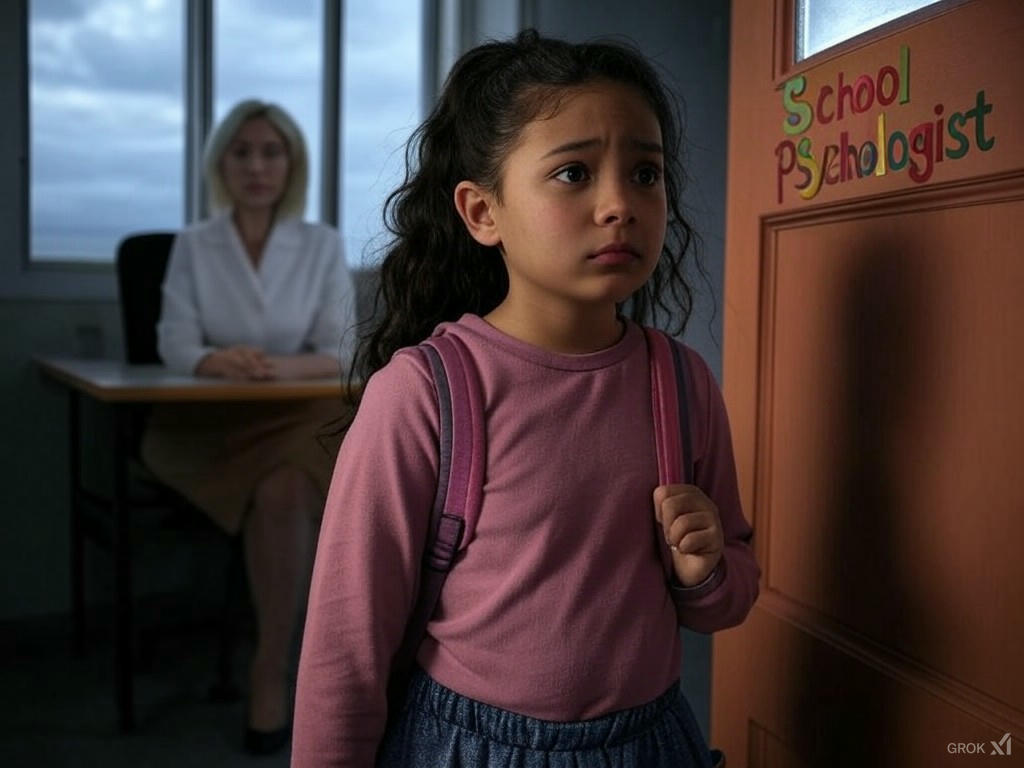
In elementary school, I was always behind in my reading levels. I also struggled to follow directions and looked “lost” in my classes. At the surface level, many would label these behaviors as having a learning disability.
Early on I was put into many of these labels because my teachers didn’t have the cultural competence to work with multilingual students.
According to the National Association of School Psychologists (NASP), in 2015, multilingual students represented 15.3 percent of students identified with specific learning disabilities (SLD) and speech-language impairment. Multilingual students were also underrepresented in gifted education.
My fourth-grade ESL teacher was the first person who made me feel seen in my language journey. She didn’t see my Spanish or my accent as a weakness. As a Spanish speaker herself, she understood my struggles with learning as a multilingual student. I distinctly remember her advocating for me in parent-teacher conferences by recognizing my strengths after my other teachers had stated my flaws.
Our education system needs more of these people. Culturally competent staff that value and understand a student’s experience is important. One way to do this is by having inclusive and diverse staff.
More specifically, in the school psychology field, the majority of school psychologists are White, female, able-bodied, and monolingual (NASP). Yet the students they serve in public schools are diverse.
Having more diverse school psychologists is one key to building more cultural competence within schools. So why isn’t the field more diverse?
There are many reasons why. One is that psychology isn’t a traditional career route for many. Growing up in a Hispanic household, I noticed that mental health was never talked about. Many mental health illnesses or disorders were seen as an “American thing” or something that was made up. The stigma that comes from receiving mental health services drives students away from pursuing the field.
In addition to stigma, there is a common misconception that psychology doesn’t work. As discussed earlier, the field is predominantly monolingual and white. A 2011 study by Kim et al. found that Latino and Asian immigrants with limited English proficiency were less likely to seek mental health services. These linguistic barriers affect the quality of service that can be given to a client and as a result, mental health services become ineffective to them.
Another is the lack of support for marginalized students pursuing a degree. In an article published by the National Association of School Psychologists Communique, it was found that racial/ethnic minority graduate students are more likely to experience microaggressions from peers, faculty, and in-field supervisors. Many colleges and universities claim that they are promoting “cultural inclusion” in their campus yet it is seen that their campuses continue to be predominantly white.
As a result, the students of color are often used as “tokens” to justify inclusion at the expense of their having imposter syndrome and experiencing microaggressions.
If we want to help students reach their full academic potential, we need to start by providing them with culturally competent staff in schools that respect, understand, and value their unique identities.