
Editor’s note: This article was written by Boardhawk monthly columnist Dr. Aaron Massey
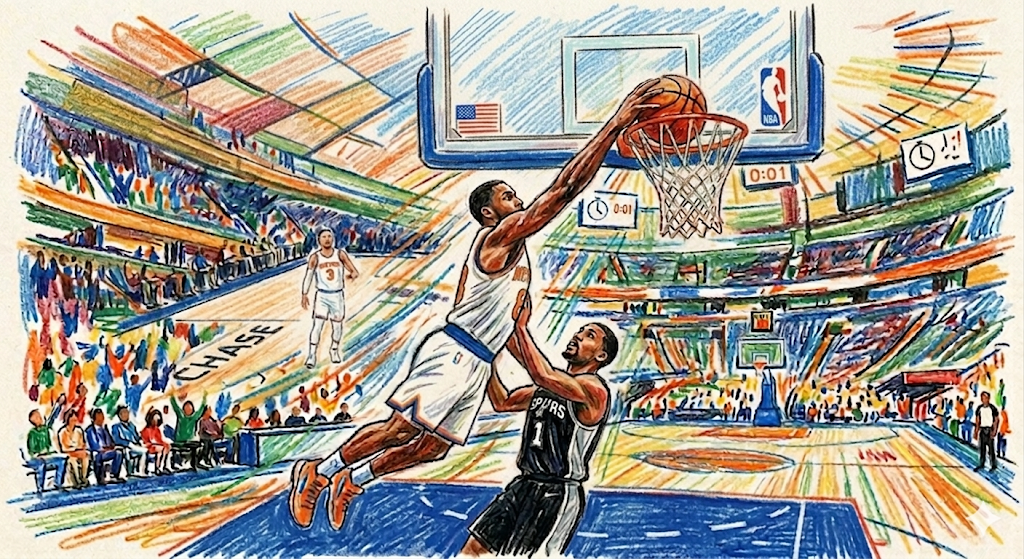
After a 53-year drought, the New York Knicks completed a gentlemen’s sweep to become NBA Champions once again. Compared to other NBA champions of the past, their winning formula highlighted a unique connectedness, scrappiness, and resilience.
Basketball has always been a critical part of my identity.
One of my earliest memories in life is watching the second Chicago Bulls vs. Utah Jazz series with my dad in 1998. Seeing a man seemingly fly in the air inspired me to go outside and try it myself.
I think every Black boy, at one point in time in life, dreamt of going to the NBA. What makes where I grew up so unique is that almost every Black boy in the entire city could hoop. We all took it seriously because we navigated with a felt, omnipresent belief that you either played basketball or you joined a gang.
Whether those were actually our only options, I don’t know. But that choice felt real.
As such, I woke up early in the morning doing dribbling drills, running plays with my best friend, and interrogating why teams win and lose.
It wasn’t simply about watching Kobe fadeaways and getting hyped after Shaq dunked. We were thinking about the roles each teammate played, matchups, and team chemistry.
Back then, I could cook anyone (including you) and score a ton of points but that didn’t necessarily lead to a win. I had to know how to activate my team, how high to set a screen, who to put in a pick and roll, when to run a play all the way through, etc. Team success was contingent upon team chemistry, team skillsets and mindsets, and team structure.
What I’ve come to learn is that effective school teams are not much different than effective basketball teams. That the decisions made in film sessions, player meetings, and the front office are similar in importance to school board meetings, professional developments, and the central office. And that if winning is our goal (i.e. getting results alongside students), you have to have a feel for the game AND understand analytics.
Let’s start with the players. Like teachers, the players are the bread and butter of the team. Though they don’t make all the decisions for the team, without players, there would be no league.
Each player comes in with a number of different attributes. Some can score a ton of points but struggle on defense like James Harden. Others are defensive specialists that miss wide open lay ups like Rudy Gobert.
How those attributes mesh and become something bigger than the sum of its parts (think Blue Ribbon Schools) often depend on more than the attributes of each individual player. Every team needs a player-leader like Jalen Brunson. Yes, he averaged over 30 points in the Finals. But more importantly, he knows what corner Karl Anthony-Towns likes to shoot in, who to double on defense with Josh Hart, and how to slow down the game when Mitchell Robinson subs in.
That’s why teacher-leaders are so critical to the team’s success. Because the principal can’t be the only leader in the building.
Like school leaders, the coach’s philosophy and schema shape how those attributes fit together. Things like player development, offensive and defensive sets, and team character are shaped by the vision and strategy of the coach. Whether a coach is defensively-minded like Mike Brown or offensively-minded like Mike D’antoni matters. It impacts what the strategy is and how players execute it.
School leaders play a similar role. What data they chose to use, how they communicate objectives and key results, and who they chose to put on their team impacts results. How bold is their vision? When is the right time to part ways with an assistant principal? Parent engagement strategies. All impact winning.
School leaders also carry the responsibility of balancing team success with central office mandates in the same way coaches are held accountable for the results of their team given front office decisions. The relationship between the coach and the front office sets the floor and ceiling for the success of the team.
That’s why Nico Harrison, former General Manager and President of Basketball Operations with the Dallas Mavericks, was fired. He traded away a perennial All-Star in Luka Doncic for an injury prone Anthony Davis. The Mavs went from being in the NBA Finals in the 2024-2025 season to a record of 39 wins and 43 losses in the very next season. As fans lost confidence in the organization, their demands to “FIRE NICO” were met.
See, it’s not just about good teaching and good leadership. Parent trust and central office decisions greatly impact how schools navigate.
When players/teachers, coaches/school leaders, business leaders and political actors/business leaders and political actors, front office staff/central staff, and fans/parents are aligned, something magical happens: sustained success.
Michael Jordan’s Chicago Bulls, Lebron and D. Wade’s Miami Heat, Steph Curry’s Golden State Warriors. The reason we respect those teams so much is because their success didn’t just mean success for their team or city. It improved basketball globally and inspired children all over the world to shoot a basketball.
This summer, education is planning for its season. District leaders are training principals. Principals are finalizing their professional development calendars. Teachers are resting up for the upcoming season.
Ball is life because the winning formula in basketball has the same components as the winning formula of schooling.
Congratulations and thank you to the New York Knicks. You gave us another winning formula in education.