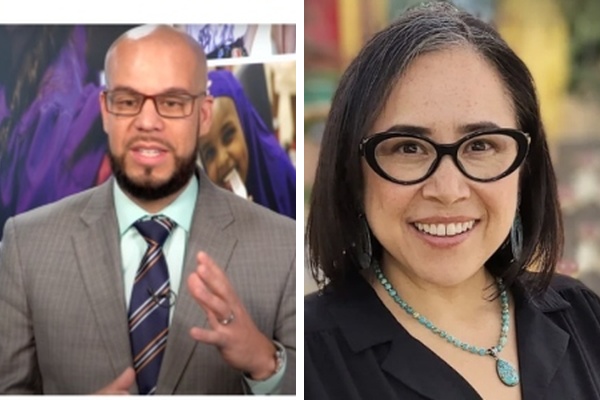

News broke midday Thursday that DJ Torres, who has served on the Denver Public Schools Board of Education, had resigned, effective immediately.
His resignation came just a few hours before the board was to meet to consider censuring him and fellow board member Monica Hunter. But in a statement, Torres said it was board dysfunction, not the accusations, that led him to walk away.
According to The Denver Post, Torres said in a statement that:
“I did not run for office to spend countless hours navigating interpersonal conflict. I did not run to participate in cycles of accusation and response. I did not run to watch personalities, procedures, power, and politics consume time that should belong to students. I did not run believing adult problems should become the defining work of a board responsible for nearly 90,000 children.”
So what happens now? And how will this affect the problematic board dynamics? We invited to the podcast to discuss this Parker Baxter, Scholar in Residence and Director of the Center for Education Policy Analysis at the School of Pubic Affairs at the University of Colorado Denver. Baxter is also a lawyer, and spent 20 years working on education policy, including a stint in the central office of Denver Public Schools during the Tom Boasberg era.
Podcast season 2 episode 25: DJ Torres resigns from DPS board
Alan Gottlieb: Hi, everybody. This is Alan Gottlieb on Alexis’ Facebook Live.
Alan Gottlieb: We are doing a weird hybrid Zoom/Facebook Live podcast episode because there’s breaking news this afternoon. As some of you who are as addicted to DPS as we are probably already know, board member DJ Torres resigned suddenly today, just a couple of hours before a possibly pivotal, important board meeting that was going to, among other things, focus on possibly censuring him and his fellow board member, Monica Hunter, for a variety of alleged offenses against district or board policies.
Alan Gottlieb: So DJ, I don’t have the story open in front of me, because we’re doing this live and we’re not prepared, but DJ did put out a statement, which we can call up here, give me a second, in which he explained his reasons. But basically, it [00:01:00] was that he didn’t sign up to be a board member to get involved in a bunch of interpersonal conflicts and not get the work of the district done.
Alan Gottlieb: So that was his reason. Here, I found the story. So I am going to read his…
Alexis Menocal Harrigan: Yep. I think you can just read the full article if you want.
Alan Gottlieb: Well, we sort of… Okay. Yeah. Sorry, Denver Post. The Denver Public Schools…
Alexis Menocal Harrigan: Please subscribe.
Alan Gottlieb: …Board of Education is scheduled to meet Thursday afternoon. This is by Jessica Seaman, who covers DPS for the Post. “The Denver Public Schools Board of Education is scheduled to meet Tuesday afternoon to discuss and potentially take action on allegations Board President Xochitl Gaitán has levied against Torres and fellow director Monica Hunter.
Alan Gottlieb: “Gaitán has accused Torres and Hunter both of not fulfilling their duties as elected board members, saying that Torres specifically has repeatedly missed board meetings. The board president has made numerous allegations against Hunter, including that she made anti-Semitic comments about a colleague.”
Alan Gottlieb: And here’s DJ’s words: “I did not run for office to spend countless hours navigating interpersonal [00:02:00] conflict,” Torres wrote in a statement. “I did not run to participate in cycles of accusation and response. I did not run to watch personalities, procedures, power, and politics,” nice alliteration, DJ, “consume time that should belong to students. I did not run believing adult problems should become the defining work of a board responsible for nearly 90,000 children.”
Alan Gottlieb: So we suddenly have an opening in the central Denver board seat in District 4. We have six board members who could split in unpredictable ways on different kinds of votes.
Alan Gottlieb: And Alexis, you said you had just looked into the process for appointing a new member to the seat. So if you can go into that. And one question I have right off the bat is, can you do an interim appointment and then have a special election, or do you appoint somebody to fulfill the remainder of DJ’s term, really three years of his term?
Alexis Menocal Harrigan: You fulfill the remainder of the three years. And Alan, while I go into this, if you… [00:03:00] Oh, I have to go send this email in just a second to our guest that we’re hoping to hop on. Give me just one moment here. Okay. I’m just gonna shoot this over. Actually, Alan, you have the email link. Do you mind forwarding it while I read this out to folks?
Alan Gottlieb: Yeah, I can text it to them.
Alexis Menocal Harrigan: Okay. That might be faster. Perfect. Great. And hopefully we can find a way to add people. So we’re new to this, everyone. Thank you for your patience as we figure out Facebook Live.
Alexis Menocal Harrigan: So per Colorado statute, if there is a vacancy, a candidate… let’s see. I’m just looking. Okay, I’m looking at the Colorado Revised Statutes right now. Wait one second. Vacancy. “Vacancy shall be deemed…” Okay, I’m not having luck looking at it this way, but basically here’s how it goes. If somebody resigns from their position, or something happens to them and they’re no longer able to serve in that seat, the [00:04:00] existing board members have to vote by a majority to appoint somebody to that vacancy from the district who is an eligible person to fill the role.
Alexis Menocal Harrigan: So they have to have a majority. I believe, and this is where I need to fact check, I believe they have 30 days to do that. So it’s not like they can hold it over indefinitely. And it’s not like it’s gonna happen in this board meeting. And we’ll get back into a lot of this here in a second, but as a reminder to folks, the board was supposed to meet at 2:30 today to…
Alan Gottlieb: And it’s 1:10 right now.
Alexis Menocal Harrigan: Yes, it’s 1:10 as we’re recording this. The board was supposed to meet at 2:30 today to discuss revisiting the vote that took place in the last board meeting, which was about two and a half weeks ago, where the board decided to remove all investigation and censure and actions of Monica Hunter, with the exception of the antisemitic allegations.
Alexis Menocal Harrigan: They were also going to talk about other investigations. It was a really heavy board agenda talking about these items. I’m assuming what’s [00:05:00] happening now is the president and board members are scrambling with legal counsel to determine what happens. I heard from somebody a little while ago that the board actually has to accept the resignation, Alan. So I don’t know if you know anything about this, but the board… Oh, there he is. Perfect. We have a guest on. Parker Baxter is joining us. Hi, Parker. We are live on Facebook, so there’s no take backs. You’re on mute, my friend.
Alan Gottlieb: Yeah, you’re muted right now. Hey, Parker.
Parker Baxter: Hi. Hi, everybody.
Alexis Menocal Harrigan: Hi. I’ll introduce you in just a second.
Parker Baxter: Thanks for having me.
Alexis Menocal Harrigan: Thanks, Parker. Parker’s a professor at the University of Denver School of Public Affairs, and an expert in education policy, and has covered DPS for probably just as long as Alan.
Alan Gottlieb: And worked for DPS for a number of years.
Alexis Menocal Harrigan: That’s right, worked for DPS for a number of years. So Parker, we were just talking about what the vacancy process is. We haven’t even gotten into any of the politics yet, but welcome to the podcast where we speculate, [00:06:00] and right now I’m speculating, so I would love it if you have any actual knowledge about this. And while you’re talking, I’ll go look up the state statute again as well.
Alexis Menocal Harrigan: So they have to vote, and I think they have 30 days to appoint somebody. It’s not a special election, ’cause those are really expensive. That person fills out the remainder of the term, unless… this is what I don’t know. I don’t know if it’s until there’s a next election, but I doubt that they would do that, ’cause then you would be off cycle for these elections, ’cause there’s two elections every two years, and DJ was just elected. So if they finish out the term, this person is serving for three years, which is wild. And then my assumption, based on what I remember from the last two times this happened…
Alan Gottlieb: You know what? And Alexis, just to interrupt, I just remembered, and I’m gonna blank on her name ’cause I’m 70 years old, but there was a fairly recent vacancy when, Charmaine Lindsay… or Brad Laurvick. Right, Brad Laurvick resigned because he was a minister and got reassigned to northern Colorado, and…
Alexis Menocal Harrigan: Correct. [00:07:00] Fort Collins.
Alan Gottlieb: I can’t remember. And what was her name? The woman who…
Alexis Menocal Harrigan: Charmaine Lindsay, who then ran and lost, but she did fill out the rest of his term, which was much shorter. So the last two… The scary thing here, I think, and Parker might know about this, is that if the board gets deadlocked on trying to appoint a new person to that seat, then the board president gets to just choose somebody, and that would be…
Parker Baxter: Yep.
Alexis Menocal Harrigan: …problematic.
Parker Baxter: That’s my understanding, and I believe they have 60 days to…
Alexis Menocal Harrigan: Oh, okay. Great.
Parker Baxter: …to choose a replacement. But then, yeah, if they are unable to do so, then the board president is responsible for choosing someone.
Alexis Menocal Harrigan: Oh, that’s terrifying. So Parker, welcome to the Board Hawk Podcast, and welcome to doing this live for the first time ever.
Parker Baxter: Yes.
Alexis Menocal Harrigan: Do you mind introducing yourself to folks that are listening live, or later when we post this as a recording on Board Hawk?
Parker Baxter: Sure. I’m Parker Baxter, and I am a scholar in residence and the director of the Center for Education Policy Analysis at the [00:08:00] University of Colorado Denver School of Public Affairs. And as you all mentioned, I spent most of my career as a practitioner working for school districts and state departments of education. And then I got into academia almost 10 years ago now, in part because I was so fascinated by what was happening in Denver. And I’ve been studying Denver’s reforms ever since.
Alan Gottlieb: Thanks for joining us, Parker.
Parker Baxter: Thank you.
Alan Gottlieb: So since we’ve sort of touched on that, Alexis, unless you want to do more about what needs to happen and what will happen next… This resignation comes at a moment when, I was talking to somebody today who had not wanted to use the word dysfunction in terms of this board, but said it is dysfunction. I don’t know how else you could describe it. And it clearly is. The board is paralyzed, is unable to get any work done, is so wrapped around the axle in interpersonal conflicts and recriminations [00:09:00] and allegations and accusations and all of that stuff, that they’re not getting anything done.
Alan Gottlieb: Now, with the resignation of DJ Torres, I don’t know how that affects everything. We’ve now got a board member who had been endorsed by the Denver Classroom Teachers Association who has resigned, so there’ll probably be interesting pressure from various quarters about who should fill that seat, and pressure on different board members to vote certain ways based on what DCTA wants, all of that stuff.
Alan Gottlieb: But I know you have a broader perspective about what’s going on here. So if you just want to briefly go into what you think is underlying some of this deep dysfunction that we’re experiencing.
Parker Baxter: Yeah, so first of all, just remind your listeners too that Alan and I published an article in the education policy journal Education Next. I guess it was, geez, six years ago now, in 2000… was it ’21?
Alan Gottlieb: I believe ’21.
Alexis Menocal Harrigan: [00:10:00] Wow.
Parker Baxter: Right before the election of Xochitl Gaitán, and also Scott Esserman and Tay Anderson. And so we wrote about their efforts to dismantle the reforms that had been in place up until that point.
Parker Baxter: And I think one of the things we learned from writing that story, at least one of the things I learned, was that there are some interesting divisions within the coalition that exists in opposition to the district’s previous reform strategy. And my sense is that what is happening now is a manifestation of those exact tensions, and that even though there is a coalition that was able to elect these three members, in fact, [00:11:00] once elected, things are more complicated than campaign slogans.
Parker Baxter: And if anything, it’s been remarkable to watch how similar the dynamic is over the last year to President Gaitán’s first term as president. I think basically the same dynamic is happening, where it looks like President Gaitán and her allies want to be more aggressive in their further dismantling of the reforms. And I think what seems obvious is that the other members, Director Hunter and now former Director Torres, likely realized once elected that things are more complicated than they may have known before getting on the board. And so I think it’s just [00:12:00] remarkable. I don’t know how else to explain this conflict except as a manifestation of President Gaitán’s frustration with her inability to get the other members to follow her lead.
Alan Gottlieb: I think I would amend that, or take a slightly different tack on that, Parker, because I agree with what you say. That certainly applies to what was happening in the first Gaitán presidency, and it was interrupted by two years of Carrie Olson being president again. But I think her agenda, and she’s almost said as much when she assumed the presidency again, her main agenda seems to be 100% support and loyalty and fealty to Superintendent Alex Marrero above all else.
Alan Gottlieb: I don’t see a lot of other agenda for her other than that. And where things started to go south with the relationships between the newly elected board members and her was when they started to see, A, that she was dictatorial in her exercise of power, and B, she was exercising that [00:13:00] power dictatorially to completely protect and defend the superintendent against any possible criticism or action, at a time when those other board members were becoming dissatisfied with him.
Parker Baxter: Yeah. I certainly agree that the posture President Gaitán has taken on is kind of a defense of the district and the administration, and that that is in tension with her vocal support for the union in some cases. I think you’re right that I don’t perceive the same dynamic, if anything because the new members seem to have their own agendas individually, in ways that are hard to understand or place into categories.
Parker Baxter: And so, just as an example, the whole debate around Vice President Hunter’s [00:14:00] proposal around literacy and phonics is an interesting manifestation of the tension you’re describing, I think, Alex… I mean Alan, because I think that is an example of her thinking that that’s an inappropriate thing for a school board member to be doing, and yet it’s hard to square that with her own behavior. For example, bringing resolutions to meetings without necessarily getting the consent of other members herself, right? If in fact President Gaitán was behaving in ways that were reflective of good governance all the time, I would understand that reaction more. But it seems like it’s really more about differing agendas and conflict over power.
Alan Gottlieb: Interesting.
Alexis Menocal Harrigan: That’s right. So I just was looking at the news that’s coming out about [00:15:00] this, and I think you’re right, Parker. Just wanted to go back to this a little bit. The board must adopt a resolution declaring a vacancy in the office, so that’s the first piece, and then it has 60 days to appoint a person to fill the vacancy. If the board fails to appoint within the 60-day period, the board president is required to make the appointment. So Parker, you were right.
Alexis Menocal Harrigan: What’s interesting is that they still have to adopt a resolution declaring the vacancy. So do you think that’s gonna happen in this board meeting? They’re still gonna have this work session. They have to adopt a resolution, which means they have to give 24-hour notice before they vote on something, correct? So they probably can’t even do it today. They’ll have to have a special meeting tomorrow at the earliest.
Alan Gottlieb: Tomorrow plus 24 hours. Or whenever they can agree to meet.
Parker Baxter: Yeah. They seem to have trouble even agreeing to meet.
Alexis Menocal Harrigan: Yep.
Parker Baxter: Yeah, I think, just to go back a little bit to the point earlier about the current state of the board, the fact that they were, even prior to this news [00:16:00] that one of the members has resigned, about to have another meeting, the third or maybe fourth meeting over the past couple months, maybe even the past few weeks, where they’re gonna revisit this conflict again… So I don’t know whether they will be able to agree to pass a resolution, or whether they’ll even be able to agree on when to schedule that meeting.
Alan Gottlieb: Yeah. And one thing I don’t think is well known, but I heard yesterday from somebody, is that two of the board members, including President Gaitán, are not even gonna be present in person for this meeting. They’re in Chicago at a conference, she and John Youngquist. So they’re gonna be joining…
Alexis Menocal Harrigan: The irony…
Alan Gottlieb: Yeah.
Alexis Menocal Harrigan: The irony of this is that President Gaitán and Marlene, I believe, Director De La Rosa, were both pretty upset at one of the last meetings, which took place at Denver School of the Arts, that people weren’t there in person, particularly [00:17:00] on a very controversial topic, the superintendent’s contract and basically whether or not they were gonna dismiss him with or without cause. They went into executive session, they consulted with their external counsel, and there was a whole thing about, you should be here in person. Monica Hunter said, “You’re being ableist.” DJ said, “You’re allowed to take these meetings.”
Alexis Menocal Harrigan: And so then for something as serious as today’s meeting, even before all of this came out about Dr. Torres, they were going to take a very serious vote, and potentially even a censure, virtually. So you can’t have it both ways, and the hypocrisy is just so blatant here. I wanna get into…
Parker Baxter: Well, and just to add real quickly…
Alexis Menocal Harrigan: Go ahead.
Parker Baxter: I don’t know if you all noticed, but this meeting today was actually scheduled for yesterday…
Alexis Menocal Harrigan: Correct.
Parker Baxter: …originally, but then apparently, I imagine, they couldn’t get themselves together in time to post the agenda.
Alexis Menocal Harrigan: To agree on the agenda items.
Parker Baxter: Yeah.
Alexis Menocal Harrigan: So I [00:18:00] wanna get into what we think about DJ making this decision, and kind of put ourselves in his shoes. But before we do, I don’t wanna lose sight of the meeting that currently is noticed to take place at 2:30 today.
Alexis Menocal Harrigan: So the items on the agenda, I’m just gonna read them off. First is board reports. They’re gonna talk about the unified improvement plan. That’s gonna be hilarious, because there’s a huge elephant in the room. And then the strategic roadmap for DPS, Drive 2030. Then the next several items are just a classic outline of the dysfunction. The first is the rescission or amendment of board action taken on September 17, 2026, including items 16.03 and 16.04 as amended by Director Youngquist concerning GP13 matters. That was the…
Alan Gottlieb: That sounds like total gobbledygook. What are they…
Alexis Menocal Harrigan: Yeah, that was basically the vote that took place, which was going to hold [00:19:00] over… Originally the intent was to hold over any discussion of censuring or investigating Director Hunter and Dr. Torres until a later time when they could do an investigation. I think they chose to change the language because Kimberly Sia wasn’t present. Then John Youngquist, as a reminder, immediately put forward a motion, which was unanimously approved, to amend the original motion to basically say there will be no investigation or action taken against Director Hunter except for an investigation of the antisemitic remarks.
Alexis Menocal Harrigan: So when that happened, for those of you who have watched or listened to the Board Hawk podcast before, you know that several of the board members regretted that decision, and their in-house counsel, not external, Aaron Thompson, failed miserably at that whole process, where he was like, “Wait, like forever?” “Yes, forever. You guys voted.” And so people were really confused. So it looks like the first item, they’re gonna review that.
Alexis Menocal Harrigan: [00:20:00] Next, while this is going on, they’re in the process, maybe they have, maybe they have not, of signing their external counsel agreement for $1,000 an hour with Ed Perlmutter’s firm, Holland & Knight. So they’re going to have an amendment to GP18, which is their governance policy for their legal counsel. So already they’re getting into some of these issues that have been plaguing the board for a while.
Alexis Menocal Harrigan: Then they’re going to authorize outside counsel to provide legal advice in executive session, which I assume was also going to happen in today’s meeting, to go into executive session to get advice from them. I’ll read what it says here: “Executive session for the purpose of receiving legal advice from Holland & Knight LLP with respect to matters related to the anticipated investigation of reported board policy violations related to, among other actions, antisemitic remarks by Vice President Monica Hunter, the investigation process and related legal considerations as authorized [00:21:00] by CRS,” blah, blah, blah, blah, blah. And then it goes into…
Alan Gottlieb: Boy, is that wordy.
Alexis Menocal Harrigan: Yeah, Colorado Board of…
Alan Gottlieb: They need an editor over there.
Alexis Menocal Harrigan: Right. So anyway, what that basically means is that they’re going to receive legal advice from their external counsel, who is Ed Perlmutter, again, for those of you who maybe are new to Colorado, our former member of Congress for… and I butchered it. It wasn’t CD6, it’s CD… Parker, do you know off the top of your head if you see…
Parker Baxter: 24-6-402?
Alexis Menocal Harrigan: No, no, no. Sorry. Congressional district.
Parker Baxter: I think it… I don’t know. Congressional district for west…
Alan Gottlieb: Nobody knows what the number is anyway.
Alexis Menocal Harrigan: Central. Yeah, it doesn’t matter. It’s fine. So that’s the next item, and then I promise I’ll wrap it up, ’cause I know this is a lot of gobbledygook here.
Alexis Menocal Harrigan: Then they are going to go into… and I’ve lost my place. Here we go. Ratification of the approval of an investigation into Monica Hunter for potential board policy violations, and then a continued discussion on possible actions regarding Treasurer Dr. Torres and Vice President Hunter.
Alexis Menocal Harrigan: So how [00:22:00] I read this is they were going to try to rescind the vote that they already took to only investigate Monica, then they were gonna go into executive session to get advice from legal counsel. Then they were going to come back, they were going to ratify the approval of an investigation into Director Hunter, and that’s for everything beyond the antisemitic remarks, allegedly. And then they were gonna continue the discussion on possible action regarding Dr. Torres and Vice President Hunter. Which leads me to believe they were never planning on investigating DJ to begin with. They were just gonna vote to possibly censure him.
Alan Gottlieb: Right. Which, if I were him, I don’t blame him for resigning. It’s like…
Alexis Menocal Harrigan: Yeah, they were gonna possibly censure him for not…
Alan Gottlieb: Basically the accusations are he was a crappy board member. He didn’t show up to meetings, he didn’t do his job, et cetera, et cetera. And it was clearly, we’ve talked about this before, an attempt to fracture the board. Some of the allegations against Monica Hunter too, not counting the [00:23:00] antisemitic ones and possibly some of the CEA conflict of interest ones, were also clearly just throwing stuff at the wall to see what would stick.
Parker Baxter: Okay. And it’s always hard, it’s not obvious what is going to happen based on this agenda, but I’ll just note that I read this as a combination of the president’s agenda items and other members’ agenda items. So I see the attempt to undo the previous restriction on the investigation, and then the continued discussion… I think it looks like President Gaitán is intent on continuing her original desire to investigate both of these people. And obviously, I also note that they have added acceptance of the resignation of Treasurer DJ…
Alexis Menocal Harrigan: Oh, they…
Parker Baxter: …Dr. DJ…
Alexis Menocal Harrigan: They’ve added it?
Parker Baxter: [00:24:00] They did.
Alexis Menocal Harrigan: Okay. They added it to the agenda.
Parker Baxter: Oh, yes. They did.
Alexis Menocal Harrigan: Wow. Wow. So can they do that? Can they accept something if there hasn’t been a 24-hour notice, Parker? I was just looking. It looks like this was last updated yesterday at 3:52 PM… no, sorry, on Tuesday at 3:52 PM, but that can’t be right.
Alan Gottlieb: No, that can’t be right.
Alexis Menocal Harrigan: So I’m gonna screenshot this right now in case anybody ever files a lawsuit on this later, ’cause I’m like, “There’s some fishy business happening right now.”
Alan Gottlieb: Wow.
Parker Baxter: You know, I just think, unfortunately, if this board was able to actually meet more easily, they probably wouldn’t feel the need to squeeze something in on the agenda.
Alexis Menocal Harrigan: Not only meet more easily, but speak to one another. I mean…
Alan Gottlieb: That’s what I wanted to talk about too, Alexis.
Alexis Menocal Harrigan: Yeah. So [00:25:00] for those of you who’ve been following along in the news and some of the drama, there’s allegations, and actually I think it’s in some of the CORA’d items that a lot of the reporters got access to, the folder of the investigation, the collected evidence, where Vice President Hunter said she would not communicate with certain members except via email.
Alexis Menocal Harrigan: You have a school board. A school board is supposed to serve children, and I would argue ideally you’d want role models on a school board. You have adults who are all probably relatively politically aligned. It’s not like it’s Republicans and Democrats. They’re all Democrats. They’re all left of center, for the most part. They cannot have a conversation one-on-one? That is so alarming to me. [00:26:00] If you are that unable to work with your colleagues, you’re not gonna get anything done, and I think I said that on a previous podcast. We might as well call it, phone it in, people. We’re done. Nothing’s gonna get done on this board. Welcome to middle school is what it seems like to me. Literally. If they went and hung out in a lunchroom in a middle school, they would probably see more mature behavior between kids than they exhibit in the boardroom and in all the exchanges.
Alan Gottlieb: One thing I think is really important to point out about the investigation, that I’m not sure we’ve done before, and I know we’re wandering around on topics here…
Alexis Menocal Harrigan: There’s a lot.
Alan Gottlieb: I guess we’re a dysfunctional podcast. But the investigation that we keep talking about, about everything outside the antisemitic comments, about the board service of Monica Hunter and DJ Torres, it’s not an investigation. It’s one person, the board president, collecting a bunch of information, emails she’s received, stuff she’s seen, and throwing it into a Google Doc or a Dropbox folder or something else, and collecting it. Nobody is investigating [00:27:00] anything at this point. It’s a black box as far as I know, and I’ve talked to other board members, they don’t really know how this stuff was collected.
Alan Gottlieb: I know, for instance, that the statement from board member Amy Kleinmolke about her exchange with Monica Hunter was something that she was asked to produce. She didn’t produce it voluntarily on her own, but was asked as part of this so-called investigation to produce that. But for the most part, this is just stuff that was emailed to Xochitl Gaitán, or she emailed to people, or that she collected. There’s no investigation here, and there’s certainly no objective third party, so who knows what’s being included and what’s not being included, but the motivations are highly suspect.
Parker Baxter: Well, and remember also that board members have raised questions about the extent to which President Gaitán coordinated with DPS administration in the gathering of that evidence, and even just the relationship between [00:28:00] the superintendent’s letter earlier this year complaining about a variety of these things and the fact that this investigation emerged with very similar allegations. I think that is likely what some board members are concerned about.
Parker Baxter: I’ll also just note that that is my interpretation of why the board might wanna meet with their Holland & Hart attorney…
Alan Gottlieb: Holland & Knight.
Parker Baxter: Sorry, Holland & Knight attorney, because they themselves may want advice about how to proceed in light of what they may perceive as a conflict of interest within the district administration itself.
Alexis Menocal Harrigan: Gosh.
Alan Gottlieb: So, Parker, one thing I wanted to ask you about: as you pointed out, you and I did this report a long time ago about some of the forces behind the dismantling of DPS. Trace briefly, if you can, the [00:29:00] connections, for instance, between Xochitl Gaitán and some of these organizations like Our Denver Our Schools, and just how this has all been connected over time to a real concerted effort, not always in a very honest way, of disparaging the former reforms of DPS in an attempt to truly dismantle them, which they’ve pretty much succeeded in doing.
Alexis Menocal Harrigan: And then Parker, before you do that… Alan, I’m gonna ask you to do two things at once, so let’s see if we can do this. If you can go on to my Facebook Live, copy the link and just post it on Board Hawk, that would be great.
Alan Gottlieb: Okay, will do.
Alexis Menocal Harrigan: Okay. I think you can do it.
Alan Gottlieb: Okay, great. Wait, I gotta find the link.
Alexis Menocal Harrigan: If you go to my Facebook here… I can also just… I’m gonna copy the link.
Alan Gottlieb: Sorry.
Alexis Menocal Harrigan: No, I’ll… This is real time, folks. I’m gonna copy it into our Zoom chat here, Alan, and then you can just copy it there from the Zoom chat.
Alan Gottlieb: And post it into the [00:30:00] Board Hawk Facebook.
Alexis Menocal Harrigan: Yep, just copy the link directly into the Board Hawk Facebook page. Okay, Parker, take it away.
Parker Baxter: Great. So I wanna be cautious here and just say that I am not trying to say that what I’m about to say explains everything or anything like that. But I do think it is really important to know the facts about how this has developed over time.
Parker Baxter: As I say, this is a big part of my research. I am fascinated by the political conflict over these reforms, and I’ve been studying this for almost a decade now. And I have gathered lots of evidence, but it’s out in the public also, that there really has been a coordinated opposition campaign to the district’s reform strategy that began approximately in 2005, when now U.S. Senator Michael Bennet became superintendent and [00:31:00] launched the Denver Plan and began taking steps that were very different from how a traditional school district normally behaves.
Parker Baxter: And there has been a core group of people. People like Margaret Bobb have been involved since 2005. Lisa Calderón has been involved since 2005. And basically a coalition of people that are all committed to fighting these reforms on every level. And we’ve seen this manifest itself through board elections, where for several years there was an effort to flip the board, and many of the people that I’m talking about were leading that effort on the ground over multiple years.
Parker Baxter: And so this is the reference I was making earlier. What I think is [00:32:00] fascinating is the extent to which that coalition of opposition includes the DCTA, but it also includes other groups that don’t always align with the DCTA. And so I have observed a lot of conflict within this coalition that I see manifesting itself in a variety of ways.
Parker Baxter: Just as an example, even the whole process of endorsements, this issue of who the coalition will choose as their candidates. You may remember in the past several elections, up until actually, I guess, the most recent one, there have been multiple anti-reform candidates. And in my view, that is reflective of the inability of the anti-reform coalition to actually settle on a single candidate.
Alan Gottlieb: Yep.
Parker Baxter: And so for me, that’s just a [00:33:00] very practical example. The fact that a coalition would run different candidates is not always the best strategy, but it is an example of how I think there are real differences within the coalition.
Parker Baxter: And the Denver Post has reported on this series of meetings, or meeting, that was held at Lisa Calderón’s house last December, I guess, or maybe November, right after the election of this new slate. And again, I’ve been watching this for long enough to know that that was a remarkable confirmation of a lot of what I thought has been going on behind the scenes. And the conflict, and the way in which they engage in politics, is troubling, I think. But it leads to exactly this kind of dysfunction. In other words…
Alan Gottlieb: And Parker, just…
Parker Baxter: Yeah.
Alan Gottlieb: Just before we leave that meeting, some of the things I’ve heard from various [00:34:00] sources that came out of that meeting were, first of all, that nobody who hadn’t been endorsed by the DCTA could possibly get an officer’s position on this new board. And there was a perception that Amy Kleinmolke, a newly elected DCTA-endorsed board member, was Jewish and wouldn’t basically say that she wasn’t a Zionist, or I don’t even know, but that she shouldn’t have a board officer position either because of…
Alexis Menocal Harrigan: Well, there were two different reasons, and we don’t know which one…
Alan Gottlieb: Because she’s Jewish, basically.
Alexis Menocal Harrigan: Well, one was because she wasn’t a person of color, so because she was white, and then the other allegation was that it was because she was a Zionist, which is the word Monica allegedly used to describe her. But in either case, it’s either because she was Jewish or because she was white. I don’t know which one is worse to discriminate against somebody for.
Alan Gottlieb: Probably the Judaism, but still. Jews are white until they’re not, and then they’re not.
Alexis Menocal Harrigan: There we go.
Parker Baxter: [00:35:00] Yeah. Well, and again, I think there’s evidence over a decade that this group has been acting in extremely ideological ways, already before that meeting was public. Right? And so the fact that it sounds like a caricature of what you would think happens in smoke-filled back rooms, right? And yet it’s apparently exactly what happened. And again, I think it is not unrelated to this resignation right here, and the point you were making earlier about board members refusing to put things in writing with each other.
Alexis Menocal Harrigan: Or meeting with each other.
Alan Gottlieb: Or only putting things in writing and refusing to meet in person.
Parker Baxter: Yeah, I’m sorry. Yes. And I think that kind of behavior, in my view, is only the result of an extremely toxic environment among individuals.
Alexis Menocal Harrigan: And I think it’s important to note that, yes, a lot of these folks, or all these folks, are endorsed by the [00:36:00] DCTA. But I think that’s what’s fascinating about this too, is that Xochi, the board president, who is the one that both DJ and Monica, and I believe John Youngquist as well, are really struggling with, was also endorsed by the DCTA.
Alexis Menocal Harrigan: So the DCTA-endorsed candidates going into this cycle that all won their elections were President Gaitán; Dr. Torres, who’s the treasurer; Monica Hunter, who’s the vice president, so they all got positions; and then Marlene, I think, is the secretary. She wasn’t a DCTA-endorsed candidate, but did also get a position. The fact that the three that are in most opposition to each other were all DCTA candidates, while all of the non-DCTA candidates are just kind of watching on the sidelines, is interesting to me.
Alexis Menocal Harrigan: And I don’t wanna just blame the DCTA for this, but they did endorse them. In talking to a lot of educator friends, they’re just as frustrated and dismayed by this, and I don’t think anybody ever intended to endorse these [00:37:00] individuals with this result and this current situation taking place.
Alan Gottlieb: Well, two quick thoughts. One is that the DCTA maybe wants to up its game in terms of its vetting of its candidates, beyond just pure loyalty to “we’ll march in lockstep with what you say,” which I don’t think any of these board members are doing, by the way. So they didn’t even do a very good job at that. But maybe look into people’s personalities, their temperaments, their ability to work with others, and things like that.
Alan Gottlieb: And then to bolster what Parker said a minute ago, it’s instructive to remember the 2021 election, when the board had finally completely flipped over to a 7-0 all DCTA-endorsed board, when it had been the exact opposite just a few years before. The first thing that happened when that new board got elected was there was a huge fight, again, over who the officers were gonna be.
Parker Baxter: Yep.
Alan Gottlieb: I’m trying to remember who it was. Carrie Olson wasn’t seen as loyal enough. She got ousted as president, and Xochitl Gaitán got put in as president, and the dysfunction just went spiraling out of control with those seven members, and they never really [00:38:00] accomplished everything on their agenda of the dismantling that Parker described, because they were so busy fighting with each other. So this is kind of a repeat, but in a somewhat different way. It’s just bizarre…
Parker Baxter: Yeah, if I could…
Alan Gottlieb: …and unfortunate.
Parker Baxter: If I could just add to that, too. If anything, it is really just remarkable how ineffective the anti-reform coalition has been in both of these situations where they were supposed to have taken power, and have been unable to exercise that power in productive ways, and have even been unable to prevent the district from devolving into chaos, at a governance level at least.
Parker Baxter: And I’ll just note one point on this. I am fascinated by the fact that there are people who have taken President Gaitán’s position on this, [00:39:00] and who are basically saying, “Hey, how come these other members didn’t get the memo that we won this mandate? The DCTA and the anti-reform movement more largely won this election, and we should all be working together.” And I find that fascinating, because I think that is the tension that I’m describing, that there apparently is a DCTA wing of the opposition and a Lisa Calderón wing of the opposition. And that is the fight that I think we’re watching.
Alan Gottlieb: I think the Lisa Calderón wing has one member, and that’s President Xochitl Gaitán.
Parker Baxter: Well, except that, again, if you read things like Paula Nuñez in Colorado Politics, writing about how Gaitán is actually leading the crusade for good governance here, from their point of view. I find that an interesting point of view.
Alexis Menocal Harrigan: But to me… a friend taught [00:40:00] me the term malicious compliance, and I think that’s what we’re witnessing with this board president. And I’m so disappointed in Xochi, because I really thought, coming out of the last board retreat, I saw her trying to talk to folks. I saw her trying to let people put items on the agenda. She was more polite and cordial with DJ in the meetings. And then to find out the timeline of things and everything else was really, really disheartening.
Alan Gottlieb: So where do you think things are gonna go from here, beginning in allegedly 40 minutes from right now, when the board convenes?
Alexis Menocal Harrigan: I think the board meeting is gonna start very late, because they’re scrambling to talk to legal counsel, both internal and external, and Holland & Knight is already gonna start billing that $1,000 an hour here very soon. And I’m terrified to know how much the taxpayers are gonna spend on external counsel, knowing that in that last board [00:41:00] meeting they never set a cap. Let me be clear, they never set a cap for the spending. Marlene was trying to get them to, so kudos to Marlene on that.
Alexis Menocal Harrigan: But I think they’re gonna start late. They’re gonna have the meeting. They’re gonna hopefully get advice from counsel on whether it’s even proper or compliant to vote on accepting the resignation if it’s not within 24-hour notice, or they’re gonna hold it over for a special meeting tomorrow or early next week, ’cause tomorrow’s Friday.
Alexis Menocal Harrigan: Then I think what is probably gonna happen is, behind the scenes, you’re going to have all of these different advocacy groups coordinating with each other to try to figure out who they’re going to put forward for the vacancy, and there’s gonna be lobbying and probably a lot of back-and-forth communication to try to put forward a candidate for that vacancy. And so that, I think, is something to hold and come back to in a couple of minutes here. But they’re probably gonna put forward, not in this meeting but the next one, a process, if they’re smart, for how [00:42:00] they’re going to fill that vacancy.
Alan Gottlieb: That’s a big if.
Alexis Menocal Harrigan: Big if.
Parker Baxter: Yeah, I was gonna say I think it’s a big if, too, because based on the way the meetings have been managed over the past several months, I see President Gaitán leading the meetings, and what you’re describing would require other members to step up. So I guess the question is will it…
Alexis Menocal Harrigan: Is it a value of the majority of the board members to get public input on a vacancy for a position that’s going to be filled for three years, not elected, but appointed by a dysfunctional board?
Alan Gottlieb: I’m gonna sound very undemocratic here…
Alexis Menocal Harrigan: Go ahead.
Alan Gottlieb: …and say please, God, no. No. Just pick somebody.
Alexis Menocal Harrigan: I totally disagree. Tell me why, Alan.
Alan Gottlieb: Because nobody ends up listening to the community, and it’s just gonna be a bunch of interest groups putting forth exactly what you would predict, and it’s just gonna be a colossal waste of time.
Alan Gottlieb: What I’m more interested in and curious about is how this board is going to [00:43:00] split. I could see a lot of different things happening when names come forward, and maybe there’ll be two or three finalists. I could see Monica Hunter and Xochi voting together on something. I could easily see it getting stuck at 3-3, with Marlene, Monica, and Xochi on one side… I don’t know. It’s impossible to know what’s gonna happen.
Alexis Menocal Harrigan: All right. Ladies…
Alan Gottlieb: But anyway, maybe there should be some sort of a process. But I find these community processes to usually be stilted and fake, and they don’t pay any attention to what they hear anyway.
Alexis Menocal Harrigan: Ladies and gentlemen, you’re about to witness civil disagreement. Watch it in action. Alan, I firmly… Alan, you ignorant slut.
Alan Gottlieb: No. Great quote.
Alexis Menocal Harrigan: Great quote from The Office.
Alan Gottlieb: Saturday Night Live.
Alexis Menocal Harrigan: Oh, yeah, okay. But then he repeated it on The Office.
Alan Gottlieb: You’re right. Oh, okay.
Alexis Menocal Harrigan: Meta. So I have bias here, so let me just put my bias out.
Alexis Menocal Harrigan: When Landry [00:44:00] Taylor… again, for those of you who have been around for a while, remember the late Landry Taylor was the board member for then Stapleton, now the Central Park region, and I think it extended all the way out to Green Valley Ranch, but he lived in Stapleton at the time. He resigned from his position, and I remember, because at the time I was on the public affairs team at Denver Public Schools.
Alexis Menocal Harrigan: Funny enough, the reason I like Shauntel Lewis so much is because Shauntel and I were actually coworkers in the same role, but in different parts of the city. So the public affairs team ran the vacancy community engagement process, where board members asked community members to submit their names in an application, or people were nominated for consideration.
Alexis Menocal Harrigan: Then they held public forums, basically almost like candidate debates…
Alan Gottlieb: Debates.
Alexis Menocal Harrigan: …but it was more like a community forum, where they were able to talk to community members. People were able to submit feedback. So it was actually a pretty great process. Now, do I think that the community members are the ones that decided? And if the community said, “Oh, we’re [00:45:00] gonna go with the full union-backed person,” that the reform board would’ve supported them? Probably not. So in some ways I agree with you, Alan, that there’s a lot of ideology built into this. But I do think that there needs to be a process by which the community can come forward and express their values and what they expect from that position and in that district.
Alan Gottlieb: I don’t disagree with that.
Alexis Menocal Harrigan: Okay, great.
Alan Gottlieb: I actually don’t disagree with that. I just think that what winds up happening is you get the organized groups out doing their very predictable things on all sides. I’m not saying it’s just the DCTA by any stretch. It’s even people like our good friends at TEN and places like Stand for Children. They’re all gonna have their people out saying what you know they’re gonna say. And at the end of the day, the board is aligned with certain people or certain groups or certain beliefs, and they’re gonna vote…
Alexis Menocal Harrigan: Mm-hmm.
Alan Gottlieb: …the way they’re gonna vote. So it’s gonna be a big exercise and a lot of hot air expended, actually having no impact on the final outcome. That’s my [00:46:00] cynical take on it.
Alexis Menocal Harrigan: Yep.
Parker Baxter: Yeah, and I guess I’ll just share that I’m very worried about that process then running into this dysfunctional board, right? In other words, I can totally see the benefit of that process, and yet I’m worried that the board may not even be able to process that. I just wanna note on that point, too, part of the challenge here is that we need someone who can approach this without the political ideology that is so prevalent throughout all of this. And so for me, it’s like, how do we find someone who’s willing to listen to evidence and act with reason, and to treat others with dignity and respect?
Alan Gottlieb: Parker fell asleep at the end of the 20th century and hasn’t lived through the last 26 years. Dream on, Parker.
Parker Baxter: Yeah, well…
Alan Gottlieb: Dream on.
Alexis Menocal Harrigan: [00:47:00] Oh my gosh.
Parker Baxter: I hold out hope that there are members on the board who take their responsibilities seriously and who wanna do what’s right for kids. And this is not good news for the district. And I just hope that people won’t try to seize this as an opportunity for further political division, right? When really what we need to do is come together and just agree that we need smart people, serious people running the district, so.
Alan Gottlieb: And just to be clear, I actually think there are a lot of people of goodwill and good intent on the board, even right now. I think Marlene, I don’t agree with a lot of what she’s done lately, but I think she’s a person of integrity and wants to do what’s best. I think the same of Kimberly Sia and John Youngquist and Amy Kleinmolke. I don’t know Monica at all. I haven’t spoken to her. She didn’t do an interview with us last year when we [00:48:00] were doing podcasts. And Xochi I’ve watched operate for long enough that I don’t have that same feeling about her.
Alan Gottlieb: So I think there are fractures, and the personalities and temperaments are such that there’s no one stepping forward to take a strong leadership role outside of the presidency. And that needs to happen. But I’m not trying to say that some of these board members are… The dysfunction is a weird group dynamic, rather than individuals who are somehow terrible people. That’s not at all what I think.
Parker Baxter: Yeah. No, I hear you, and I certainly didn’t mean to intimate that you didn’t… If anything, I also see a majority of the board as actually ready to try to govern effectively. What I am confused about is why they are not using their majority power to do that more. And I think it does look like President Gaitán is being defensive of her position, and [00:49:00] even potentially using the presidency in ways that look to me like they might be anti-democratic, even. And so if in fact there is a majority of the board who is committed to good governance, then I think that majority needs to lead.
Alexis Menocal Harrigan: Absolutely. I wanna pivot a little bit here and just talk to folks about what the District 3 boundaries are, in case anybody is interested in being considered for the vacancy. As I was googling the different maps, the map on the district website is terrible, and a couple of Google searches down was Denver Families Action, and they actually have a really nice and helpful map that’s interactive. It was made with Google Maps. So I just wanna walk people through the neighborhoods that are represented in District 3. So this is west…
Alan Gottlieb: If you can even do the streets more… I know they probably zigzag.
Alexis Menocal Harrigan: Yeah, yeah. No, I can do the streets.
Alan Gottlieb: ‘Cause I’m sure there are gonna be thousands of people who are dying for this job and are gonna hope they don’t live right across the street from the boundary. [00:50:00]
Alexis Menocal Harrigan: Yes, they’re gonna be knocking at the doors of DPS in droves to be considered to join this board.
Alexis Menocal Harrigan: Okay, so District 3 is the central east side of town. It’s Broadway at the furthest west part of the district, and then it cuts from Colfax to Speer. So starting at Colfax to Speer, all the way down to Downing. It goes up Downing to 18th Avenue, and there’s a tiny little carve-out, which I think was part of the weird redistricting, where it goes up to 20th between High and York, and now I’m getting really into it.
Alexis Menocal Harrigan: It goes back down to 17th, so south of City Park. Then once you get to Colorado Boulevard, it goes all the way up to 23rd, past Fred Thomas Park, and then south to Montview. And then it goes all the way to Yosemite, which is basically the Aurora border. So all of [00:51:00] Lowry, all the way to, like, Windsor, and then it cuts back around. The very furthest south tip is Washington Virginia Vale, so the Virginia Village area. The furthest tip is just north of Cook Park Recreation Center. And then…
Alan Gottlieb: Crazy boundaries, huh?
Alexis Menocal Harrigan: Yeah. And then following the Cherry Creek Trail back up to Speer. So the neighborhoods are Lowry, Windsor, Hilltop, Country Club, Congress Park, Capitol Hill, Montclair, and East Colfax.
Alexis Menocal Harrigan: So a pretty diverse district. You have Capitol Hill with a bunch of apartments and some older homes. You have Lowry and South Park Hill, and Hilltop, which is a very affluent area. What I always found interesting whenever there were these races for District 3 is that House District 6, which overlaps this by a lot, is one of the most active, well-attended house districts, I would say, in Denver Democratic politics. And they will host forums, and [00:52:00] having been to many a DPS candidate forum and public meeting, House District 6 is, I would argue, not representative of Denver, but probably representative of the voters of Denver, which is older and white.
Alexis Menocal Harrigan: Interestingly, it has a very big Jewish population, so that’ll be interesting to see, how much, if at all, people’s other ideologies even play into the vacancy, in a way that you would never think would happen before. But given the antisemitism, and given the division, or not the division, but the frustration, I think, in both the Black and Jewish communities, who will be put forward for vacancy consideration?
Alan Gottlieb: Man. What a time. Well, we’ve been going for almost an hour, and I’d like to take a little break before I have to watch this exciting board meeting.
Alexis Menocal Harrigan: Yes.
Alan Gottlieb: So Parker, thank you so much for coming on with absolutely no advance notice. Really appreciate it.
Parker Baxter: Yeah. Thank you very much.
Alan Gottlieb: And a point of broadcast host privilege that has nothing to do with Denver Public Schools: I wanna [00:53:00] point to my black filing cabinet…
Alexis Menocal Harrigan: File cabinet.
Alan Gottlieb: …and see that I have a Chicago White Sox decal there, because I grew up on the South Side of Chicago, and the Chicago White Sox just made it past the first round of the playoffs for the first time since 2005, and the Cubs didn’t. So suck it, Cubs fans, ’cause I’m from the South Side and I’m not a Cubs fan.
Alexis Menocal Harrigan: Well, I have to also say I went to the Avs game last night. It was…
Alan Gottlieb: Oh my God, that was crazy.
Alexis Menocal Harrigan: …epic. It was so good. I got very little sleep. I got home at, like, 11:30 last night. That was an amazing game. The fight… it was one of the best games I’ve ever seen. I almost thought about wearing my Avs hat, but I don’t know if I’ll get in trouble wearing paraphernalia. Anyway, if you haven’t seen that game, go watch it. Probably more entertaining than the board meeting.
Parker Baxter: My son and I had a blast at the Broncos game, so.
Alexis Menocal Harrigan: Oh, fun. I’ve never been to a Broncos game, and I’ve…
Parker Baxter: It was fun.
Alexis Menocal Harrigan: …lived in Denver since I was six years old.
Alan Gottlieb: These are great games. All right. Well, thanks, everyone.
Alexis Menocal Harrigan: Well, thank you all. Thanks for listening. We’ll post this later. Thank you, Parker. Bye, everyone.