

It is time for the board to call for new leadership of the body. A new officer election would give members an opportunity to reconsider that leadership and publicly articulate the expectations they have of those serving as president, vice president, and other offices.

Recently, I’ve heard people question whether Denver should make another investment in our schools because of the disagreements and challenges happening among adults in the district. As a student, that is hard for me to understand. Whatever concerns adults have about leadership, governance, or accountability, taking investment away from students because of adult behavior feels like punishing us for decisions we did not make.
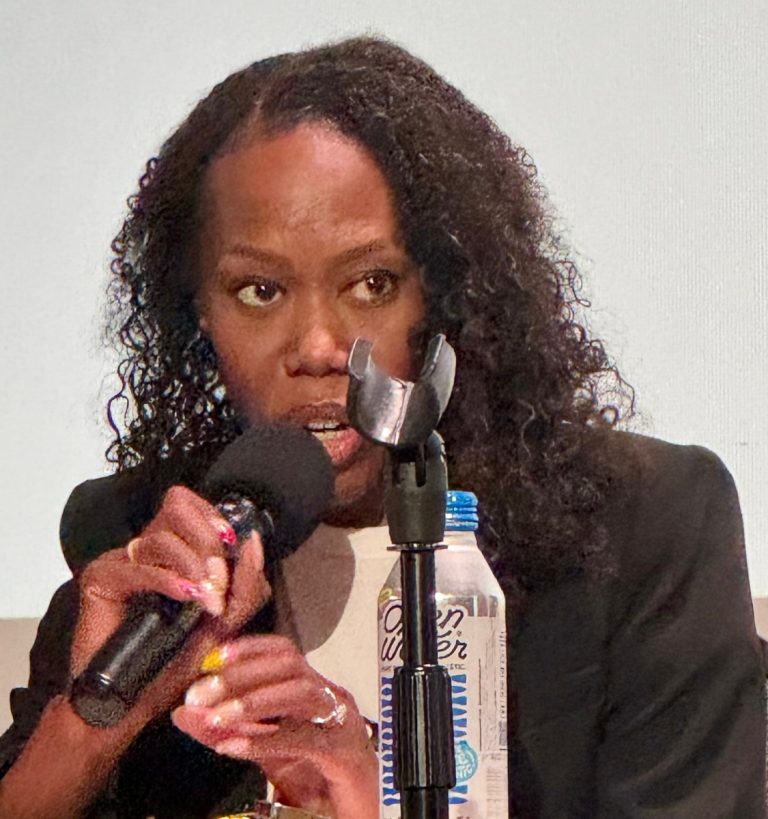
The Denver school board on Thursday, October 8, censured Director Monica Hunter for allegedly making anti-Semitic statements about a fellow board member. The censure followed a quick investigation by an outside party, and while the findings of the investigation were inconclusive, the board decided on a 4-2 vote that there was enough evidence to merit the censure. Potential conflicts of interest with Hunter’s employment also contributed to the decision to censure her. In this episode, co-hosts Alexis Menocal Harrigan and Alan Gottlieb discuss the fallout.
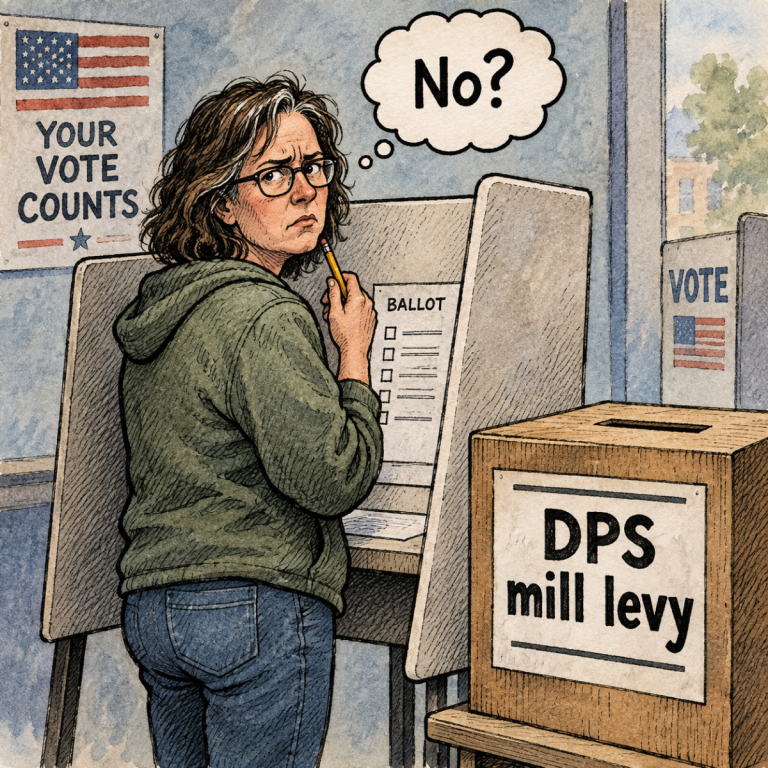
Maybe it is time for all of us to say NO to the board’s request for a $44 million mill levy tax increase. I am torn. Denver’s teachers need to be paid more. But I do not see how Denver will ever do better by most of its students without a clear plan, transparency, honest discussion of progress, and real accountability for student success — none of which this board has offered.

Alleged antisemitic statements by Denver school board member Monica Hunter aimed at her colleague Amy Klein Molk are problematic. Equally troubling, however, is why the superintendent and board president sat on them for nine months until it became politically expedient to release them. In this episode, co-hosts Alexis Menocal Harrigan and Alan Gottlieb discuss whether board relationships and trust in board President Xóchitl Gaytán and Superintendent Alex Marrero are irreparably damaged, and if so, what should happen as a result.

The Denver school board on Thursday, Sept. 17 voted unanimously to launch an investigation into allegations that board Director Monica Hunter made anti-semitic comments about fellow board member Amy Klein Molk, who is Jewish. In this episode, co-hosts Alexis Menocal Harrigan and Alan Gottlieb discuss the meeting’s bizarre twists and turns, and impacts on Denver Public Schools students, with Nicholas Hernández, executive director of the advocacy group Transform Education Now.

At the September 17 Denver Public Schools Board of Education public comment session, 14 people addressed the board and community about allegations leveled against two board members by the board President Xóchitl Gaytán, with an assist from Superintendent Alex Marrero. Two comments stood out, so we are publishing them here.

In its 2024–25 State of Charter Schools Report, the Colorado Department of Education concluded that charter schools had lower chronic absenteeism rates than non-charter schools in each of the previous three years.

In this episode, cohosts Alexis Menocal Harrigan and Alan Gottlieb discuss the latest Denver school board imbroglio, including potentially serious allegations, and its implications for Colorado’s largest school district.

Last week, Boardhawk published a detailed analysis of Denver Public Schools’ 2026 state test score (CMAS) data, as well as an evaluation of the state school performance framework rating of DPS. We invited the author of the piece, Cody Ostenson, on the podcast to discuss the findings.

In this episode, cohosts Alexis Menocal Harrigan and Alan Gottlieb discuss the latest Denver school board imbroglio, including potentially serious allegations, and its implications for Colorado’s largest school district.

Last week, Boardhawk published a detailed analysis of Denver Public Schools’ 2026 state test score (CMAS) data, as well as an evaluation of the state school performance framework rating of DPS. We invited the author of the piece, Cody Ostenson, on the podcast to discuss the findings.
Students across rural Colorado have been back in school for a few weeks now. In far too many of their classrooms, they were greeted by a brand-new teacher. In some, they’ll find a rotating substitute, a class merged into one down the hall, or simply no permanent teacher at all, because the position was never filled. While not a perfect proxy for teacher effectiveness, the data that is available on turnover, vacancies, and certifications are the best available proxies we have in Colorado.

The release of new annual state testing data is always accompanied by a blizzard of slide decks, and reports, an no small amount of spin. Here is an in-depth, straightforward look at how Denver Public Schools performed, disaggregated by income, race and ethnicity, and school governance model.

Last week, Denver Public Schools Superintendent Alex Marrero presented to the school board a slide deck labeled Denver Thrives 2030: A Strategic Roadmap refresh. The deck was thin on just about everything, lacking strategy and a clear vision of what lays ahead and how to tackle challenges and opportunities over the next few years.

Listen to cohosts Alexis Menocal Harrigan and Alan Gottlieb discuss with educator and advocate Van Schoales how new test score data calls into question Colorado’s bragging rights about being the number one state in the nation for public education. This post also includes a transcript of the conversation, for those of you who prefer reading to listening.

While Colorado Gov. Jared Polis and other officials trumpet Colorado’s national top education ranking as reported by one magazine, new test score data reveal a very different reality. Read this deep dive into the new data.
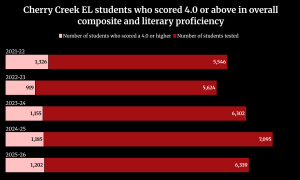
A federal complaint alleges that Cherry Creek School District is retaining students in its English learner program for far longer than it should

Right now, in a time when public school absences remain stubbornly high since Covid closures five years ago, it seems amazing not that educators can’t fix this problem, because it is complicated and occurs for many reasons, but that they can’t even agree on how to count whether a student is absent or not.

DSST prepares its Hispanic, Black, and low-income students for college-level math at two to three times the district rate. Its low-income readiness in 2025 was 39.5%, about 2.6 times the state’s rate for the same students. Much of what makes Denver look better than the state turns out to be concentrated in a single charter school network.


The DPS board needs a leadership reset
It is time for the board to call for new leadership of the body. A new officer election would give members an opportunity to reconsider that leadership and publicly articulate the expectations they have of those serving as president, vice president, and other offices.