
It is time for the board to call for new leadership of the body. A new officer election would give members an opportunity to reconsider that leadership and publicly articulate the expectations they have of those serving as president, vice president, and other offices.

Recently, I’ve heard people question whether Denver should make another investment in our schools because of the disagreements and challenges happening among adults in the district. As a student, that is hard for me to understand. Whatever concerns adults have about leadership, governance, or accountability, taking investment away from students because of adult behavior feels like punishing us for decisions we did not make.
The Denver school board on Thursday, October 8, censured Director Monica Hunter for allegedly making anti-Semitic statements about a fellow board member. The censure followed a quick investigation by an outside party, and while the findings of the investigation were inconclusive, the board decided on a 4-2 vote that there was enough evidence to merit the censure. Potential conflicts of interest with Hunter’s employment also contributed to the decision to censure her. In this episode, co-hosts Alexis Menocal Harrigan and Alan Gottlieb discuss the fallout.
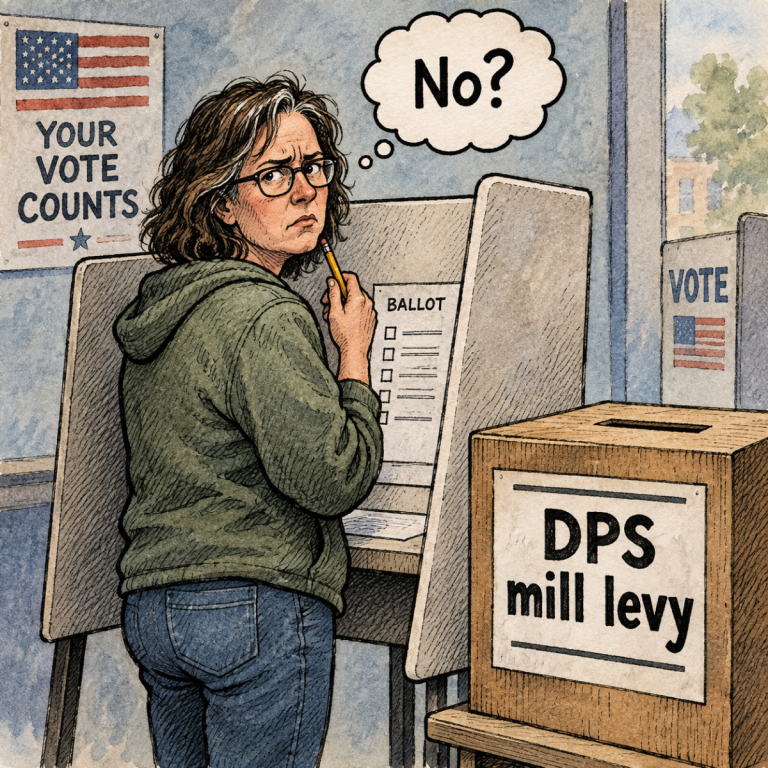
Maybe it is time for all of us to say NO to the board’s request for a $44 million mill levy tax increase. I am torn. Denver’s teachers need to be paid more. But I do not see how Denver will ever do better by most of its students without a clear plan, transparency, honest discussion of progress, and real accountability for student success — none of which this board has offered.
Alleged antisemitic statements by Denver school board member Monica Hunter aimed at her colleague Amy Klein Molk are problematic. Equally troubling, however, is why the superintendent and board president sat on them for nine months until it became politically expedient to release them. In this episode, co-hosts Alexis Menocal Harrigan and Alan Gottlieb discuss whether board relationships and trust in board President Xóchitl Gaytán and Superintendent Alex Marrero are irreparably damaged, and if so, what should happen as a result.
The Denver school board on Thursday, Sept. 17 voted unanimously to launch an investigation into allegations that board Director Monica Hunter made anti-semitic comments about fellow board member Amy Klein Molk, who is Jewish. In this episode, co-hosts Alexis Menocal Harrigan and Alan Gottlieb discuss the meeting’s bizarre twists and turns, and impacts on Denver Public Schools students, with Nicholas Hernández, executive director of the advocacy group Transform Education Now.

At the September 17 Denver Public Schools Board of Education public comment session, 14 people addressed the board and community about allegations leveled against two board members by the board President Xóchitl Gaytán, with an assist from Superintendent Alex Marrero. Two comments stood out, so we are publishing them here.

In its 2024–25 State of Charter Schools Report, the Colorado Department of Education concluded that charter schools had lower chronic absenteeism rates than non-charter schools in each of the previous three years.
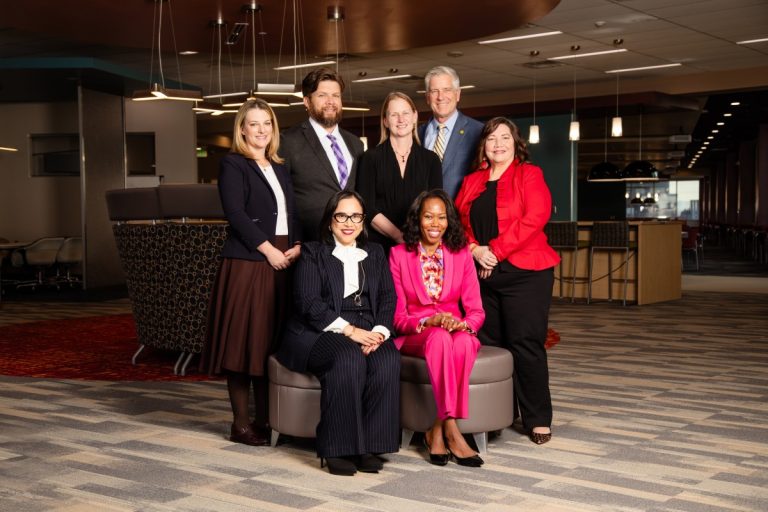
In this episode, cohosts Alexis Menocal Harrigan and Alan Gottlieb discuss the latest Denver school board imbroglio, including potentially serious allegations, and its implications for Colorado’s largest school district.

Last week, Boardhawk published a detailed analysis of Denver Public Schools’ 2026 state test score (CMAS) data, as well as an evaluation of the state school performance framework rating of DPS. We invited the author of the piece, Cody Ostenson, on the podcast to discuss the findings.

Denver Public Schools has begun a months-long process of collecting feedback and studying options for redrawing its school boundaries. It’s sure to be a contentious process, akin to school closure debates. Perhaps that is one of the reasons the district hasn’t undertaken this task since 1955-96, when federally mandated busing for integration ended after 25 years. In this episode co-hosts Alexis Menocal Harrigan and Alan Gottlieb discuss the promises and pitfalls the district will face in the coming months. Gottlieb was a Denver Post reporter during the lasy boundary debate, and offers some historical perspective.
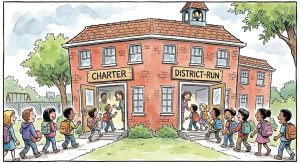
Not all co-locations feel the same. Some create a sense of direct competition; others feel more complementary. That distinction matters because successful co-location requires more than operational efficiency. It requires trust, structure, and intentional partnership.
Marlene De La Rosa was elected to the Denver school board in November 2023, representing North Denver. She recently led the effort to develop a policy for the use of smartphones in Denver schools. We asked de la Rosa on to discuss that policy as well as how her perspective about the district has shifted since she first joined the board. De La Rosa worked in the federal immigration court system for more than 30 years. We invited De La Rosa on to discuss the cellphone policy as well her views on current board dynamics. We also asked her about some votes she has taken that have upset some of her original supporters, most notably a contract extension for Superintendent Alex Marrero and the censure of fellow board member John Youngquist.

SB 26-145 is designed to strengthen procedural requirements for how districts consult with charter schools and consider their facility needs when planning bond questions. At its core, the bill would require districts that are considering submitting ballot questions to voters to more actively solicit and consider charter school capital construction needs.

You can now listen and/or watch us on YouTube, also embedded in this article!
Our guest for this episode is Pat Donovan, who has been a leading Denver public-education advocate for many years. He led the advocacy and funding organization RootED, held a top leadership position at its successor, Denver Families for Public Schools. He heads the board of Rocky Mountain Prep, one of Denver’s largest, homegrown charter school networks. He’s also a board member at the Colorado League of Charter Schools.
Donovan has a long perspective on a variety of trends in Denver Public Schools, including how well the district is preparing students for life after high school and the narrowing of school choice. We invited Pat on for a wide-ranging discussion on these and other DPS-related topics.

Boardhawk wanted former Denver school board member Scott Esserman on the podcast because we vigorously disagreed with him on a range of Denver Public Schools issues during his tenure, and wrote about him in a harshly critical tone on several occasions. At times the tone of those criticisms might have obscured the substantive differences in policy and philosophy that underlay them. Some of those disagreements include the performance of Superintendent Alex Marrero, whether DPS is headed n the right direction, Marrero’s contract extension, and school safety.
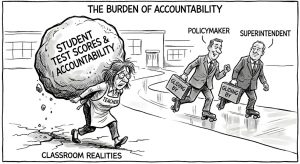
But while holding the right people accountable to the implementation of schooling is critical, a primary focus on accountability of implementation is incomplete. How excellent teachers and administrators navigate the conditions/systems of school, are a) are impacted by constraints of a system and b) have an impact on what we all want from school: results.

Marrero clearly wants to consolidate as many as schools as possible under his control, returning to the bad old days of large urban districts being run by a bloated, inefficient system. The district’s las innovation zone is a big thorn in his side for that reason.

A proposed expansion of the Luminary Learning Network, Denver’s lone remaining Innovation zone, is being strongly opposed by Superintendent Alex Marrero. LLN Executive Director joins us to discuss the zone, and repeated attempts to curb its autonomies. The consolidation of school control under Marrero has implications for everyone with a stake in DPS.

In this second installment of our occasional series on the implications for public education of artificial intelligence in classrooms and homes, we welcome Dr. Richard Charles, the chief information officer for Denver Public Schools. A mathematician by training and inclination, Dr. Charles has deep knowledge of AI, its promises and pitfalls. This thought-provoking conversation is well worth a listen.

The DPS board needs a leadership reset
It is time for the board to call for new leadership of the body. A new officer election would give members an opportunity to reconsider that leadership and publicly articulate the expectations they have of those serving as president, vice president, and other offices.