
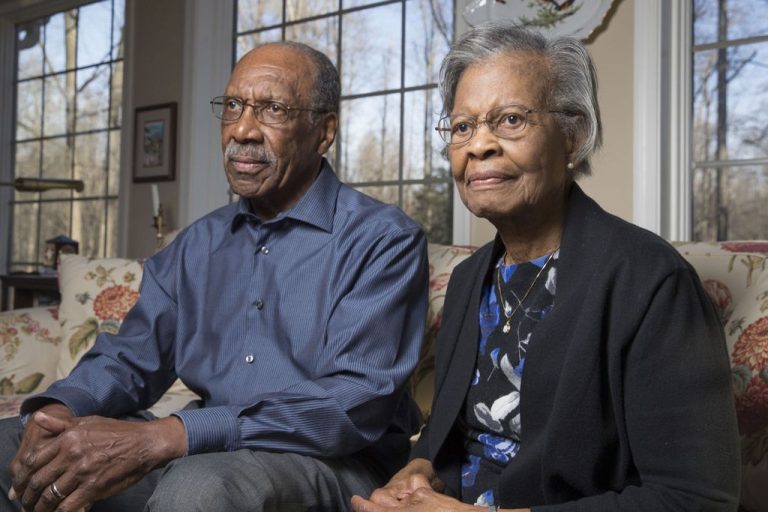
What struck me most in reading about Dr. Gladys West’s life was not only her brilliance, but her perseverance. A deep love of geometry sparked a career that unfolded in the face of profound racial and gender discrimination, in an era when Black women were systematically excluded from advanced mathematics and scientific fields. Her story raises an uncomfortable question closer to home. Are Denver’s public schools systematically cultivating the next generation of Gladys Wests, or are they leaving that talent unrealized?

Colorado public schools are experiencing sustained enrollment declines (Denver less than many other districts), and that’s reshaping everything — school funding, staffing, program offerings, district politics, and debates over school choice. This is more than a demographic story; it’s a governance and values story. Today we are joined by Brian Eschacher to unpack enrollment trends, how school choice fits into the picture, and what districts and policy makers should be paying attention to next.

Three Denver high school students spell out their aspirational dreams for our country, in the spirit of Dr. Martin Luther King Jr., in a very dark time.
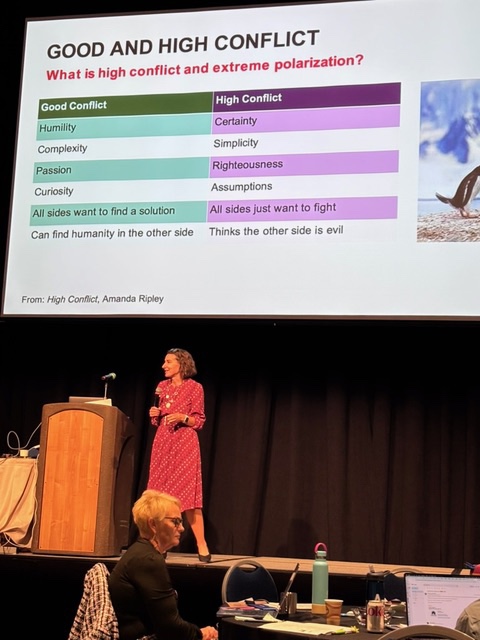
Dr. Katy Anthes served as Commissioner of Education in Colorado from 2016-2023, and is widely respected for her commitment to listen to diverse perspectives and her legacy of developing solutions that are founded on productive middle ground. Her perspective on how to foster meaningful dialogue and change across political and ideological differences has carried forward into her current work on a project called FORWARD: From Polarization to Progress.

In this piece, Colorado Mesa State University Trustee Alison Griffin offers a rebuttal to a recent column by Peter Huidekoper Jr. that argued that college students are being forced into career paths too quickly, at the expense of exploration and healthy uncertainty.
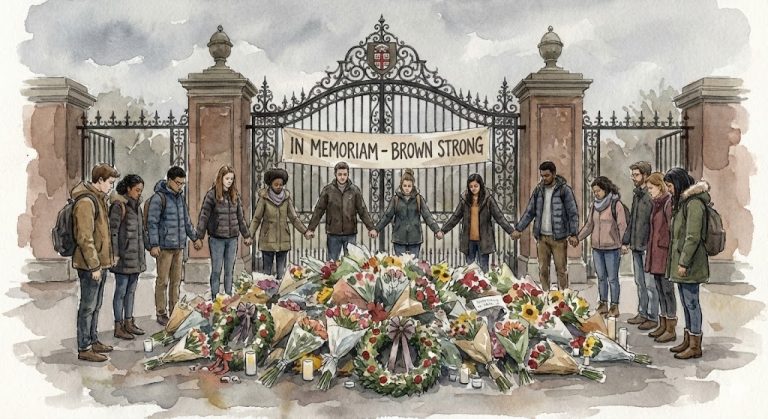
Boardhawk columnist Aaron Massey says the mass hooting last weekend at Brown University hit close to home. What, he asks, do teachers think about how to approach gun violence in American schools? “If you ask me, they are the ones that can make progress in solving gun violence.Teachers have a unique positionality in society in that they see children progress through the human developmental stages.”

For many education reformers, this moment marks not only the end of portfolio management in Denver but the end of any real hope for sustained academic improvement, particularly for low-income students and students of color. While I remain a strong proponent of portfolio management, that conclusion is too simplistic and ultimately too pessimistic. There is still reason for cautious optimism, even under a centralized governance model that many of the reformers of the last decade instinctively distrust. Traditional, centrally managed districts, when led well, can improve student outcomes.
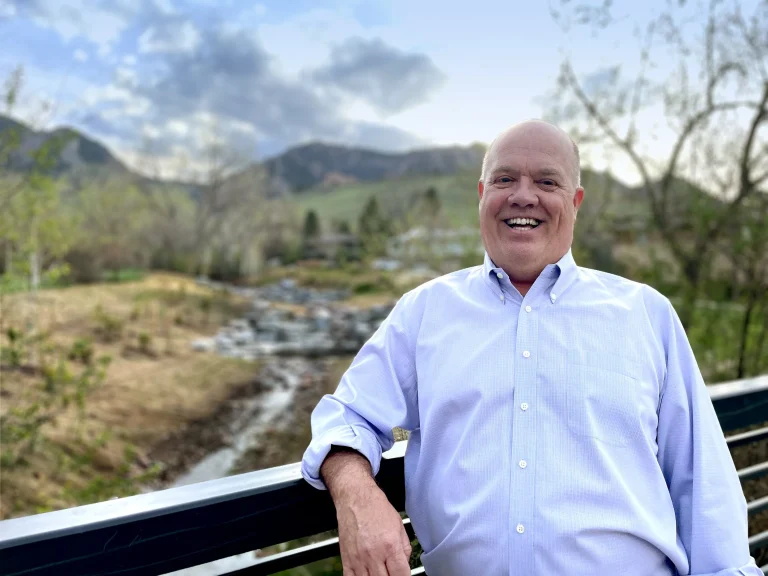
We asked Boulder school board member Alex Medler on to discuss his district’s bell-to-bell cellphone restriction policy, which is gaining momentum across the country (DPS is just forming a community committee to study the issue and make recommendations). We also wanted to hear his provocative thoughts, as a long time charter school advocate and “ed reformer” on how his perspective has changed after two years as a school board member. He has strong opinions about where reformers, and the foundations that fund them, have gone astray.

From Boulder Valley School District board member Alex Medler: Last fall, the Boulder Valley School District board took that responsibility seriously and voted for a bell-to-bell phone-free policy across all grades and all school hours. Adopting this “away for the day” policy was, I believe, one of the most powerful and positive decisions our board has ever made for our children. And it is exactly the kind of decision school boards across the country should have the courage to make.
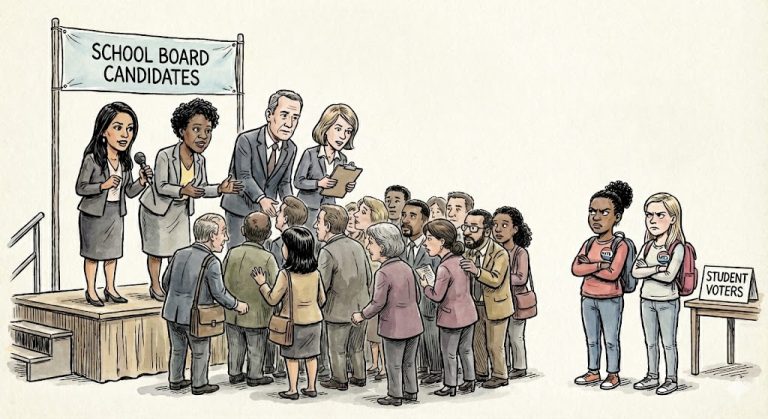
Editor’s note: The SHIFT Chronicles is a monthly feature dedicated to amplifying student voices, where those most impacted by the public education system share their thoughts, reflections, and experiences. In collaboration with FaithBridge SHIFT fellows, these commentaries offer a genuine glimpse into the challenges students are facing within our city’s schools. These students represent a diverse range […]
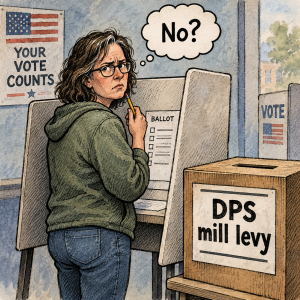
Maybe it is time for all of us to say NO to the board’s request for a $44 million mill levy tax increase. I am torn. Denver’s teachers need to be paid more. But I do not see how Denver will ever do better by most of its students without a clear plan, transparency, honest discussion of progress, and real accountability for student success — none of which this board has offered.

News broke midday Thursday that DJ Torres, who has served on the Denver Public Schools Board of Education, had resigned, effective immediately. So what happens now? And how will this affect the problematic board dynamics? We invited to the podcast to discuss this Parker Baxter, Scholar in Residence and Director of the Center for Education Policy Analysis at the School of Pubic Affairs at the University of Colorado Denver. Baxter is also a lawyer, and spent 20 years working on education policy, including a stint in the central office of Denver Public Schools during the Tom Boasberg era.

Alleged antisemitic statements by Denver school board member Monica Hunter aimed at her colleague Amy Klein Molk are problematic. Equally troubling, however, is why the superintendent and board president sat on them for nine months until it became politically expedient to release them. In this episode, co-hosts Alexis Menocal Harrigan and Alan Gottlieb discuss whether board relationships and trust in board President Xóchitl Gaytán and Superintendent Alex Marrero are irreparably damaged, and if so, what should happen as a result.
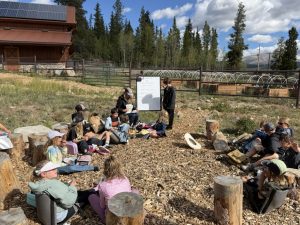
This is High Rockies Community School, a K-8 public charter school located at Sacramento Creek Ranch outside Fairplay. The four-day-a-week school is most notable for holding almost all of its instruction outdoors.

The Denver school board on Thursday, Sept. 17 voted unanimously to launch an investigation into allegations that board Director Monica Hunter made anti-semitic comments about fellow board member Amy Klein Molk, who is Jewish. In this episode, co-hosts Alexis Menocal Harrigan and Alan Gottlieb discuss the meeting’s bizarre twists and turns, and impacts on Denver Public Schools students, with Nicholas Hernández, executive director of the advocacy group Transform Education Now.

At the September 17 Denver Public Schools Board of Education public comment session, 14 people addressed the board and community about allegations leveled against two board members by the board President Xóchitl Gaytán, with an assist from Superintendent Alex Marrero. Two comments stood out, so we are publishing them here.

In its 2024–25 State of Charter Schools Report, the Colorado Department of Education concluded that charter schools had lower chronic absenteeism rates than non-charter schools in each of the previous three years.

In this episode, cohosts Alexis Menocal Harrigan and Alan Gottlieb discuss the latest Denver school board imbroglio, including potentially serious allegations, and its implications for Colorado’s largest school district.

Last week, Boardhawk published a detailed analysis of Denver Public Schools’ 2026 state test score (CMAS) data, as well as an evaluation of the state school performance framework rating of DPS. We invited the author of the piece, Cody Ostenson, on the podcast to discuss the findings.
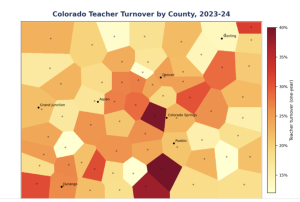
Students across rural Colorado have been back in school for a few weeks now. In far too many of their classrooms, they were greeted by a brand-new teacher. In some, they’ll find a rotating substitute, a class merged into one down the hall, or simply no permanent teacher at all, because the position was never filled. While not a perfect proxy for teacher effectiveness, the data that is available on turnover, vacancies, and certifications are the best available proxies we have in Colorado.

Should Denver voters say no to DPS mill levy?
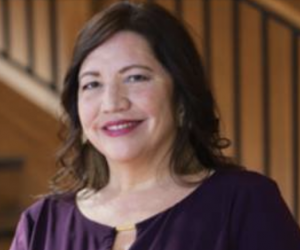
Maybe it is time for all of us to say NO to the board’s request for a $44 million mill levy tax increase. I am torn. Denver’s teachers need to be paid more. But I do not see how Denver will ever do better by most of its students without a clear plan, transparency, honest discussion of progress, and real accountability for student success — none of which this board has offered.