
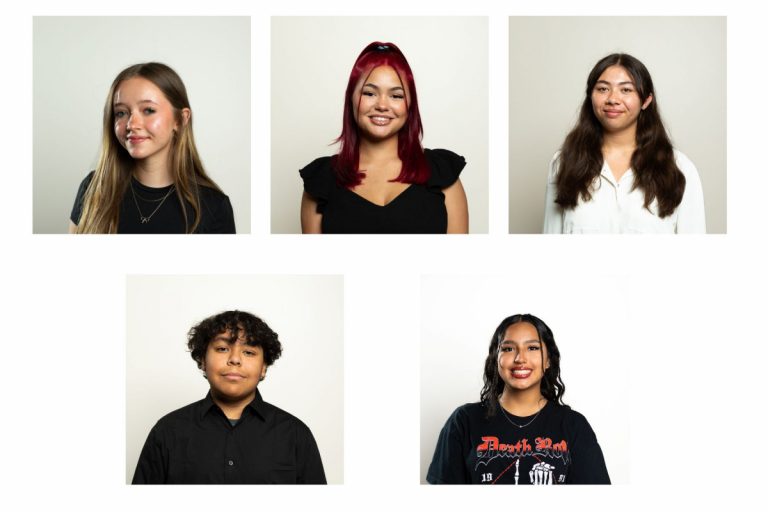
The SHIFT Chronicles is a new monthly feature dedicated to amplifying student voices, where those most impacted by the public education system share their thoughts, reflections, and experiences. In collaboration with FaithBridge SHIFT fellows, these commentaries offer a genuine glimpse into the challenges students are facing within our city’s schools.

It’s not lost on me that school shootings are a complicated societal issue and that everyone is invested in school safety. I am suggesting, however, that when we have an issue that everyone is invested in solving and we still haven’t solved it, we might want to start thinking about it in a different way.

It is true that DPS students and subgroups of students (low-income students and kids of color) outpaced the state on growth measures in many areas. But at the rate that many DPS students are growing, they will never reach grade-level proficiency. That has profound implications for their futures, and is hardly cause for celebration.

We have an opportunity in Denver to lead the way in how to equip students with these vital skills; to be the standard of financial education and cultural awareness in the state and beyond. However, for this to be possible, we need to create the systems and structures in DPS to last beyond any administrative changes, personnel movement and alumni who graduate from Denver high schools.

As students prepared to return to the classroom in Denver, Boardhawk asked teachers to share what they were hopeful for in the new year and what they wished for their students.
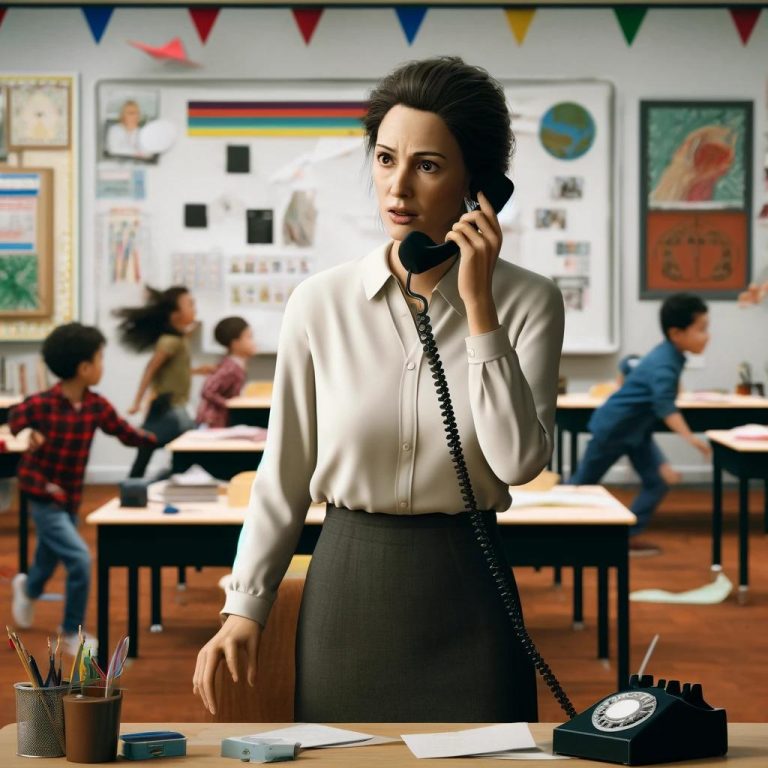
In the upside down world of schools, classroom teachers rank the lowest while those closest to administrators rank the highest.

From columnist Alexis Menocal Harrigan: It’s clear this email campaign did too much and missed the mark by focusing on self-promotion and not the immediate needs of students and families. When parents like me are seeking reassurance and helpful information as the school year begins, we were instead met with a barrage of grandstanding that did little to address anything we are concerned with at present.
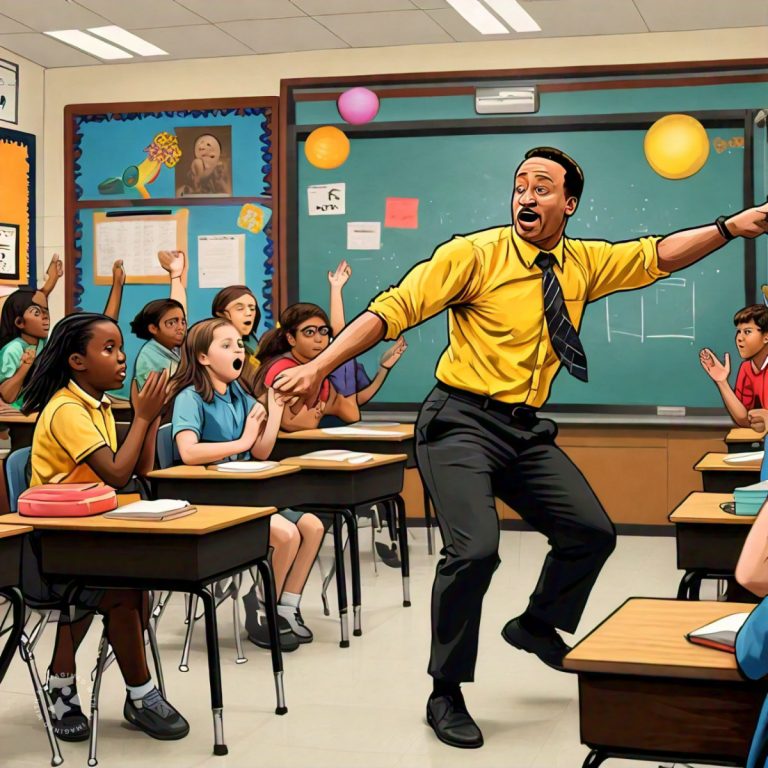
When students saw teachers hitting the Nae Nae, they were elated. It’s a clearcut example of how Hip Hop improved schools. When teachers did the dance, students began to see them as human as opposed to disinterested adults that know nothing about them. Teachers connected with students in a way that was authentic to them. Connecting with students in authentic ways directly contributes to student engagement.
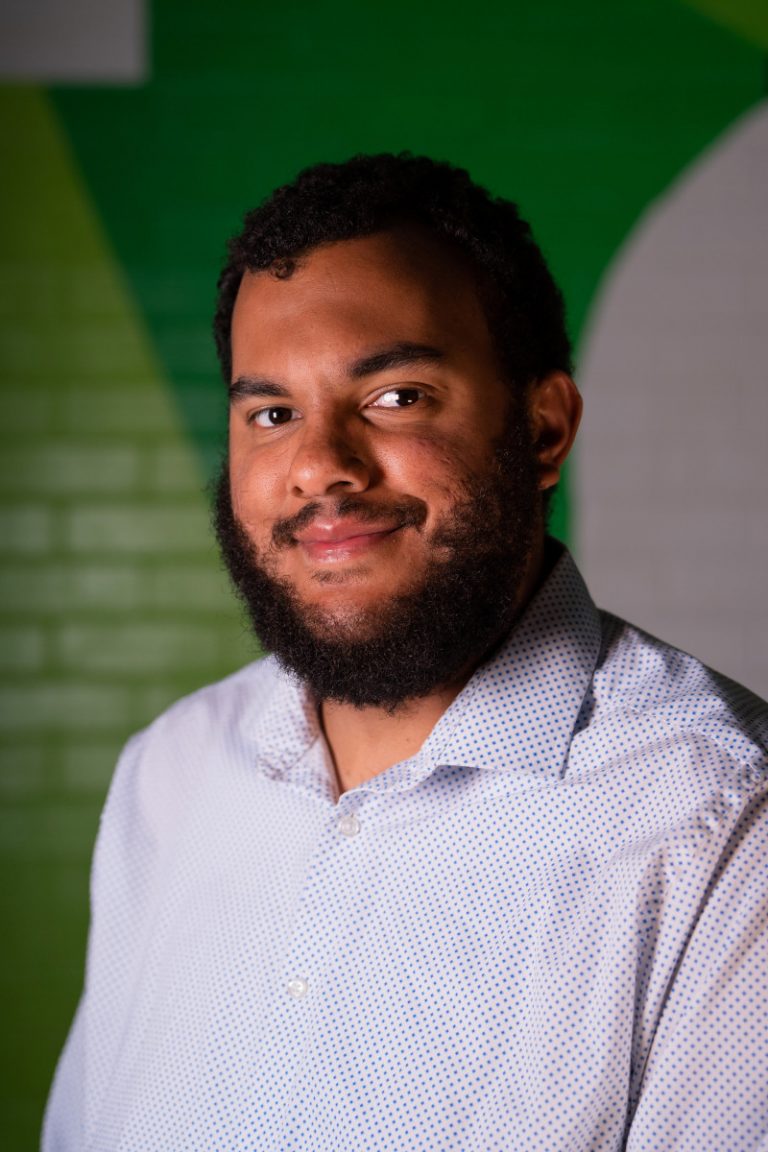
Each student brings a unique perspective, and I find immense joy in encouraging and motivating each of them in different ways.

One of our primary goals with Montessori on Wheels is to help children and families look out their windows and see their communities as spaces for learning and innovation.
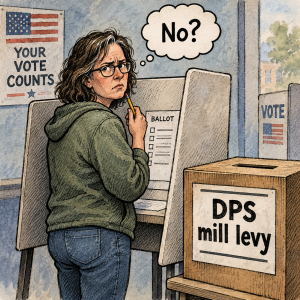
Maybe it is time for all of us to say NO to the board’s request for a $44 million mill levy tax increase. I am torn. Denver’s teachers need to be paid more. But I do not see how Denver will ever do better by most of its students without a clear plan, transparency, honest discussion of progress, and real accountability for student success — none of which this board has offered.

News broke midday Thursday that DJ Torres, who has served on the Denver Public Schools Board of Education, had resigned, effective immediately. So what happens now? And how will this affect the problematic board dynamics? We invited to the podcast to discuss this Parker Baxter, Scholar in Residence and Director of the Center for Education Policy Analysis at the School of Pubic Affairs at the University of Colorado Denver. Baxter is also a lawyer, and spent 20 years working on education policy, including a stint in the central office of Denver Public Schools during the Tom Boasberg era.

Alleged antisemitic statements by Denver school board member Monica Hunter aimed at her colleague Amy Klein Molk are problematic. Equally troubling, however, is why the superintendent and board president sat on them for nine months until it became politically expedient to release them. In this episode, co-hosts Alexis Menocal Harrigan and Alan Gottlieb discuss whether board relationships and trust in board President Xóchitl Gaytán and Superintendent Alex Marrero are irreparably damaged, and if so, what should happen as a result.
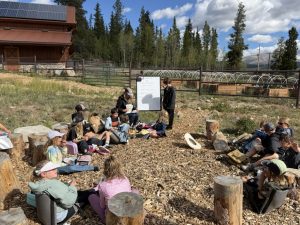
This is High Rockies Community School, a K-8 public charter school located at Sacramento Creek Ranch outside Fairplay. The four-day-a-week school is most notable for holding almost all of its instruction outdoors.

The Denver school board on Thursday, Sept. 17 voted unanimously to launch an investigation into allegations that board Director Monica Hunter made anti-semitic comments about fellow board member Amy Klein Molk, who is Jewish. In this episode, co-hosts Alexis Menocal Harrigan and Alan Gottlieb discuss the meeting’s bizarre twists and turns, and impacts on Denver Public Schools students, with Nicholas Hernández, executive director of the advocacy group Transform Education Now.

At the September 17 Denver Public Schools Board of Education public comment session, 14 people addressed the board and community about allegations leveled against two board members by the board President Xóchitl Gaytán, with an assist from Superintendent Alex Marrero. Two comments stood out, so we are publishing them here.

In its 2024–25 State of Charter Schools Report, the Colorado Department of Education concluded that charter schools had lower chronic absenteeism rates than non-charter schools in each of the previous three years.

In this episode, cohosts Alexis Menocal Harrigan and Alan Gottlieb discuss the latest Denver school board imbroglio, including potentially serious allegations, and its implications for Colorado’s largest school district.

Last week, Boardhawk published a detailed analysis of Denver Public Schools’ 2026 state test score (CMAS) data, as well as an evaluation of the state school performance framework rating of DPS. We invited the author of the piece, Cody Ostenson, on the podcast to discuss the findings.
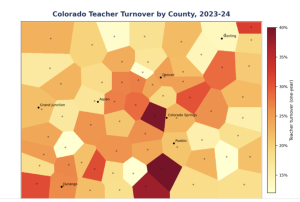
Students across rural Colorado have been back in school for a few weeks now. In far too many of their classrooms, they were greeted by a brand-new teacher. In some, they’ll find a rotating substitute, a class merged into one down the hall, or simply no permanent teacher at all, because the position was never filled. While not a perfect proxy for teacher effectiveness, the data that is available on turnover, vacancies, and certifications are the best available proxies we have in Colorado.
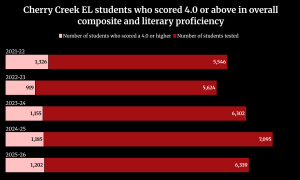


Should Denver voters say no to DPS mill levy?
Maybe it is time for all of us to say NO to the board’s request for a $44 million mill levy tax increase. I am torn. Denver’s teachers need to be paid more. But I do not see how Denver will ever do better by most of its students without a clear plan, transparency, honest discussion of progress, and real accountability for student success — none of which this board has offered.