

Paula Noonan is an outspoken critic of charter schools and test-based accountability, who broadcasts her thoughts in a regular column in Colorado Politics. Nicholas Hernández is executive director of Transform Education Now, a parent advocacy organization that supports parents in advocating for robust educational options in Denver and environs. We brought them together on the podcast to debate school choice, charter schools, school funding, teacher quality, test-based accountability, and more. It’s a lively episode, somewhat longer than usual.

Thirteen people have applied for a one-year vacancy on the Denver school board created by the resignation last month of central-Denver representative DJ Torres. On this podcast episode, longtime District 3 resident and DPS parent and advocate Heather Lamm discusses with co-hosts Alexis Menocal Harrigan and Alan Gottlieb the candidates and what the board needs in and from its new member.

Denver voters have approved mill levy overrides before. DPS collected $369.6 million last year from seven voter-approved overrides dating to 1988. That history is exactly why voters deserve specifics. A district that has been trusted this many times should be able to say what the next dollars will do.

Three eventful years into his tenure on the Denver Public Schools Board of Education, board member John Youngquist discusses where the board’s focus should be as it emerges (we hope) from a period of tumult, in-fighting and dysfunction.

We asked Denver Classroom Teachers Association President Rob Gould, and Vernon Jones, a community advocate and executive director of FaithBridge, onto the show to discuss the mill levy, reasons voters should approve it, and to answer some questions about why maybe some voters should be skeptical that it’s a good idea. We also discussed board and district leadership and whether there need to be changes.
It is time for the board to call for new leadership of the body. A new officer election would give members an opportunity to reconsider that leadership and publicly articulate the expectations they have of those serving as president, vice president, and other offices.

Recently, I’ve heard people question whether Denver should make another investment in our schools because of the disagreements and challenges happening among adults in the district. As a student, that is hard for me to understand. Whatever concerns adults have about leadership, governance, or accountability, taking investment away from students because of adult behavior feels like punishing us for decisions we did not make.
The Denver school board on Thursday, October 8, censured Director Monica Hunter for allegedly making anti-Semitic statements about a fellow board member. The censure followed a quick investigation by an outside party, and while the findings of the investigation were inconclusive, the board decided on a 4-2 vote that there was enough evidence to merit the censure. Potential conflicts of interest with Hunter’s employment also contributed to the decision to censure her. In this episode, co-hosts Alexis Menocal Harrigan and Alan Gottlieb discuss the fallout.
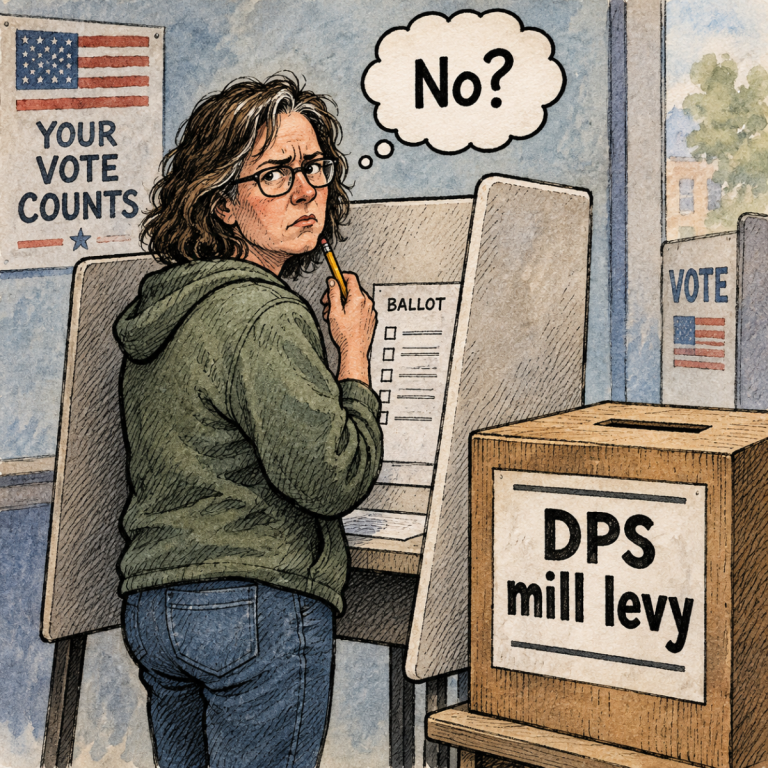
Maybe it is time for all of us to say NO to the board’s request for a $44 million mill levy tax increase. I am torn. Denver’s teachers need to be paid more. But I do not see how Denver will ever do better by most of its students without a clear plan, transparency, honest discussion of progress, and real accountability for student success — none of which this board has offered.
Alleged antisemitic statements by Denver school board member Monica Hunter aimed at her colleague Amy Klein Molk are problematic. Equally troubling, however, is why the superintendent and board president sat on them for nine months until it became politically expedient to release them. In this episode, co-hosts Alexis Menocal Harrigan and Alan Gottlieb discuss whether board relationships and trust in board President Xóchitl Gaytán and Superintendent Alex Marrero are irreparably damaged, and if so, what should happen as a result.

This excellent commentary on the illegal Denver school board executive session last March was written by Quentin Young, editor of Colorado Newsline, and first appeared on that website: https://coloradonewsline.com/

Moonshot aims to solve several interconnected problems. We address the achievement gap for students of color, which we believe is driven by the lack of diversity in leadership and the type of learning environments learners can access. Although 75% of students in Denver are students of color, 71% of the teaching force and 60% of school leaders are white.
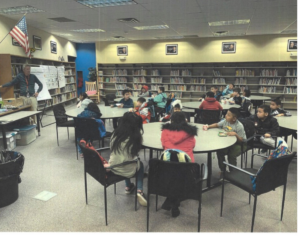
I frankly am more worried about the state of public education than I was when I made the leap 15 years ago. But I still have hope for public education. Much of that hope lives through resilient students and committed teachers.

While the district is trying to frame the firing as the removal of a principal who violated federal privacy law and meted out discipline disproportionately to kids of color, that sounds like putting a politically palatable veneer over a load of BS.

Based on my own experience and armed with research, I founded Students Cultivating Dignity (SCD) Enrichment Program in 2018 to support, recruit and retain BIPOC secondary students with gifted and advanced education.

Recent developments continue to demonstrate that the current Denver school board and leadership want to hide key matters from public scrutiny. Why?

“Schools need to do more; they need to figure out how to meet the needs of all their students and not just push out the kids who they are scared of,” says school psychologist Erin Pier.

More reversals are sure to come unless school leaders defend and perhaps even expand the policies that have given the city’s most vulnerable students an educational lifeline.

Despite our frustration, we accept the decision made and want to urge the board to use this opportunity to manage their sole employee with a more intentional focus on accountability, transparency, and community integration.

The key to comprehensive summer programs is that they offer a safe, consistent, and positive environment daily for approximately six hours and for six to eight weeks. While there are various options available for Denver youth in the summer, very few are comprehensive programs that meet the consistency needs of working families.


Podcast season 2, episode 30: Charter critic Paula Noonan, parent advocate Nicholas Hernández hold a passionate, mostly polite debate
Paula Noonan is an outspoken critic of charter schools and test-based accountability, who broadcasts her thoughts in a regular column in Colorado Politics. Nicholas Hernández is executive director of Transform Education Now, a parent advocacy organization that supports parents in advocating for robust educational options in Denver and environs. We brought them together on the podcast to debate school choice, charter schools, school funding, teacher quality, test-based accountability, and more. It’s a lively episode, somewhat longer than usual.